
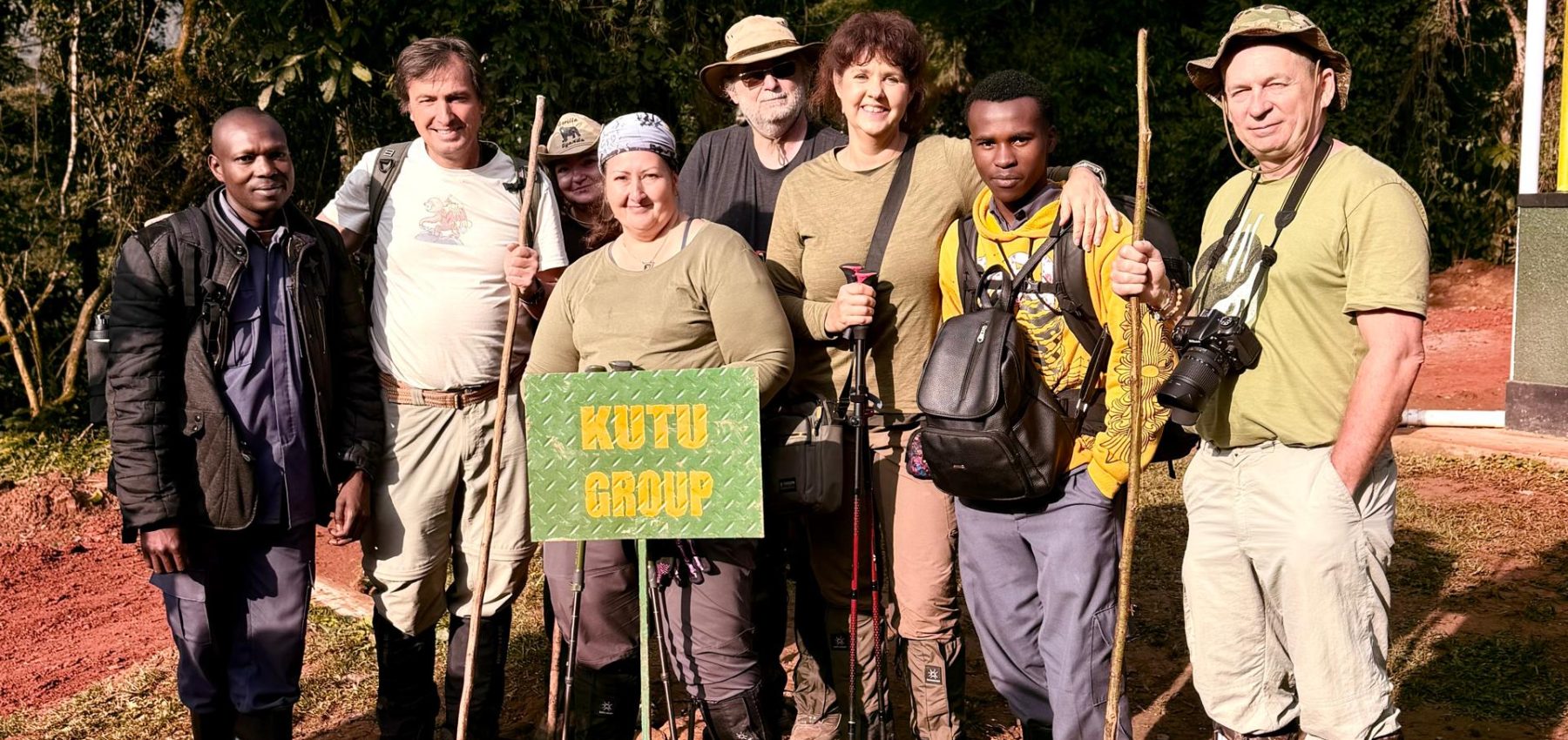
Can I take photographs during gorilla habituation in Uganda? Yes, you can take photographs during the Gorilla Habituation Experience in Uganda, and the extended time spent observing the gorillas makes it particularly rewarding for wildlife photography. Unlike standard gorilla trekking, where visitors have a maximum of one hour with a habituated gorilla family, gorilla habituation allows up to four hours of viewing once the gorillas have been located. However, photography must always follow Uganda Wildlife Authority (UWA) rules, including no flash photography, maintaining the required distance, and following the instructions of the ranger and habituation team.
The important thing to understand is that gorilla habituation is not a photography session arranged around the visitor. You are entering the forest as part of a carefully managed wildlife experience involving researchers, trackers, rangers, and gorillas that are still becoming accustomed to human presence. Your camera is welcome, but it must never take priority over the welfare of the animals or the instructions of the people managing the encounter.
For photographers, however, this is precisely what makes the experience so special. Four hours of observation give you considerably more time to watch, wait, adjust your camera settings, and capture different behaviours instead of feeling pressured to photograph everything within a short viewing window.
Is photography allowed during gorilla habituation?
Yes, photography is allowed during gorilla habituation, provided that visitors comply with the applicable park and gorilla-tracking rules.
One of the clearest restrictions is that flash photography is not permitted. UWA’s published gorilla tracking rules state that visitors should not use flash photography while with the gorillas. The same rules require visitors to maintain a 10-metre distance, avoid littering, and refrain from activities such as smoking, eating, and drinking while with the gorillas.
This means you should prepare your camera before the encounter rather than relying on the flash to brighten dark photographs. Bwindi is a dense rainforest, and the light underneath the canopy can be considerably darker than the conditions outside the forest.
If you are using a camera that automatically activates its flash in low light, learn how to disable the flash before your trek. This is particularly important if you are using a compact camera or smartphone with automatic settings.
The official Uganda gorilla tracking and habituation guidelines provide the broader framework for how gorilla and chimpanzee tracking and habituation activities are managed by UWA.
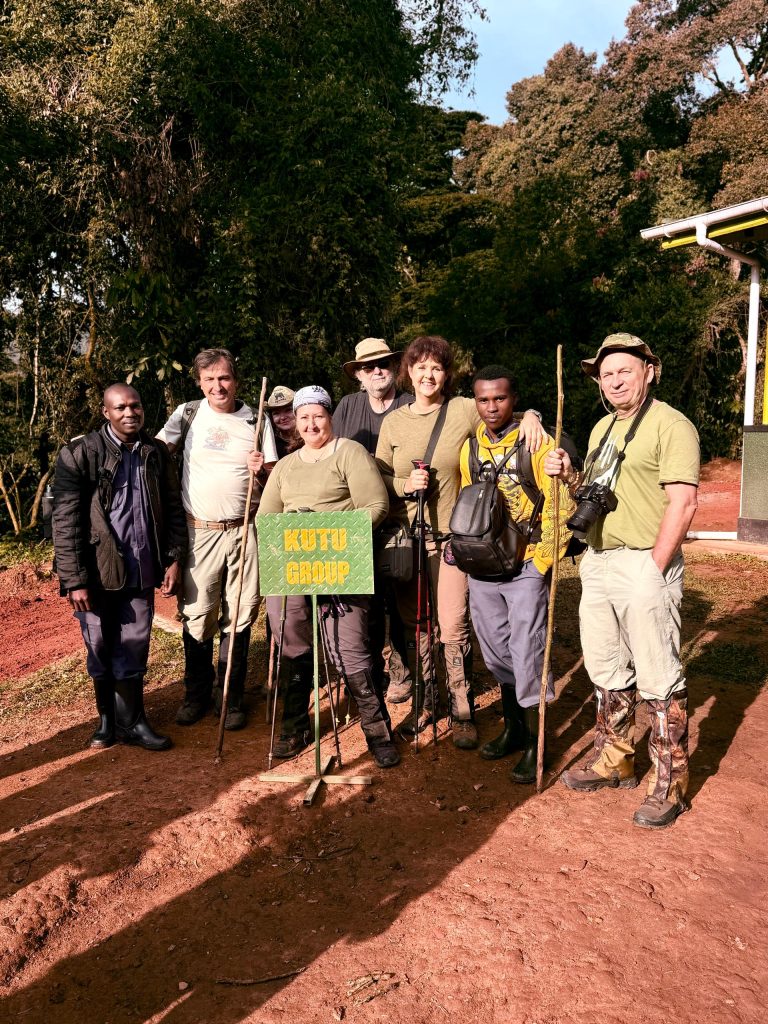
Why is gorilla habituation excellent for photography?
The biggest advantage is time.
During standard gorilla trekking, the viewing period with a habituated gorilla family is limited to one hour. Gorilla habituation provides up to four hours of viewing, giving photographers substantially more time to observe behaviour and wait for suitable photographic opportunities. UWA’s guidelines distinguish the habituation experience from standard tracking and specify a maximum four-hour viewing period for habituation.
That extra time changes the way you photograph the gorillas.
Instead of immediately raising your camera every time a gorilla moves, you can spend the first few minutes watching the family. You can see where the light is coming from, understand where the gorillas are moving, and identify opportunities before taking the photograph.
You may see a gorilla feeding, resting, grooming, moving through vegetation, interacting with another member of the group, or simply looking directly toward the visitors. You might also have periods when the gorillas are partially hidden by vegetation. Rather than considering those moments wasted, photographers can use them to observe behaviour and wait for a clearer composition.
This is one of the biggest differences between Gorilla Habituation and standard Gorilla Trekking: the longer viewing period gives you more time to experience the animals rather than rushing to collect as many photographs as possible.
Can I take photos with my phone?
Yes, a smartphone can be used for photographs during Gorilla Habituation.
Modern smartphones can produce excellent images in wonderful light, but Bwindi’s forest environment can be challenging because of dense vegetation and uneven lighting. A phone may struggle when a gorilla is positioned beneath a dark canopy or several metres away behind leaves and branches.
If your phone is your only camera, don’t worry. You can still capture memorable photographs.
The most important things are to:
- Keep your phone fully charged.
- Carry a power bank.
- Clean the camera lens before entering the forest.
- Turn off the flash.
- Avoid using excessive digital zoom.
- Hold the phone steady in low light.
- Follow the ranger’s instructions.
A phone is also useful for quickly capturing photographs of the forest, trekking environment,, and other moments before and after the gorilla encounter.
However, if photography is one of the main reasons and you have chosen the Gorilla Habituation Experience, a dedicated camera with a suitable lens will normally give you considerably more flexibility.
What camera is best for gorilla habituation?
You do not need an extremely expensive professional camera to photograph gorillas.
A good DSLR or mirrorless camera is more than capable of producing excellent results. What matters more is understanding your equipment and being comfortable changing basic settings quickly.
A camera with good low-light performance is particularly useful because Bwindi’s forest canopy can reduce the available light.
A camera with interchangeable lenses also gives you more flexibility, particularly when the gorillas are at different distances.
For most travelers, the ideal setup is something that balances image quality with weight. Remember that you will still have to walk through a mountainous rainforest, sometimes over steep, muddy, and uneven terrain.
Carrying a huge amount of photographic equipment can become tiring surprisingly quickly.
What lens should I use for gorilla habituation?
There is no single perfect lens, but a medium telephoto or versatile zoom lens is often a very practical choice.
A lens in the approximate 70–200mm range can be useful because it allows you to photograph details without requiring you to approach the animals. The exact focal length you need depends on the camera body, the distance from the gorillas, and the type of photographs you want.
A wider lens can also be useful for environmental photographs showing the gorilla within the Bwindi forest rather than producing only close-up portraits.
If you have several lenses, think carefully before carrying all of them.
A practical combination might be:
| Feature | Gorilla Habituation | Gorilla Trekking |
|---|---|---|
| Viewing Time | Up to 4 hours | Up to 1 hour |
| Photography Opportunity | More time to observe, compose and photograph | More limited photography time |
| Gorilla Groups | Groups undergoing habituation | Fully habituated gorilla groups |
| Best For | Wildlife photographers and travelers seeking a deeper experience | Travelers looking for a shorter gorilla encounter |
| Photography Approach | More time for patience, observation and behavioral photography | More emphasis on making the most of a shorter viewing period |
| Permit Category | Gorilla Habituation Experience permit | Standard Gorilla Tracking permit |
The goal is not to carry the largest camera bag possible. The goal is to carry equipment you can comfortably use for several hours in a wet, demanding forest environment.
What camera settings should I use?
There is no single camera setting that will work throughout the entire experience because the lighting in Bwindi can change dramatically.
One moment you may be photographing a gorilla in a relatively open clearing, and a few minutes later the animal may move underneath thick vegetation.
For this reason, it is useful to understand three basic settings: ISO, shutter speed and aperture.
ISO
You may need to increase ISO when the forest becomes dark.
Modern cameras generally perform much better at higher ISO values than older cameras, so don’t be afraid to increase ISO when necessary.
A slightly noisy photograph is usually preferable to a completely blurred photograph caused by an excessively slow shutter speed.
Shutter Speed
Gorillas are not stationary subjects.
A gorilla that appears relaxed can suddenly move, stand, walk through vegetation, or interact with another gorilla. A reasonably fast shutter speed can therefore help freeze movement.
You may need to increase your shutter speed when the animals are active and reduce it when they are resting, depending on available light and your lens.
Aperture
A wider aperture allows more light to reach the camera sensor and can also create a softer background.
This can be especially useful when photographing a gorilla surrounded by dense leaves and branches, helping the animal stand out from some of the visual clutter.
But don’t rely on automatic settings without understanding what your camera is doing. The more comfortable you are with your camera before entering Bwindi, the more time you can spend observing rather than trying to figure out your settings in front of the gorillas.
Can I use flash during gorilla habituation?
No, flash photography should not be used.
UWA’s published gorilla tracking rules explicitly state: “Do not use flash photography.”
This is one of the most important photography rules to remember.
Your camera should therefore be configured for available light before you begin photographing the gorillas. If your camera or smartphone has an automatic flash, switch it off.
Do not assume that because your flash is small or built into a phone, it is acceptable. The rule applies to the photography situation, not the size of the flash.
If you are unsure about your equipment or whether a particular setting is permitted, ask your guide or ranger before using it.
How close can I get to gorillas for a photograph?
You should never move closer to a gorilla simply to get a better photograph. UWA’s published gorilla tracking rules specify a 10-metre distance between visitors and gorillas.
This is particularly important for photographers because a camera can create the temptation to keep moving forward to obtain a tighter portrait.
Don’t do this.
A longer lens is much better than trying to physically reduce the distance. The ranger team determines how visitors position themselves, and their instructions should take priority over your desired composition.
The best wildlife photograph is not worth compromising the safety, comfort, or conservation rules surrounding the gorillas.
What if a gorilla comes closer to me?
This is an important distinction.
You should not approach a gorilla to obtain a better photograph. However, wildlife encounters do not always happen according to a perfectly controlled script.
If a gorilla changes its position and comes closer to the visitors, do not move toward it and do not attempt to touch it. Remain calm and follow the instructions of the ranger team.
Put the camera down if necessary.
Your guide and rangers are there to manage the encounter, and their instructions should always take priority over photography.
This is particularly important during habituation because the gorillas participating in the experience are still undergoing the habituation process. UWA defines the Gorilla Habituation Experience as an activity where visitors accompany researchers and habituators into the forest as part of that process.
Should I photograph everything during the four hours?
No,, and this is where experienced wildlife photographers often have an advantage. You have up to four hours of viewing, but that does not mean you should spend four hours continuously looking through a viewfinder.
Put the camera down sometimes. Watch the gorillas. Listen to the forest. Observe how individuals interact with each other. Wait for behaviour that tells a story rather than simply taking hundreds of nearly identical portraits. The extra time provided by habituation means you can afford to be selective.
You might photograph a silverback resting beneath vegetation, then wait for a better moment when it raises its head. You might observe juveniles playing and wait for an interaction instead of photographing every movement. You might wait for a gorilla to emerge from behind leaves rather than trying to shoot through dense vegetation.
The best gorilla habituation photographs often come from patience rather than speed.
What are the biggest photography challenges in Bwindi?
The forest itself is one of the biggest challenges. Bwindi is a dense tropical rainforest, and the conditions can change quickly. You may encounter bright sunlight outside the canopy, deep shade beneath trees, mist, rain, wet vegetation, and constantly changing backgrounds.
The gorillas may also move behind leaves and branches. This means you should not expect every photograph to look like a studio portrait. Sometimes the vegetation becomes part of the photograph.
A gorilla partially hidden behind leaves can create a more authentic image of the animal in its natural environment. Instead of fighting the forest, use it to tell the story of where the gorillas live. Rain is another consideration. Even when the weather forecast looks favourable, rainforest conditions can change quickly. Protect your camera and lenses with a waterproof cover or suitable protective bag, and carry a microfiber or lens cloth.
How many batteries and memory cards should I carry?
For a four-hour wildlife experience, one battery and one memory card may not be enough, particularly if you are using a mirrorless camera, shooting at high resolution, or recording video. Carry at least one spare battery if your camera allows it. It is also sensible to carry an additional memory card rather than relying on a single card for the entire experience.
The forest is not the place where you want your camera to display:
“Battery exhausted.”
or
“Memory card full.”
Preparation is simple, and it can prevent a frustrating situation.
Can I record videos during gorilla habituation?
Photography and video are both useful ways to document a wildlife experience, but the same principle applies: the camera must never interfere with the encounter. If you want to record video, make sure you can operate your camera quietly and without constantly moving around.
Avoid repeatedly changing position just to follow a gorilla through the forest. Don’t block another visitor’s view and don’t allow recording to distract you from the ranger’s instructions.
Short, thoughtful video clips can sometimes tell a better story than several minutes of continuous footage.
And just as with still photography, never use flash.
Is Gorilla Habituation Better Than Gorilla Trekking for Photographers?
For someone whose priority is photography, gorilla habituation can offer a major advantage because of the longer viewing period. Standard gorilla trekking provides up to one hour of observation with a habituated family, while gorilla habituation provides up to four hours of viewing.
That extra time gives photographers more opportunities to:
- Observe behaviour before taking photographs
- Wait for better compositions
- Adjust camera settings
- Photograph changing light
- Capture interactions between gorillas
- Photograph original members of the family
- Spend more time observing rather than rushing
This doesn’t automatically mean that every photograph will be better. The forest, weather, gorilla movements, and lighting remain unpredictable. What the additional time gives you is more opportunity.
If you’re interested in the broader difference between these experiences, our guide to what is the difference between Gorilla Habituation and Gorilla Trekking explains how the two activities compare in terms of time, cost, group experience, and the nature of the encounter.
Is Gorilla Habituation Suitable for Wildlife Photographers?
Absolutely. The experience can be particularly attractive to wildlife photographers because photography and observation naturally fit into the longer viewing period.
However, you do not have to be a professional photographer to enjoy it. A traveler with a smartphone can come away with meaningful photographs, while an experienced wildlife photographer can use the four-hour experience to work on more sophisticated compositions and behavioural images.
What matters most is patience, preparation, and respect for the animals. You don’t need a €10,000 camera to have an unforgettable experience.
What Should I Pack for Gorilla Habituation Photography?
If photography is important to you, consider adding the following items to your normal gorilla habituation packing list:
Camera body: DSLR, mirrorless, or a capable compact camera.
Lens: A versatile zoom or medium telephoto lens.
Spare battery: Particularly important for mirrorless cameras.
Memory cards: Carry more storage than you think you need.
Rain protection: A waterproof camera cover or dry bag.
Lens cloth: Useful for rain, humidity, and condensation.
Power bank: Particularly useful if you are also using your smartphone for photography.
Small camera bag: Keep your equipment protected without carrying unnecessary weight.
Neck strap or comfortable camera harness: Helpful when moving through the forest.
You should also consider hiring a porter if you are carrying significant photographic equipment. The Gorilla Habituation experience can involve challenging forest terrain, and having someone carry some of your gear can make the experience more comfortable.
If you’re still preparing your clothing and equipment, our guide on what to wear for Gorilla Habituation covers the practical clothing, footwear, and rain protection that are useful in Bwindi.
What should I avoid doing while photographing gorillas?
The simplest rule is:
- Never allow photography to change your behaviour around the gorillas.
- Don’t move closer for a better photograph.
- Don’t use flash.
- Don’t make unnecessary noise.
- Don’t crowd another visitor.
- Don’t ignore the ranger because you are trying to capture a particular shot.
- Don’t touch a gorilla.
- Don’t chase a gorilla through vegetation.
- Don’t become so focused on your camera that you stop listening to the ranger.
And don’t forget to experience the encounter without a camera in front of your face.
UWA’s gorilla rules are designed to protect both visitors and gorillas, including requirements concerning distance, health, conduct, and photography.
The Most Important Photography Rule: The Gorillas Come First
Gorilla habituation is ultimately a conservation experience, not simply a wildlife photography excursion.
The reason visitors can spend extended periods observing these animals is connected to a carefully managed habituation process. UWA describes the experience as accompanying researchers and habituators into the forest as they work on habituating gorillas to human presence. That makes responsible photography especially important.
A photograph is a record of an experience. It should not become the reason that the experience is changed. If the ranger tells you to stop photographing, move back, lower your camera, change position, or remain quiet, follow the instruction immediately. The photograph can wait.
Frequently Asked Questions About Photography During Gorilla Habituation
Can I take photographs during gorilla habituation?
Yes, photography is permitted during gorilla habituation, but visitors must follow UWA’s gorilla-tracking rules and ranger instructions. Flash photography is prohibited.
Can I use my smartphone to photograph gorillas?
Yes, smartphones can be used, although their performance may be limited in the darker parts of Bwindi’s forest. Make sure the flash is disabled and your phone has enough battery and storage.
Can I use a professional camera?
Yes. Professional and amateur photographers can participate. A camera with good low-light performance and a versatile zoom lens can be particularly useful.
Can I use flash photography?
No. UWA’s published gorilla tracking rules specifically prohibit flash photography.
How much time do I have to take photographs?
The Gorilla Habituation Experience allows up to four hours of viewing once the gorillas have been located. The total time in the forest can be longer because the day also includes briefing, tracking, locating the gorillas,, and returning from the forest.
How close can I get to a gorilla for a photograph?
UWA’s published gorilla tracking rules specify a 10-metre distance. You should never move closer to obtain a photograph.
What is the best lens for gorilla habituation?
A versatile zoom or medium telephoto lens can be very practical. A 70–200mm-type lens is one example, but the best choice depends on your camera system and photography style.
Do I need an expensive camera?
No. A smartphone or basic camera can capture memorable images. More advanced equipment simply gives experienced photographers greater control, particularly in low-light conditions.
Should I bring spare batteries?
Yes. Gorilla habituation is a long experience, and cold, humidity, and high-resolution photography and video can all affect battery life. A spare battery is a sensible precaution.
Should I bring extra memory cards?
Yes. It is better to have more storage than you need than to run out of space during the encounter.
Can I take photographs if a gorilla approaches me?
Do not move toward the gorilla or attempt to touch it. Follow the ranger’s instructions and prioritize the animal’s space and safety over getting a photograph.
Ultimate Answer: Can you take photographs during gorilla habituation?
Yes, you can take photographs during Gorilla Habituation in Uganda, and the experience can be exceptional for wildlife photography because you have up to four hours of viewing with the gorillas once they are located.
But the best gorilla habituation photographer is not necessarily the person with the most expensive camera. It is the person who understands that the gorillas come first. Use a camera that you know how to operate. Carry enough batteries and storage. Protect your equipment from rain. Prepare for low-light conditions. Use a suitable zoom lens if you have one. Most importantly, never use flash, never move closer simply for a photograph, and always follow the ranger team’s instructions.
The four-hour viewing opportunity gives you something that a shorter wildlife encounter cannot: time. There is time to put the camera down, time to watch, time to understand the behaviour of the family. And when the right moment finally appears, time to raise your camera and capture it without rushing.
For the official rules and conservation framework behind the experience, travelers can consult the Uganda Wildlife Authority’s gorilla tracking and habituation guidelines.
And if you’re planning the experience itself, it is also worth understanding how many hours you spend with gorillas during habituation, because the four hours of viewing are only part of the total time spent in the forest.
That is what makes Gorilla Habituation different: you are not simply given more time to take photographs. You are given more time to observe the gorillas. The photographs are what you take home from that experience.