
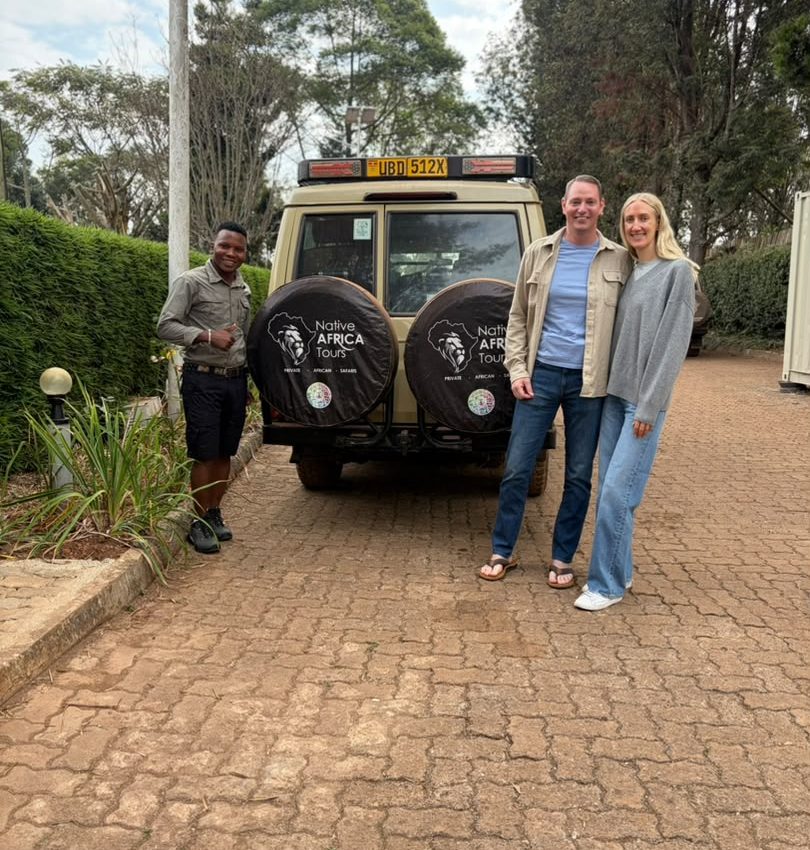
Can I combine gorilla habituation with a Uganda safari? Yes, and combining these experiences can be one of the best ways to experience Uganda beyond gorilla trekking alone. A gorilla habituation experience in the Rushaga sector of Bwindi Impenetrable National Park can be combined with Uganda’s major wildlife destinations, including Queen Elizabeth National Park, Kibale Forest and, for longer journeys, Murchison Falls National Park. This allows travelers to spend extended time with mountain gorillas while also experiencing chimpanzees, savannah wildlife, boat safaris and Uganda’s diverse landscapes.
This combination works particularly well because Uganda offers very different wildlife environments within one country. You can begin your journey in the savannah looking for elephants, lions and buffaloes, continue into the tropical forests of Kibale for chimpanzees, and eventually reach the mountainous rainforest of Bwindi for an extended encounter with mountain gorillas. The result is much more than a gorilla trip; it becomes a complete Uganda wildlife and primate safari.
Uganda Wildlife Authority describes gorilla trekking in Uganda as an activity taking place in Bwindi Impenetrable National Park and Mgahinga Gorilla National Park. Standard treks can take between two and seven hours depending on the location of the gorilla family, with up to one hour of observation once the family is located. Gorilla habituation is a unique experience, designed around spending considerably more time with gorillas as part of the habituation process.
For travelers planning a combined trip, however, the most important thing is not simply adding as many parks as possible. The route needs to make sense. Your gorilla habituation date should become one of the main anchors of the itinerary, with accommodation and transportation arranged around the Rushaga sector.
Why Combine Gorilla Habituation with a Uganda Safari?
A Gorilla Habituation Experience is already a major wildlife experience on its own, but combining it with other Ugandan destinations gives you a much broader understanding of the country’s landscapes and wildlife.
Imagine starting your journey with several days in the savannah. You might be watching elephants cross the road during a game drive, searching for lions in Queen Elizabeth National Park, or taking a boat ride along the Kazinga Channel. As the journey continues south, the landscape changes. Open grasslands gradually give way to rolling hills, cultivated countryside, and finally the dense rainforest of Bwindi.
Then the nature of the safari changes completely.
Instead of sitting in a safari vehicle looking across open plains, you are walking through thick vegetation, following the signs of a gorilla family and spending extended time in the forest with the habituation team. That contrast is one reason a gorilla habituation and Uganda safaris work so well.
Bwindi itself is a particularly important destination for this type of trip. UWA describes it as a biologically diverse rainforest in southwestern Uganda, with steep ridges and deep valleys and an elevation ranging from about 1,160 to 2,607 metres. The park covers approximately 321 square kilometres and can be accessed through several routes, including the southern approach to Rushaga and Nkuringo from the Kisoro area.
The safari therefore becomes a journey through several very different ecosystems rather than a collection of unrelated activities.
Where does gorilla habituation fit into a Uganda safari?
The first thing to understand when planning a Gorilla Habituation safari in Uganda is that you need to plan specifically for Rushaga in southern Bwindi.
Bwindi has four main gorilla trekking sectors: Buhoma, Ruhija, Rushaga, and Nkuringo, but you should not assume that an ordinary gorilla trekking itinerary in any of these sectors can simply be converted into a gorilla habituation itinerary. Your accommodation, transfer arrangements, and permit need to correspond with the habituation experience you are actually undertaking.
This distinction becomes particularly important when travelers book accommodation independently. A lodge may advertise itself as being “in Bwindi,” but that does not necessarily mean it is conveniently located for a very early morning departure from Rushaga.
UWA’s current Bwindi information confirms that the southern sectors of Nkuringo and Rushaga are accessed from Kisoro, including scheduled flights from Entebbe to Kisoro Airstrip, followed by a 4WD transfer to the lodge. UWA also notes that the road from Kisoro toward the southern sectors is winding and that a 4WD vehicle is recommended.
This is why a safari operator should look at the entire route rather than simply booking the cheapest available accommodation.
What are the best safari combinations with gorilla habituation?
There is no single itinerary that is perfect for everyone. A traveler interested mainly in primates may prefer Kibale, while someone looking for a classic African wildlife experience may prioritize Queen Elizabeth National Park.
The table below gives a useful starting point.
Gorilla Habituation Safari Combinations
| Safari Combination | Main Experiences | Best For | Suggested Duration |
|---|---|---|---|
| Gorilla Habituation + Queen Elizabeth | Gorillas, game drives, Kazinga Channel | First-time Uganda visitors | 4–5 days |
| Gorilla Habituation + Kibale | Gorillas and chimpanzees | Primate enthusiasts | 4–5 days |
| Gorilla Habituation + Queen Elizabeth + Kibale | Gorillas, chimpanzees and savannah wildlife | A balanced Uganda safari | 6–7 days |
| Gorilla Habituation + Murchison Falls + Kibale + Queen Elizabeth | Major wildlife parks, chimpanzees and gorillas | Travelers with more time | 9–12+ days |
| Gorilla Habituation + cultural experiences | Gorillas, forest and local culture | Travelers wanting a deeper local experience | 3–5+ days |
These are planning ranges rather than fixed packages. The appropriate duration depends on where you start, where you finish, your flights, accommodation, and how much time you want to spend on the road.
For example, adding Queen Elizabeth to a Gorilla Habituation trip is relatively logical for a southwestern Uganda itinerary. Adding Murchison Falls creates a much larger circuit and should only be considered when you have enough days to make the additional driving worthwhile.
Can I combine gorilla habituation with Queen Elizabeth National Park?
Yes. Gorilla habituation and Queen Elizabeth National Park are one of the most practical combinations for travelers who want both mountain gorillas and traditional African wildlife.
Queen Elizabeth gives you a completely different safari environment. Instead of hiking through rainforest, you can spend time on game drives and, depending on your itinerary and current activity availability, explore the Kazinga Channel by boat.
The Ishasha sector can make the combination even more interesting. UWA describes the route through southern Queen Elizabeth and Ishasha as one approach toward Bwindi, and notes the possibility of looking for the area’s famous tree-climbing lions. UWA also states that the route from Ishasha toward Buhoma is primarily a dirt road and recommends a 4WD vehicle.
For a traveler, this means that Queen Elizabeth does not simply have to be an additional park added to the itinerary. It can form part of the journey toward southwestern Uganda.
A typical itinerary might therefore spend time in Queen Elizabeth before continuing south toward Bwindi. After the wildlife portion of the trip, you arrive in the forest environment where the focus shifts to the Gorilla Habituation Experience.
This gives the safari a natural progression rather than making every day feel like the same activity.
Can I combine gorilla habituation with Kibale and chimpanzee tracking?
Yes, and this is an especially good option for travelers who are passionate about primates.
Kibale National Park is widely associated with chimpanzee experiences, while Bwindi provides the opportunity to encounter mountain gorillas. Combining the two creates a safari focused on two of Africa’s most fascinating great apes.
The experiences are also very different.
Chimpanzee tracking takes place in the forest environment of Kibale, while Gorilla Habituation takes you into the mountainous rainforest of Bwindi. The landscapes, tracking conditions, and behavior of the animals are different, so combining them does not simply feel like repeating the same activity twice.
For a traveler interested in primates, this can be one of the strongest combinations available in Uganda.
You can also read our detailed guide to Gorilla Habituation and Chimpanzee Habituation to understand how the two experiences compare.
How many days do I need for a gorilla habituation safari?
The answer depends heavily on how many destinations you want to include.
If gorilla habituation is your major priority and you want to add only one other destination, four to five days can create a workable itinerary. If you want to include Kibale and Queen Elizabeth as well, six to seven days gives you considerably more flexibility.
Once you start adding Murchison Falls or other northern destinations, you should think in terms of a longer Uganda safari rather than a short gorilla extension.
The important consideration is not simply the number of days spent inside national parks. It is the amount of time spent traveling between them.
Uganda’s destinations can be geographically spread out, and southwestern Uganda includes winding and mountainous roads. UWA’s own access information illustrates this clearly, with routes to Bwindi involving long road sections and recommending 4WD vehicles on several approaches.
Trying to squeeze too many parks into a short itinerary can therefore produce a trip where you spend more time in the vehicle than actually enjoying the destinations.
For that reason, I would rather recommend a well-paced six-day itinerary covering three powerful experiences than a four-day itinerary that tries to include five destinations.
Example: 5-Day Gorilla Habituation and Wildlife Safari
A five-day itinerary can work well if you want a combination of wildlife and gorillas without making the trip excessively long.
Day 1: Travel from Entebbe or Kampala toward Queen Elizabeth National Park, with wildlife viewing depending on the arrival time and route.
Day 2: Game drive in Queen Elizabeth National Park and, where suitable, a boat experience on the Kazinga Channel before continuing toward the Bwindi region.
Day 3: Travel toward Rushaga and settle into your accommodation near the Gorilla Habituation starting point.
Day 4: Full Gorilla Habituation Experience in Rushaga.
Day 5: Depart Bwindi toward your next destination or Entebbe/Kampala, depending on your flight schedule.
The actual order can change depending on where you begin and end the safari. A good operator should not force every traveler into the same sequence.
Example: 7-Day Gorilla Habituation, Chimpanzee and Wildlife Safari
With seven days, the itinerary becomes much more interesting because you can introduce Kibale without making the trip feel excessively rushed.
Day 1: Entebbe/Kampala to Kibale.
Day 2: Chimpanzee tracking or another Kibale Forest experience.
Day 3: Travel from Kibale toward Queen Elizabeth National Park with wildlife viewing depending on the route.
Day 4: Game drive and/or Kazinga Channel boat experience.
Day 5: Continue toward the Bwindi region and overnight near Rushaga.
Day 6: Gorilla Habituation Experience.
Day 7: Departure from the Bwindi region toward your next destination or Entebbe/Kampala.
This kind of itinerary is particularly attractive to travelers who want to see chimpanzees, mountain gorillas, and classic African wildlife during one Uganda trip.
Should Gorilla Habituation Be at the Beginning or End of the Safari?
There is no universal answer, but I recommend making the gorilla habituation date the central point around which the rest of the safari is arranged.
Some travelers prefer to start with gorillas because the experience is the main purpose of their trip. If that is the case, you can travel toward Rushaga shortly after arrival, complete the habituation experience, and then continue to Queen Elizabeth, Kibale, or another destination.
Other travelers prefer to build toward the gorillas. In that case, you might start with wildlife and chimpanzees before finishing with the Gorilla Habituation Experience.
Both approaches can work.
What I would avoid is placing the habituation experience immediately after an unnecessarily long transfer. You want to arrive near Rushaga with enough time to rest and prepare rather than spending the previous day driving for hours and then waking up extremely early for the forest experience.
This is one reason the night before gorilla habituation is strategically important.
Why is the night before gorilla habituation so important?
Gorilla habituation is not an activity you should schedule casually between two long road transfers.
You need to be in the right part of Bwindi, near the Rushaga sector, before the experience. That means your accommodation should be selected based not only on its price or comfort but also on its location and the morning logistics.
Uganda Wildlife Authority’s information confirms that the southern Bwindi sectors are reached through the Kisoro area and that travelers arriving by air still require a 4WD transfer from Kisoro Airstrip to their lodge.
This is particularly important for international travelers who may look at a map and assume that any lodge advertised as “Bwindi” will be equally convenient.
It is not.
A good safari itinerary considers where you sleep, where you start the trek, how you reach the trailhead, and how long the transfer takes, rather than simply listing destinations.
Is Gorilla Habituation Harder Than the Rest of a Uganda Safari?
For many travelers, yes, it can be one of the more physically demanding parts of the itinerary.
A game drive in Queen Elizabeth, for example, involves sitting in a safari vehicle for most of the activity. Gorilla habituation involves walking through forest terrain, which can include steep sections, muddy ground, thick vegetation, and uneven surfaces.
Uganda Wildlife Authority states that standard gorilla trekking requires moderate fitness and that treks can last from two to seven hours.
Gorilla Habituation should therefore be approached as a serious forest activity rather than simply another sightseeing stop.
This does not mean you need to be exceptionally athletic. Preparation, appropriate clothing, good footwear, hydration, and pacing can make a significant difference. A porter can also carry your backpack and photography equipment, allowing you to concentrate on the forest experience.
You can learn more in our guide to Is Gorilla Habituation Harder Than Normal Gorilla Trekking?
And if you are wondering whether carrying your own equipment is worthwhile, our article Can I Hire a Porter for Gorilla Habituation in Uganda? Explains how porter support can make the experience more comfortable.
What Should I Do After Gorilla Habituation?
This depends on your onward route, but I would avoid automatically scheduling another demanding activity immediately after the habituation experience.
After several hours in the forest, many travelers appreciate returning to their lodge, having lunch, and relaxing. You can then continue with the safari the following day.
This is particularly useful if you are traveling with older travelers, people who are not accustomed to hiking, or photographers carrying significant equipment.
If your schedule is tight, you may begin an onward transfer after the experience, but the exact feasibility depends on where you are going, road conditions, the timing of the habituation experience, and your accommodation location.
The better principle is simple: build the itinerary around the experience rather than forcing the experience into an unrealistic schedule.
Can I add cultural experiences to a gorilla habituation safari?
Yes, and cultural experiences can add an important human dimension to the safari.
Bwindi is surrounded by communities whose livelihoods are connected in different ways to the landscape and tourism. Depending on the area and activities available during your visit, you may include community walks, cultural performances, craft experiences, or other local encounters.
Uganda Wildlife Authority’s Bwindi information also highlights cultural experiences involving communities around areas such as Buhoma and Nkuringo.
The important thing is to treat these experiences as more than entertainment added to a checklist. A good cultural experience allows travelers to understand the people, history, and livelihoods of the communities living around the protected area.
This can be particularly meaningful after spending time inside the forest because it gives you another perspective on the relationship between conservation and surrounding communities.
Can I combine gorilla habituation with Murchison Falls National Park?
Yes, but this is where trip length becomes particularly important.
Murchison Falls National Park is in northern Uganda, while Bwindi is in the southwest. Combining the two gives you an impressive cross-country safari, but it also creates considerably more road travel.
If you have nine to twelve days or more, the combination becomes much more realistic. You can experience Murchison Falls and its wildlife, continue toward Kibale for chimpanzees, travel through Queen Elizabeth, and eventually reach Bwindi for gorilla habituation.
That produces a broad Uganda safari covering several major ecosystems.
If you only have four or five days, however, I would not recommend trying to add Murchison Falls simply because it is another famous park. The additional travel can take away from the quality of the safari.
This is where itinerary design matters more than the number of destinations on the itinerary.
Which Gorilla Habituation Safari Combination Is Best for You?
The best combination depends on what you want from Uganda.
| If Your Priority Is… | Recommended Combination | Why |
|---|---|---|
| Gorillas + classic wildlife | Gorilla Habituation + Queen Elizabeth | Good balance of forest and savannah |
| Gorillas + chimpanzees | Gorilla Habituation + Kibale | Strong primate-focused trip |
| Gorillas + chimps + wildlife | Gorilla Habituation + Kibale + Queen Elizabeth | Most balanced short-to-medium safari |
| A comprehensive Uganda safari | Murchison + Kibale + Queen Elizabeth + Gorilla Habituation | Covers several major ecosystems |
| A shorter trip | Gorilla Habituation + one nearby/compatible destination | Less time spent driving |
| A slower, more immersive trip | Gorilla Habituation + wildlife + cultural experience | More time to enjoy each destination |
There is no prize for visiting the largest number of parks. If the goal is to have a memorable safari, quality of routing is more important than quantity of destinations.
What should I book first: gorilla habituation or the safari?
If gorilla habituation is the main reason for your trip, I recommend starting with the habituation date.
Once the date is confirmed, you can build the rest of the surrounding safari.
This is especially important because the habituation experience is tied to a particular location and requires the appropriate permit. Accommodation near Rushaga then becomes part of the logistical planning, followed by transportation and the destinations before and after Bwindi.
You can read our guide to How Far in Advance Should I Book Gorilla Habituation? for a more detailed explanation of the booking process.
It is also worth remembering that permit prices and regulations can change. When planning a trip for a future travel date, the applicable UWA tariff should be checked rather than relying on an older price published online.
What does a complete gorilla habituation and Uganda safari include?
A combined safari can include considerably more than the gorilla experience itself.
Depending on your itinerary, it may include airport transfers, private 4WD transportation, accommodation, meals according to the lodge plan, game drives, chimpanzee tracking, boat safaris, cultural experiences, and the Gorilla Habituation permit.
The exact inclusions vary from one itinerary to another, so travelers should always check the quotation carefully.
| Safari Component | What It Means for Your Trip |
|---|---|
| Gorilla Habituation permit | Allows you to participate in the designated habituation experience |
| Accommodation | Overnight stays positioned according to the route |
| 4WD safari vehicle | Useful for Uganda’s varied roads and park access |
| Driver/guide | Handles navigation, wildlife interpretation and safari logistics |
| Wildlife activities | Game drives and other activities depending on the parks visited |
| Chimpanzee experience | Can be added through Kibale where suitable |
| Boat safari | Can be added in destinations such as Queen Elizabeth |
| Porter | Optional support during the forest experience |
| Cultural activities | Optional community and cultural experiences |
| Airport transfers | Transfers at the beginning or end of the trip |
The table is useful when comparing quotations because a lower price does not always mean a better safari. One quotation may include more activities, well-positioned accommodation, or private transportation, while another may leave important items outside the headline price.
What is the best route for a gorilla habituation safari?
For a traveler arriving through Entebbe, there are several routes.
A Kibale → Queen Elizabeth → Bwindi route works well for travelers interested in primates and wildlife.
A Queen Elizabeth → Bwindi route is better for a shorter southwestern safari.
A Murchison Falls → Kibale → Queen Elizabeth → Bwindi route is appropriate for travelers with considerably more time who want a broad Uganda experience.
There are also fly-in options. Uganda Wildlife Authority states that scheduled flights from Entebbe to Kisoro Airstrip serve travelers visiting the southern Bwindi sectors, including Rushaga, after which a 4WD transfer is needed to reach the lodge.
The best route therefore depends on your arrival airport, departure airport, number of days, budget, and priorities.
Frequently Asked Questions
Can I combine gorilla habituation with a Uganda safari?
Yes, gorilla habituation can be combined with wildlife and primate destinations such as Queen Elizabeth National Park and Kibale National Park. The itinerary should be planned around the habituation date and the Rushaga sector.
How many days do I need for a gorilla habituation and Uganda safari?
A shorter combination can work in around four to five days, while six to seven days gives you more flexibility to combine gorillas with chimpanzees and wildlife. Longer circuits, including Murchison Falls, are better suited to nine days or more.
Can I combine gorilla habituation with Queen Elizabeth National Park?
Yes. Queen Elizabeth is one of the most practical wildlife additions to a southwestern Uganda Gorilla Habituation itinerary, particularly when the route is planned through the southern part of the park.
Can I combine gorilla habituation with chimpanzee tracking?
Yes, Kibale National Park can be combined with Bwindi for a strong primate-focused safari featuring chimpanzees and mountain gorillas.
Where does gorilla habituation take place?
The Gorilla Habituation Experience in Uganda is conducted in the Rushaga sector of Bwindi Impenetrable National Park. Your accommodation and transportation should therefore be planned specifically around Rushaga.
Should I do gorilla habituation before or after a wildlife safari?
Either can work. If gorillas are the main purpose of your trip, you may want to do habituation early and then continue with wildlife. If you prefer to build toward the highlight, you can place Gorilla Habituation toward the end of the safari.
Is gorilla habituation physically demanding?
It can be. Bwindi has steep ridges, deep valleys, and uneven forest terrain, and gorilla trekking requires moderate fitness according to UWA.
Can I hire a porter during gorilla habituation?
Yes. A porter can carry your belongings and photography equipment and can make the forest experience more comfortable. Porter services are separate from the official gorilla tracking team.
Final Thoughts
Combining gorilla habituation with a Uganda safari is an excellent way to experience the country’s wildlife, forests, and landscapes in one journey. Instead of making Bwindi the only destination, you can combine the habituation experience with Queen Elizabeth National Park for classic wildlife, Kibale for chimpanzees, or a longer circuit that also includes Murchison Falls.
The most important part of planning is to avoid treating gorilla habituation as just another activity that can be inserted between long transfers. The experience takes place in the Rushaga sector, and your accommodation, transportation, and preceding day’s route should all be planned around it.
A well-designed itinerary should also give you enough time to appreciate the destinations between transfers. Uganda’s landscapes change dramatically as you move from savannah to forest, and that transition is part of what makes a combined safari so memorable.
For travelers who want mountain gorillas, chimpanzees, African wildlife, and the experience of exploring Uganda beyond a single national park, a Gorilla Habituation and Uganda safari can be one of the most rewarding ways to discover the country.