
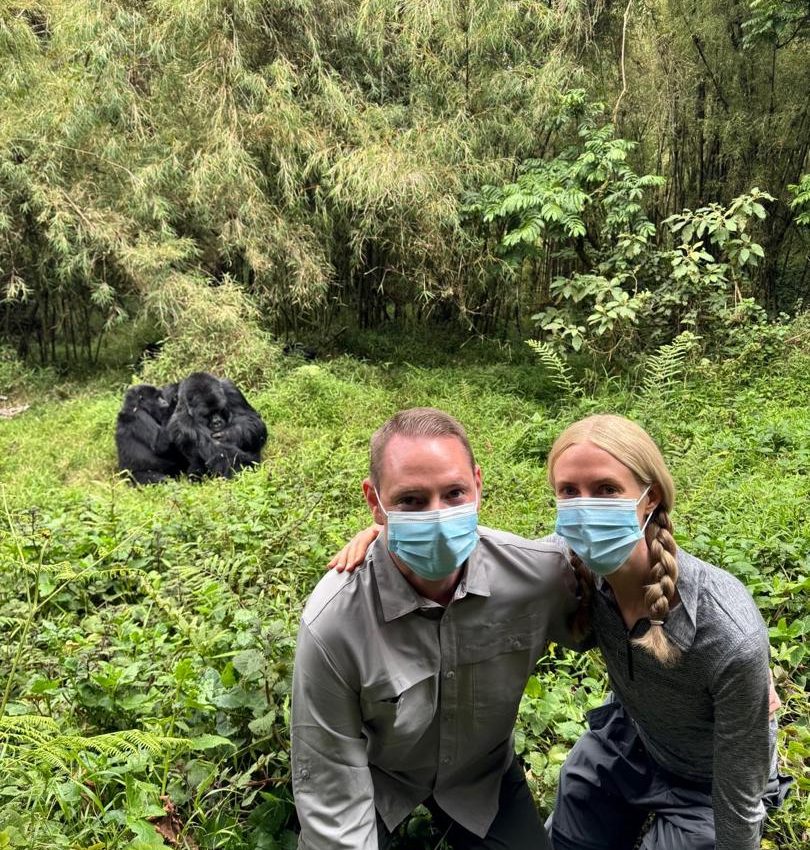
Is It Physically Difficult to Trek Gorillas Twice?
Is it physically difficult to trek gorillas twice? Yes, two gorilla treks can be physically demanding, but for many reasonably fit travelers, completing two gorilla treks in Uganda is entirely possible. The difficulty depends on several factors, including the terrain, how far the gorilla family has moved, weather conditions, your fitness level, and whether you allow enough time to recover between the two trekking days.
Uganda Wildlife Authority (UWA) describes gorilla trekking as an activity requiring moderate fitness, with tracking potentially lasting approximately 2 to 7 hours depending on the circumstances of the day. Once the gorillas are located, standard gorilla trekking provides a maximum of one hour with the gorilla family.
That means trekking gorillas twice does not necessarily mean doing two identical hikes or simply doubling the physical effort of one trek. Your first trek could be relatively short, while the second could involve several hours of hiking through steep terrain. The opposite can also happen.
For travelers considering two gorilla trekking experiences in Uganda, the most important question is therefore not simply whether two treks are “too difficult.” It is how the two trekking days are scheduled and how well the itinerary matches your physical ability.
At Gorilla Uganda, we help travelers plan gorilla experiences around their travel dates, preferred trekking sector, accommodation and overall safari itinerary. If you are considering trekking twice, careful planning can make a significant difference to how comfortable the experience feels.
Quick Answer: Can You Trek Gorillas Twice?
Yes, you can trek gorillas twice in Uganda, provided you have the required permits for both trekking days and meet the applicable park requirements. The physical difficulty of the two treks will depend largely on the conditions encountered on each day. UWA explains that gorilla tracking requires moderate fitness and can take approximately 2 to 7 hours.
This variation is important. Mountain gorillas are wild animals. They are not waiting at a fixed viewing point for visitors to arrive. The tracking team follows the gorilla family through the forest, and the distance you walk depends partly on where the group is located and how it has moved. Consequently, your first trek might take three hours while your second takes six hours. You could also have a short first trek followed by another short trek.
There is simply no way to guarantee the exact physical difficulty of either day in advance. For this reason, travelers planning two treks should prepare for the possibility that either day could be the more demanding one.
Why Is Gorilla Trekking Physically Difficult?
Gorilla trekking is not technical mountaineering. You do not need climbing ropes, specialist mountaineering experience or advanced hiking skills. However, it is also not an ordinary nature walk.
Gorilla trekking takes place in mountainous rainforest environments, particularly in Bwindi Impenetrable National Park. UWA identifies Buhoma, Ruhija, Rushaga and Nkuringo as the four main trekking sectors of Bwindi, while gorilla trekking also takes place in Mgahinga Gorilla National Park.
The forest environment is what makes the experience physically demanding. You may walk uphill for extended periods, descend steep slopes, cross uneven ground and move through vegetation. The trail may include roots, rocks, mud and slippery sections, especially after rainfall. This means that gorilla trekking uses more than your cardiovascular system. Your legs, hips, ankles and core are constantly working to keep you balanced. When you do this once, you may feel tired afterward. When you do it again the following day, you may still have some fatigue from the previous trek. That is the main reason the second trek can feel more difficult.
Is the Second Gorilla Trek Harder Than the First?
Not necessarily. This is probably the most important thing to understand if you are considering trekking gorillas twice. The second trek can feel harder because your body may still be recovering from the first one. Your thighs may be sore, your calves may feel tired and your feet may be uncomfortable after several hours in trekking boots.
However, the actual second trek might be considerably shorter. Suppose your first gorilla trek takes five hours through steep terrain. You return to your lodge tired and spend the evening recovering. The following day, the gorilla family you are assigned to happens to be relatively close to the starting point. You may reach the group after two hours. Even though your legs are slightly tired, the second trek could involve less total physical effort than the first.
The opposite can happen as well. You might have an easy first trek and then spend six or seven hours walking on the second day. This unpredictability is part of gorilla trekking. UWA’s published guidance gives a broad tracking range of approximately two to seven hours rather than promising a fixed trek duration.
So rather than thinking, “The second trek will definitely be harder,” it is more accurate to think: “The second trek may feel harder because of accumulated fatigue, but the actual difficulty depends on the conditions of that day’s trek.”
What Makes the Second Trek More Physically Demanding?
There are several reasons why someone who completes one trek comfortably may find the second day more tiring.
The first is muscle fatigue. Walking through steep terrain for several hours can place considerable demand on the quadriceps, hamstrings, calves and glutes. Even travelers who exercise regularly may experience some muscle soreness afterward.
The second factor is recovery time. If your two gorilla treks are scheduled on consecutive days, your body has only one evening to recover. That may be sufficient for a fit traveler, but it may not be enough for someone who is unaccustomed to hiking.
The third factor is the terrain on the second day. A second trek involving steep climbs and slippery descents may be more physically demanding than a first trek on easier ground.
Finally, there is mental fatigue. A long trek requires concentration. You are constantly watching your footing, adjusting your balance and following the ranger through dense vegetation. After doing this for several hours on one day, you may feel mentally tired as well as physically tired.
How Difficult Is the Terrain in Bwindi?
Bwindi Impenetrable National Park is a mountainous rainforest, and its terrain is one of the main reasons gorilla trekking requires moderate fitness. The forest does not resemble a flat safari savannah where visitors can walk along a relatively even track. Instead, you can encounter steep slopes, narrow trails, exposed roots, dense vegetation, wet ground and muddy sections.
The terrain can also change during the same trek. You might begin by walking along a relatively gentle trail before reaching a much steeper section as the trackers follow the gorillas deeper into the forest. This is why preparation should focus on walking endurance and leg strength, rather than simply being able to walk a few kilometers on flat ground.
If you want a broader introduction to the experience before deciding whether two treks are suitable for you, our guide to Gorilla Trekking in Uganda provides an overview of where gorilla trekking takes place and what visitors can expect.
Does Rain Make the Second Trek More Difficult?
It can. Bwindi is a rainforest, so rainfall is a normal part of the environment rather than an unusual event. When the forest becomes wet, trails can become muddy and slippery. This can make walking slower and require greater concentration. A slippery descent can be particularly tiring because you need to control every step. You may also use your arms and legs more actively to maintain balance.
If your first trek takes place in wet conditions, you may return to your lodge feeling more tired than you expected. That is another reason why the recovery period between two treks matters. Good footwear is essential, and a waterproof jacket is highly recommended. It is also useful to keep electronics and other sensitive items protected from rain.
Can You Trek Gorillas on Consecutive Days?
Yes, it is possible to arrange gorilla trekking on consecutive days. This arrangement can work well for travelers with limited time, especially if they are physically active and accustomed to hiking. However, consecutive trekking is not necessarily the most comfortable option for everyone. If your first trek is long, you may wake up the following morning with stiff legs. You can still complete the second trek, but it may require greater effort. For this reason, travelers who are unsure about their fitness often benefit from building a recovery day into the itinerary.
Is It Better to Have a Rest Day Between Two Gorilla Treks?
For many travelers, yes. A more relaxed arrangement would be:
Day 1 – First Gorilla Trek
Day 2 – Recovery Day
Day 3 – Second Gorilla Trek
The recovery day gives your muscles more time to recover and gives you the opportunity to rest your feet. It does not necessarily mean sitting in your room all day. You could enjoy a relaxed cultural experience, spend time at the lodge, take a scenic drive or simply enjoy the surrounding area without undertaking another strenuous hike. This option is particularly useful for travelers who do not regularly participate in long-distance hiking. It also makes the overall safari less rushed.
Who Should Consider Two Consecutive Gorilla Treks?
A traveler who regularly hikes, walks long distances or participates in other physically active activities may be comfortable with two consecutive trekking days. Someone who exercises regularly but does not hike may also manage two days successfully after appropriate preparation. The situation is different for someone who rarely exercises. If your normal routine involves very little walking, two demanding forest treks on consecutive days may be tiring. That does not automatically mean you should abandon the idea of trekking twice. Instead, you can prepare for the trip and structure the itinerary more carefully. A rest day, porter, walking stick, appropriate footwear and some pre-trip training can make the experience substantially more comfortable.
How Fit Do You Need to Be to Trek Gorillas Twice?
You do not need to be an athlete. You do, however, need to be reasonably comfortable with prolonged physical activity. UWA specifically describes gorilla trekking as requiring moderate fitness. The organization’s current gorilla tracking information also states that the activity may last approximately two to seven hours. A useful way to think about your fitness is not to ask whether you can run a certain distance. Ask yourself whether you can comfortably spend several hours walking, including uphill and downhill sections, without becoming completely exhausted. If you can already hike for several hours, you have a useful foundation. If you rarely walk for long periods, begin preparing before your trip.
How to Train for Two Gorilla Treks
The best preparation is surprisingly simple. Start walking regularly several weeks before your safari. Gradually increase the length of your walks instead of suddenly attempting a very long hike shortly before departure. If possible, include hills. Walking uphill helps prepare your cardiovascular system and leg muscles for the climbs you may encounter in Bwindi. Stairs and incline treadmill walking can also be useful if you live in a flat area. It is equally important to prepare for downhill movement.
Descending steep terrain can put considerable strain on your thighs and knees, so controlled step-down exercises, lunges and other basic leg-strengthening movements can be useful. You should also train in the shoes you intend to wear during the trek. Do not arrive in Uganda with brand-new boots that have never been worn for an extended walk. Blisters can turn an otherwise enjoyable second trek into a very uncomfortable experience.
Should You Hire a Porter for Two Gorilla Treks?
Yes, especially if you are concerned about physical fatigue. A porter can carry your daypack and some of your personal belongings while you trek. That might include your water, rain jacket, camera equipment and other items you would otherwise have to carry yourself. The difference can be noticeable during a long climb. A lighter backpack means less strain on your shoulders and back and allows you to concentrate more on walking and enjoying the forest.
A porter can also provide support on difficult sections of the trail. Beyond the practical benefit, hiring a porter also provides an opportunity to directly support people from communities around the park. For travelers planning two treks, we generally consider porter assistance one of the simplest ways to reduce unnecessary physical strain.
Should You Use a Walking Stick?
A walking stick can also be helpful. It provides an additional point of contact with the ground and can improve your stability on steep or slippery sections. This is particularly useful during descents, where maintaining balance can become more difficult. You do not need to be an experienced hiker to use one. Your trekking team can help you understand how to use it effectively. When combined with proper footwear and a porter, a walking stick can make the physical experience considerably more comfortable.
What Should You Eat After the First Gorilla Trek?
Recovery begins as soon as you return from the forest. After several hours of physical activity, your body needs food and fluids. A proper meal containing carbohydrates and protein can help replenish energy and support normal muscle recovery. Hydration is equally important. Drink enough water after the trek and continue hydrating during the evening. This is especially important if the weather was warm or you were sweating heavily. Then prioritize sleep. If you are trekking again the following morning, staying awake late at night after your first trek is probably not the best way to prepare for the second day.
What Should You Wear When Trekking Gorillas Twice?
Good clothing can make two trekking days much easier. Wear comfortable, sturdy hiking boots with good grip. Long trousers and a long-sleeved shirt provide useful protection from vegetation, mud and insects. A lightweight waterproof jacket should be part of your daypack because rainforest weather can change quickly. Some travelers also prefer lightweight gardening or trekking gloves because they can be useful when moving through vegetation or holding onto branches on steep sections. Most importantly, do not overpack. A heavy backpack becomes increasingly noticeable after several hours of hiking, and even more so when you are preparing for a second trek.
Is Gorilla Trekking Twice Suitable for Older Travelers?
Age by itself does not determine whether someone can complete two gorilla treks. Physical condition and mobility are much more important. An older traveler who regularly walks and hikes may be better prepared for two trekking days than a younger person who rarely exercises. However, older travelers may want to be more conservative when planning recovery time. Instead of scheduling two demanding treks on consecutive days, a trek → rest → trek itinerary may provide a more comfortable experience. If you have concerns about whether your body can safely handle several hours of hiking, particularly if you have an existing medical condition or significant mobility limitations, discuss the activity with your healthcare professional before traveling.
What If You Are Not Very Fit?
Being less fit does not necessarily mean you cannot experience Uganda’s mountain gorillas. It does mean you should plan carefully. If you already know that a single long hike can leave you exhausted, scheduling another trek immediately the next morning may not be ideal. Instead, consider allowing a recovery day. You should also tell your tour operator about your physical limitations before the itinerary is finalized. This allows the trip to be designed around your circumstances rather than trying to solve problems after you arrive.
Hiring a porter is particularly useful in this situation. The objective of gorilla trekking is not to finish the trail faster than everyone else. The objective is to safely reach the gorillas and enjoy the experience.
Does the Gorilla Sector Affect How Difficult the Trek Is?
The sector can influence the overall trekking environment, but it is important not to assume that one sector is always easy and another is always difficult. Bwindi has four main trekking sectors: Buhoma, Ruhija, Rushaga and Nkuringo. Mgahinga Gorilla National Park is another Ugandan destination for gorilla trekking. The actual difficulty on the day depends heavily on where the assigned gorilla family is located.
For example, a traveler might have a relatively short trek in one sector on one day and a much longer trek in the same sector on another day. This is why claims that a particular sector guarantees an easy trek should be treated cautiously. What can be compared more reliably is the geographical position, access route, accommodation and type of gorilla experience available.
For example, Rushaga is one of the main sectors of Bwindi and is particularly important for travelers interested in Gorilla Habituation.
If you are traveling from Rwanda, the location of Rushaga in southern Bwindi can also make it useful for a Rwanda–Uganda itinerary. Our guide explaining why Rushaga makes sense for Rwanda and Uganda gorilla trips goes into the routing in greater detail.
Is Rushaga Easier Than Buhoma?
There is no reliable rule saying that Rushaga is easier than Buhoma, or that Buhoma is easier than Rushaga. Both are gorilla trekking sectors, and the difficulty of your particular trek depends largely on the gorilla family’s location and the terrain encountered that day. Rushaga’s more important distinction is geographical and experiential. It is located in southern Bwindi and is particularly associated with the Gorilla Habituation Experience. Buhoma is in northern Bwindi, while Ruhija is in eastern Bwindi and Nkuringo is also in southern Bwindi. Therefore, if you are planning two standard gorilla treks, you should choose sectors based on the overall itinerary rather than assuming one guarantees an easier hike.
Could Your Second Trek Actually Be Easier?
Absolutely. There are two reasons. The first is that the gorilla family may be closer. The second is that you know what to expect. Your first trek teaches you how your body responds to the forest. You discover how steep the terrain feels, how quickly you need to walk, what clothing works best, how much water you actually need and how useful a walking stick can be. By the second day, you are no longer experiencing everything for the first time. You know how to pace yourself. You know when to stop for a short rest. You know how to step carefully through muddy sections. You may therefore feel more confident during the second trek, even if you still have some muscle soreness.
Why Some Travelers Choose to Trek Gorillas Twice
There is more to doing two gorilla treks than simply wanting to repeat the same activity. Every gorilla encounter is different. You may be assigned to a different gorilla family, encounter different individuals, experience different weather or walk through a completely different part of the forest. Gorillas also behave differently from one day to another. One family might be resting when you arrive. Another might be feeding, climbing, playing or moving through the vegetation. For wildlife enthusiasts and photographers, having a second opportunity can therefore be particularly appealing.
It also gives travelers more time to appreciate the forest itself. The first trek is often dominated by anticipation: Where are the gorillas? How long will we walk? When will we find them? During a second trek, you may be able to pay more attention to the smaller details—the birds, vegetation, sounds, insects and changing landscape around you.
Is Two Gorilla Treks Better Than One?
There is no universal answer because travelers have different objectives. If your priority is simply to see mountain gorillas, one standard trek provides the opportunity to experience the animals in their natural habitat. If you are particularly interested in gorilla behavior, photography or experiencing different gorilla families, two trekking days can provide additional opportunities. Another option is to consider the Gorilla Habituation Experience, particularly if your real reason for wanting to trek twice is that you want more time with the gorillas.
UWA’s current guidelines distinguish normal gorilla tracking from habituation. Standard tracking allows a maximum of one hour of viewing, while the Gorilla Habituation Experience allows up to four hours of viewing once the gorillas have been located.
Our detailed article on the difference between Gorilla Habituation and Gorilla Trekking explains how the two experiences differ and which type of traveler each may suit.
Is Gorilla Habituation More Physically Demanding Than Two Standard Treks?
It can be, although the experiences should not be compared purely by the number of hours spent with the gorillas. The Gorilla Habituation Experience involves accompanying researchers and habituators with a gorilla group that is still becoming accustomed to human presence. UWA’s current guidelines allow up to four hours of viewing time during habituation, compared with one hour for normal tracking.
That does not mean you walk continuously for four hours. The four-hour figure refers to the maximum time spent viewing the gorillas once they have been located. The overall activity also includes the trek to and from the gorilla group. Because habituation can involve a longer day in the forest, travelers should not automatically assume that it is physically easier than completing two standard treks. If your main concern is physical difficulty, two standard treks separated by a rest day may be a very different experience from one long habituation day.
If your main objective is spending substantially more time observing gorilla behavior, however, habituation may be worth considering. You can also read our guide on whether Gorilla Habituation is harder than normal gorilla trekking before making your decision.
How Long Should You Rest Between Two Gorilla Treks?
There is no mandatory recovery period that applies to every traveler. A fit and experienced hiker may be comfortable trekking on consecutive days. A traveler who is less accustomed to long walks may prefer a full day between the two experiences. The best schedule therefore depends on your personal circumstances. If you have plenty of time, I would generally favor:
First Gorilla Trek → Recovery Day → Second Gorilla Trek over: First Gorilla Trek → Second Gorilla Trek. The extra day gives your body more time to recover and also makes the overall safari less rushed. It can be particularly valuable if the first trek turns out to be a long one.
How to Recover Between Two Gorilla Treks
Your recovery does not need to be complicated. Once you return to your lodge after the first trek, focus on food, fluids, rest and sleep. Eat a proper meal rather than relying only on snacks. Drink enough water. If your muscles feel comfortable, gentle stretching or light movement can help you avoid becoming excessively stiff. Then get a good night’s sleep. Avoid filling the evening with another physically demanding activity. If the next morning involves another gorilla trek, your body should be given the opportunity to recover rather than being pushed into another long walk immediately after returning from the first one.
What Should You Avoid Between Two Gorilla Treks?
If you are doing two treks during the same safari, avoid scheduling another strenuous hiking activity between them unless you are certain your body can handle it. For example, doing a long mountain hike immediately after your first gorilla trek and then attempting another gorilla trek the next morning could create unnecessary fatigue. A recovery day should actually be a recovery day. You can still enjoy your destination, but choose activities that are relatively gentle. This is one of the advantages of working with an experienced safari operator. The itinerary can be arranged so that the most physically demanding activities are not unnecessarily stacked together.
How Should You Prepare for the Second Trek?
The best preparation for the second trek actually begins before the first one. Arrive in Uganda reasonably fit. Wear comfortable trekking boots that you have already broken in. Keep your personal backpack light. Use a porter. Carry enough water. Follow the ranger’s instructions. And pace yourself. Do not try to walk at the fastest person’s pace simply because you are worried about holding up the group. Gorilla trekking is not a race. A steady pace is usually more sustainable than rushing uphill and then becoming exhausted later.
What If I Feel Too Tired During the Second Trek?
Communication is important. If you are struggling, tell your guide. Do not continue silently because you feel embarrassed. Your ranger and trekking team are there to manage the experience and can help you pace yourself appropriately. Likewise, if you experience significant pain, dizziness, difficulty breathing or another concerning symptom, do not assume it is simply normal tiredness. Your safety should always come before completing a planned activity.
How Much Does Trekking Gorillas Twice Cost?
Two gorilla trekking experiences generally mean planning for two separate gorilla permits, because each trekking day is a separate permit-based activity. The cost of the entire safari will then depend on accommodation, transportation, meals, number of travelers, route and other activities. Permit rates can change, so it is important to verify the applicable UWA tariff for your travel period rather than relying on an old article or quotation. UWA currently publishes its conservation tariffs and related gorilla permit guidance through its publications section.
If you are planning two treks, we recommend confirming permit availability and the applicable rates before making non-refundable arrangements. For travelers considering habituation instead, the budgeting is different because the habituation experience uses a separate permit category. You can see our current guide to Gorilla Habituation permit costs in Uganda for more information.
Can You Trek Gorillas Twice in Different Sectors?
Yes, this can be planned where permits and logistics allow it. For example, you could potentially trek in one Bwindi sector on the first day and another sector on the second. This can be attractive to travelers who want to experience different parts of Bwindi. However, changing sectors introduces logistical considerations. The sectors are spread around the forest, and moving from one part of Bwindi to another can require a road transfer.
You therefore need to consider where you sleep after the first trek and how you will reach the second trailhead. For some travelers, staying in one sector and trekking twice there is simpler. For others, experiencing two different sectors is part of the appeal. The decision should be made based on the complete itinerary rather than simply choosing two sectors because they look different on a map.
Can You Trek Gorillas in Uganda and Rwanda on the Same Trip?
Yes. Travelers can combine gorilla trekking in Rwanda’s Volcanoes National Park with gorilla trekking in Uganda’s Bwindi or Mgahinga areas. This creates another possibility for travelers who are interested in two separate gorilla experiences. For example, you could experience a standard gorilla trek in Rwanda and then cross into Uganda for another gorilla trek or a Gorilla Habituation Experience. Our guide on doing gorilla trekking in Rwanda and Uganda on the same trip explains some of the logistical considerations involved in combining the two countries.
What Is the Best Two-Trek Itinerary for Someone Concerned About Fitness?
If physical recovery is your main concern, I would build the itinerary around three important principles: do not rush, stay close to the trailhead before each trek, and leave recovery time between the two most demanding days. A simple structure could look like this:
Day 1: Arrive in the Bwindi area: Travel to your lodge and relax.
Day 2: First Gorilla Trek: Complete your first gorilla trek and return to the lodge for rest.
Day 3: Recovery Day: Enjoy a relaxed day without strenuous hiking.
Day 4: Second Gorilla Trek: Complete your second gorilla trekking experience. This arrangement gives you two opportunities to see the gorillas without forcing your body to perform two long forest hikes on consecutive days. For travelers with limited time, the itinerary can be compressed into consecutive trekking days. The important thing is to match the schedule to your physical condition.
Is Two Days of Gorilla Trekking Too Much?
For many travelers, no. For some travelers, it may be. There is no universal answer because physical ability varies considerably between individuals. Someone who regularly hikes may find two days perfectly manageable. Someone who rarely exercises may find one long trek exhausting. Someone with an existing mobility limitation may require a much more carefully structured itinerary. The important thing is to be honest about your physical condition before booking. A good safari itinerary should be designed around the traveler rather than forcing every traveler into exactly the same schedule.
The Biggest Mistakes Travelers Make When Trekking Gorillas Twice
One common mistake is assuming that the second trek will be exactly like the first. It won’t. The gorillas may be in a different location, the weather may change and the terrain may feel completely different. Another mistake is failing to prepare physically. You do not need to become an elite athlete, but regular walking before your trip can make the experience considerably more comfortable. Carrying too much is another avoidable problem. A camera, water and essential items are enough for most trekkers. A porter can carry the heavier items.
Some travelers also underestimate how important footwear is. A good pair of broken-in hiking boots can make a substantial difference, especially when the trail becomes wet and muddy. Finally, some visitors treat gorilla trekking as a competition. It is not. Your goal is to enjoy one of the world’s most remarkable wildlife experiences safely and responsibly.
Frequently Asked Questions About Trekking Gorillas Twice
Is it physically difficult to trek gorillas twice?
It can be physically demanding, particularly if the two treks are on consecutive days. However, reasonably fit travelers can often manage two treks with appropriate preparation and pacing.
Is the second gorilla trek harder?
Not automatically. Your muscles may still be tired from the first trek, but the second trek could be shorter or involve easier terrain.
Can I trek gorillas two days in a row?
Yes. Consecutive gorilla trekking can be arranged when permits are available. Travelers should be prepared for possible muscle fatigue after the first day.
Should I have a rest day between two gorilla treks?
If you are concerned about fitness or recovery, a rest day is a good idea. A trek–rest–trek itinerary is generally less demanding than two consecutive trekking days.
How many hours does gorilla trekking take?
UWA states that gorilla tracking may take approximately 2 to 7 hours, depending on the circumstances of the trek.
How long do you spend with gorillas?
Normal gorilla tracking allows a maximum of one hour of viewing once the gorillas are located. Gorilla Habituation allows a maximum of four hours of viewing.
Do I need to be very fit to trek gorillas?
No. UWA describes gorilla tracking as requiring moderate fitness. However, travelers should be comfortable with several hours of walking over potentially steep and uneven terrain.
Can older people trek gorillas twice?
Age alone does not determine whether someone can complete two treks. Fitness, mobility and hiking experience are more relevant. Older travelers who are concerned about recovery may prefer a rest day between treks.
Should I hire a porter?
Hiring a porter is particularly useful if you are concerned about fatigue. The porter can carry your backpack and belongings, reducing the amount of weight you personally carry.
Can I trek in two different Bwindi sectors?
It can be arranged depending on permit availability and the logistics of your itinerary. However, changing sectors requires additional planning because Bwindi’s trekking sectors are geographically separated.
Is Rushaga easier than Buhoma?
There is no reliable rule that one sector is always easier. Trekking difficulty depends greatly on where the assigned gorilla family is located and the conditions on the day.
Is Gorilla Habituation harder than two standard gorilla treks?
Not necessarily, because the experiences are structured differently. Habituation allows up to four hours of viewing, compared with one hour for standard tracking, but the overall physical demands depend on the location of the gorillas and the conditions of the day.
Do I need two gorilla permits if I trek twice?
Yes. Two separate gorilla trekking days require two permits.
Can I combine two gorilla treks with a Uganda safari?
Absolutely. Gorilla trekking can be combined with destinations such as Queen Elizabeth National Park, Kibale Forest, Murchison Falls National Park, Lake Bunyonyi and other Ugandan attractions, depending on the length of your trip.
Final Answer: Is It Physically Difficult to Trek Gorillas Twice?
Trekking gorillas twice can be physically demanding, but it is not necessarily too difficult for a reasonably fit traveler. The biggest factor is not simply the fact that you are trekking twice. It is the combination of your fitness level, the length of each trek, the terrain, weather conditions and recovery time between the two experiences. A two-day consecutive itinerary can work well for an active traveler, particularly one who regularly hikes or walks long distances.
If you are less accustomed to strenuous walking, allowing a rest day between the two treks is a sensible way to make the experience more comfortable. The unpredictability of gorilla trekking is also important. UWA’s current guidance gives a broad tracking duration of approximately two to seven hours, which means neither you nor your tour operator can guarantee exactly how long you will spend walking before finding the gorillas.
That uncertainty is not something to fear. It is simply part of following wild mountain gorillas through their natural habitat. The best preparation is therefore straightforward: arrive reasonably fit, wear appropriate footwear, keep your backpack light, use a porter if you need one, carry adequate water, follow your ranger’s instructions and give your body enough time to recover.
And if your reason for wanting to trek twice is that you simply want more time with the gorillas, consider whether two standard treks are actually what you want. Uganda’s Gorilla Habituation Experience offers up to four hours of viewing once the gorillas are located, compared with one hour during normal tracking. You can learn more in our detailed guide to Gorilla Habituation in Uganda, particularly if you are considering Rushaga as part of your itinerary.
Plan Your Two Gorilla Treks in Uganda
If you are thinking about trekking gorillas twice but are unsure how to arrange the two days, Gorilla Uganda can help you build the itinerary around your physical ability, travel dates and interests. We can help you determine whether consecutive trekking days make sense or whether a recovery day would be more appropriate. We can also help with gorilla permits, accommodation, transportation, porters and the wider Uganda safari.
If you are traveling from Rwanda, we can also design a route that crosses into southwestern Uganda and incorporates destinations such as Rushaga, Lake Bunyonyi, Queen Elizabeth National Park or Kibale Forest. The most important thing is to avoid treating two gorilla treks as simply “one trek twice.” Every trek is different, and the itinerary should allow enough flexibility for you to enjoy both experiences.
Contact us now to discuss your travel dates, number of travelers, preferred accommodation level and whether you want two standard gorilla treks or a combination of gorilla trekking and habituation.