
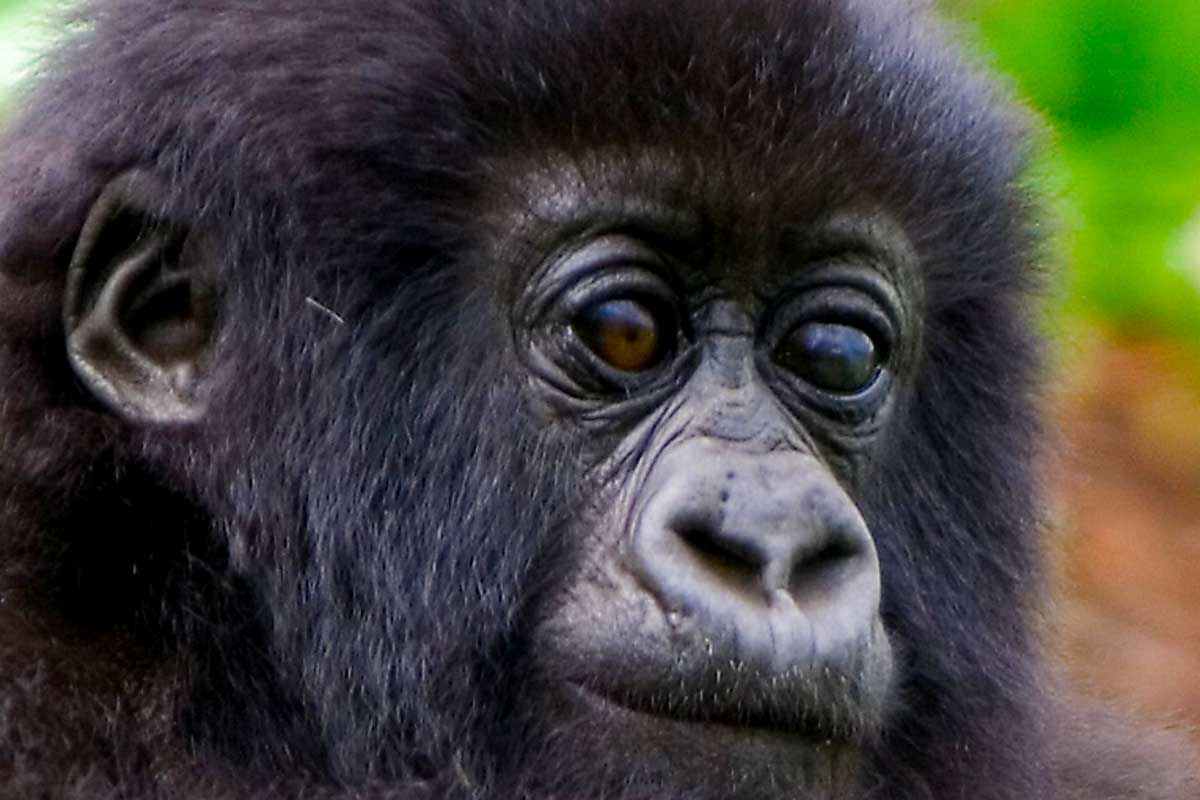
Gorilla Trekking in Uganda: Getting a glimpse of these animals close to their natural territory is one of the most splendid wildlife encounters in Africa. Gorilla trekking is a wildlife experience where visitors can see mountain gorillas in their natural habitat. Trekking is where visitors trek through dense forests for up to six hours to find gorillas. Mountain gorillas in Uganda can be sighted in Bwindi Impenetrable Forest and Mgahinga Gorilla National Park;
Bwindi forests, a large primeval forest in the Albertine Rift, is located in southwestern Uganda within the three districts of Uganda, namely, Kabale, Kisoro and Kanungu. It takes 9 hours to reach the park, and 11 hours depending on the different routes used, by air, it takes 1 hour to charter from Entebbe airport. The forest contains around 160 tree species and 100 ferns. Designated as a national park in 1994, Bwindi is governed by the Uganda Wildlife Authority and is a UNESCO World Heritage Site.

Bwindi is a local word derived from the word Mubwindi, meaning a place full of darkness due to its thickness and dense vegetation. Bwindi is a large forest with extensive interspersed with bamboo and hardwoods. A thick cover of ferns, vines and bamboo hinders direct access on foot. The place full of darkness is one of the most biologically diverse areas on Earth, with half of the world’s population of highly endangered mountain gorillas living within its borders.
Other residents in the forest include red-tailed monkeys, chimpanzees, black and white colobus monkeys,20 frog species, 348 bird species, and 220 butterfly species. The forest is the traditional home of the Batwa people. Gorilla trekking is done all year round, but the months of June, July, and August are the best months to trek the gorillas because the land isn’t slippery.
Bwindi has four gorilla sectors, namely, Ruhija, Buhoma, Rushaga, and Nkuringo. A maximum of 8 people is allowed to trek each gorilla family. Rushaga is the only sector with habituation families in Bwindi Impenetrable National Park.
Mgahinga Gorilla National Park
Mgahinga takes its name from the local word Gahinga, which means the ‘Piles of volcanic stones at the foot of the volcanoes.’ It was gazette as a national park in 1991, and Mgahinga National Park has one habituated gorilla family group. It was a gazette to protect the rare mountain gorillas that inhabit its dense forests. The park has a huge cultural significance, particularly for the indigenous Batwa pygmies. The tribe of hunter-gatherers was the forest’s first people, and their ancient knowledge of its secrets remains unrivaled.
The most striking features in Mgahinga are three conical, extinct volcanoes in the spectacular Virunga range that lies along the border region of Uganda. Mgahinga boasts over 76 mammals, which include leopards, buffalos, bush back, bush pigs, elephants, giant forest hogs, and over 180 bird species. The park is blessed with golden monkeys, which can only be tracked in this park.
Trekking golden monkeys starts with a briefing at the headquarters in the morning, then after the briefing, head to the forest in search of the golden monkeys, which takes about 3 hours, depending on where they are located. Golden monkeys trekking in lower areas don’t leave clear evidence of the previous day’s location as compared to their counterparts, the gorillas, making their trekking difficult. Once they are found, you are given one hour to spend with the monkeys, watching their behaviors, feeding, and jumping from one tree to another while taking photos and videos.
Gorilla Trekking Guidelines in Uganda
- One should be clean and always wash hands before heading to the forest for trekking
- Stand 7 meters away from the mountain gorillas, and when you come into contact with them, don’t look straight into their eyes.
- Always keep your voice low and remember you are in the jungle
- Do not leave your group because you might look harmful to the gorillas
- Only one hour is allowed with the gorillas as you watch them feed, play, and groom each other.
- Respect the number of visitors allowed per day to minimize transmission of diseases
- You are not to trek the gorillas in case you have a contagious disease, as this may spread to the gorillas
- Always keep your eyes on the park habitats, namely, mammals, geckos, reptiles, birds, plus many more.
- You are not allowed to leave any rubbish in the park, so whatever rubbish you come with is supposed to be taken back with you
- As you approach the gorillas, guides, and rangers will inform you about them, plus you will hear the noise within the forest
- You are not allowed to touch or play with the mountain gorillas
- Flash photographs are permitted, so be very careful
- You should keep your voice low after the encounter until 200 meters away from the gorillas
- If you want to ease yourself, ask the ranger to dig a hole 30 cm deep and fill it with soil after use
Other Attractions in Bwindi Impenetrable National Park
Bwindi Forest
Bwindi is covered with lush vegetation of various types and is one of the few areas in Africa covered by tropical forests where lowland and montane zones meet. Bwindi is distinguished by a canopy of plant species such as newtonia, red stinkwood, yellow wood, and strombosia scheffleri. Bwindi Impenetrable National Park is crossed by many minor rivers, such as Munyaga, Ihihizo, Ishasha, and Lvi; these rivers pour their waters into Lake Edward.
Birds
The park boosts bird species, especially the water and forest species of birds. Home to over 350 birds, 14 bird species endemic only to Bwindi National Park and 23 endemics only in Albertine Rift. The birds sighted include Rwenzori batis, tit hylia, strange weaver, regal sunbird, African wood owl, and western green tinker bird, among many others.
Batwa Pygmies
Batwa are the indigenous people of this forest, but they were forcefully driven out of the forest to the outskirts of the park. The Batwa are regarded as keepers of the forests who majorly depend on hunting wild animals and gathering fruits. When visiting Bwindi Impenetrable National Park, one must visit this extremely unique culture.
Further planning resources for Gorilla Trekking in Uganda
Compare the complete safari package library, destination guides, safari experiences. For independent destination and conservation context, consult Uganda Wildlife Authority. Use official sources for general background and confirm current fees, access, schedules, permits and operating rules for the exact travel dates before payment. Internal Gorilla Uganda pages help compare route structure and travel style, while the open inquiry form allows a local specialist to check how the information applies to a private journey.