Gorilla Trekking and Wildebeest Migration Safari
A gorilla trekking and wildebeest migration safari combines two of Africa’s most remarkable wildlife experiences into one extraordinary East African adventure. Instead of choosing between the mist-covered forests of Uganda or Rwanda and the vast savannas of Kenya or Tanzania, travelers can experience both sides of East Africa in a single carefully planned safari. One part of the journey takes you deep into the rainforest in search of endangered mountain gorillas, where the experience is intimate, unpredictable and deeply immersive. The other takes you into the open plains of the Serengeti or Maasai Mara, where vast herds of wildebeest, zebras and gazelles move across the ecosystem in response to seasonal rainfall, creating one of the world’s most spectacular wildlife events, commonly known as the Great Wildebeest Migration.
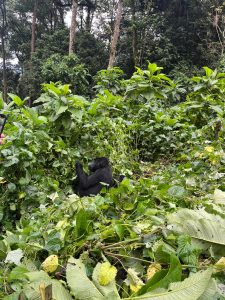
What makes this combination particularly special is the extraordinary contrast between the two experiences. Gorilla trekking is an active wildlife encounter that takes place on foot in a dense mountain forest. You may spend several hours hiking through steep slopes, tangled vegetation, muddy trails and misty rainforest before finding a habituated gorilla family. When you finally come face to face with the gorillas, the experience is remarkably personal. A silverback may sit quietly nearby, young gorillas may play around their mothers, or a curious individual may watch your group from only a few metres away. The encounter is not simply about seeing an animal; it is about entering the natural environment of one of the world’s most endangered great apes and observing their behavior in the forest where they live.
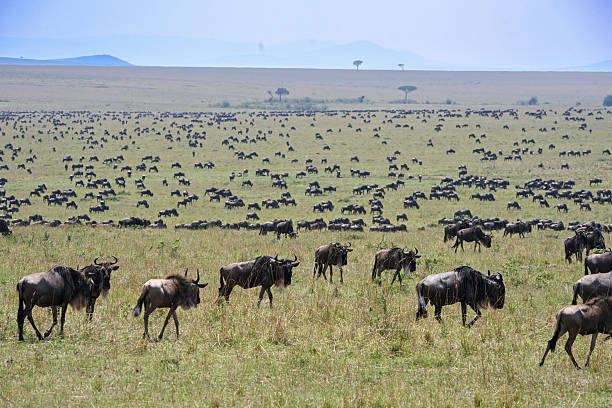
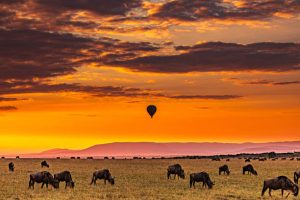
The wildebeest migration, by contrast, takes place across an enormous savanna ecosystem. More than a million wildebeest, together with large numbers of zebras and gazelles, move through the Serengeti ecosystem and across the border into Kenya’s Maasai Mara as they respond to changing grazing conditions and rainfall. Their movement creates exceptional opportunities to see large concentrations of wildlife, particularly during periods of calving, predator activity and the famous Mara River crossings. Lions, leopards, cheetahs, hyenas and crocodiles are among the predators that interact with the migrating herds, while elephants, giraffes, buffalo and numerous antelope species add to the wider safari experience.
A combined gorilla trekking and Great Migration safari therefore offers much more than two separate wildlife activities. It creates a journey through dramatically different African ecosystems, cultures and landscapes. A traveler might begin the trip walking beneath ancient trees in the montane forests of Bwindi Impenetrable National Park in Uganda, continue through the spectacular landscapes of the Albertine Rift, and later find themselves watching thousands of wildebeest crossing the golden plains of the Serengeti. Another traveler may begin in Kigali, trek mountain gorillas in Volcanoes National Park in Rwanda, and then fly onward to Tanzania for several days of game viewing in the Serengeti. For travelers who want to experience the diversity of East Africa rather than concentrate on a single destination, this is one of the most rewarding safari combinations available.
Can You Combine Gorilla Trekking With the Great Wildebeest Migration?
Yes, gorilla trekking can be combined with the Great Wildebeest Migration, and this can be arranged through several East African safari combinations. The most common options involve Uganda or Rwanda for gorilla trekking and Tanzania or Kenya for the migration. In Uganda, the principal gorilla trekking destinations are Bwindi Impenetrable National Park and Mgahinga Gorilla National Park. In Rwanda, mountain gorilla trekking takes place in Volcanoes National Park, part of the wider Virunga conservation landscape. The migration can then be experienced in Tanzania’s Serengeti National Park or Kenya’s Maasai Mara National Reserve, depending on the season, preferred safari style and travel route.
The most suitable combination depends largely on what you want to see and when you want to travel. A traveler visiting during July, August, September or October may choose an itinerary designed around the northern Serengeti and Maasai Mara portion of the migration, when large herds can be found in the northern part of the ecosystem and river-crossing activity may occur. However, the timing and location of wildlife are never completely predictable. The Great Migration is a natural ecological process driven by rainfall, grazing conditions and animal behavior, rather than a scheduled event that occurs at exactly the same location every year on a particular date.
Travelers visiting earlier in the year may instead plan around the southern Serengeti and Ndutu region, where the migration is associated with the annual calving season. This period can offer exceptional opportunities to witness newborn wildebeest and intense predator activity. Gorilla trekking, meanwhile, can be undertaken throughout the year, meaning that the migration calendar is usually the more important factor when choosing the dates for a combined safari.
This flexibility makes it possible to design a trip around different priorities. Someone who dreams of seeing the Mara River crossing may build the safari around the northern migration season. A wildlife photographer interested in newborn animals and predator interactions may prefer the calving season. A honeymoon couple may prioritize a luxury safari camp and combine gorilla trekking with a private Serengeti experience. A traveler with limited time may choose Rwanda because of its accessibility to Kigali and then fly onward to Tanzania. A traveler seeking a more comprehensive Uganda experience may combine Bwindi gorilla trekking with Queen Elizabeth National Park, chimpanzee trekking in Kibale Forest and then continue to Tanzania.
Where Does a Gorilla and Wildebeest Migration Safari Take Place?
There is no single park where you will see both mountain gorillas and the Great Wildebeest Migration. These experiences take place in different ecosystems and, in most cases, different countries. Planning the safari therefore involves connecting the gorilla destination with the most appropriate migration destination.
Uganda and Tanzania form one of the most attractive combinations. Travelers can trek mountain gorillas in Bwindi Impenetrable National Park and then continue to Tanzania for a safari in the Serengeti. This combination is particularly appealing to travelers who want a deeper Uganda experience before moving into Tanzania’s famous savanna ecosystem. Depending on the itinerary, the Uganda portion can also include Queen Elizabeth National Park Kibale Forest National Park, Lake Bunyonyi or other destinations before the traveler continues to Tanzania.
Rwanda and Tanzania provide another highly practical combination. A traveler can arrive in Kigali, travel to Volcanoes National Park for gorilla trekking, return to Kigali and then connect by air to Tanzania. This can reduce the amount of road travel and works particularly well for travelers who prefer a relatively efficient luxury safari itinerary. The Rwanda portion can also include Kigali city experiences, the Kigali Genocide Memorial, or other destinations before the Serengeti.
Uganda and Kenya are another possibility, particularly for travelers who want to experience gorilla trekking in Bwindi and then see the migration in the Maasai Mara. This route can be attractive when the migration is concentrated in Kenya, especially during the period when large herds are moving through the Mara ecosystem. It can also provide an opportunity to combine gorilla trekking with Kenya’s wider safari destinations.
Rwanda and Kenya provide a further combination, linking gorilla trekking in Volcanoes National Park with wildlife viewing in the Maasai Mara. This can be an efficient option for travelers who want to minimize long overland journeys while experiencing two of East Africa’s most famous wildlife destinations.
The right combination is therefore not simply a matter of choosing the cheapest or shortest route. It depends on the traveler’s dates, preferred migration experience, budget, accommodation level, tolerance for road travel, interest in additional national parks and whether they want a private or shared safari.
Why Combine Gorilla Trekking With the Wildebeest Migration?
The greatest advantage of combining these experiences is the sheer diversity of the journey. Gorilla trekking introduces travelers to the forests and mountains of the Albertine Rift, while the migration introduces them to vast open savannas where wildlife can stretch as far as the eye can see. The landscapes are dramatically different, as are the wildlife encounters.
During a gorilla trek, the focus is on behavior and proximity. You are walking quietly through the forest with an experienced ranger and tracker team, searching for signs of a particular gorilla family. The journey itself is part of the experience because the location of the gorillas changes from day to day. Once the family is located, the atmosphere often becomes quiet and intensely focused as travelers observe feeding, grooming, resting, playing and social interactions among the gorillas.
During a migration safari, the focus can shift toward scale and movement. A game drive across the Serengeti may reveal thousands of wildebeest spread across the plains, while nearby zebras and gazelles move between grazing areas. Predators may follow the herds, and large concentrations of animals can create dramatic scenes throughout the day. During certain periods of the year, travelers may also have opportunities to witness river crossings, although no responsible safari operator can guarantee that a crossing will occur at a particular place or on a particular day.
Combining the two therefore gives travelers a remarkably broad understanding of African wildlife. You experience a highly specialized rainforest ecosystem inhabited by mountain gorillas and then move into one of the world’s greatest savanna ecosystems. You experience wildlife on foot and from a safari vehicle, dense forest and open plains, primates and large herbivores, intimate encounters and enormous concentrations of animals.
Is a Gorilla Trekking and Migration Safari Right for You?
This type of safari is particularly well suited to travelers who want more than a conventional game-drive holiday. If your dream African safari includes both close encounters with primates and spectacular savanna wildlife, combining gorilla trekking with the Great Migration can be an excellent choice.
It is also an attractive option for couples and honeymooners looking for a distinctive East African experience. A private gorilla trek followed by several nights in a luxury Serengeti or Maasai Mara camp can create a memorable combination of adventure and relaxation. Photographers can benefit from the extraordinary variety of subjects, from mountain gorillas in the forest to wildebeest, lions, elephants and other wildlife on the plains.
Families and older travelers can also undertake a combined safari, although the gorilla trekking portion requires consideration of fitness, terrain and individual mobility. Gorilla trekking can involve steep and muddy terrain, sometimes at high elevation, and the duration of the trek depends on where the gorilla family is located. A well-designed itinerary can take these factors into account by selecting an appropriate gorilla sector, arranging porter assistance where desired and allowing sufficient time for rest between activities.
For travelers with a strong interest in wildlife photography, the combination is especially compelling. The forest environment presents different photographic challenges from the savanna, requiring different approaches to light, distance, shutter speed and lens selection. The migration, meanwhile, provides opportunities for wide landscape photographs, large herds, predator interactions and, when conditions align, dramatic river-crossing scenes.
How Long Should a Gorilla and Wildebeest Migration Safari Be?
There is no single ideal length for this type of safari. The appropriate duration depends on how much time you have and how many destinations you want to include.
A shorter 7- to 8-day safari can combine a gorilla trek with several days in a migration destination, particularly when flights are used to reduce travel time. This is suitable for travelers who want to experience both highlights without adding many additional parks.
A 10-day gorilla and wildebeest migration safari provides considerably more flexibility. It can allow time for arrival, gorilla trekking, transfers and several game drives in the Serengeti or Maasai Mara without making every day feel rushed.
A 12- to 14-day itinerary is ideal for travelers who want a more comprehensive East African experience. Depending on the route, this could include gorilla trekking, chimpanzee trekking, Queen Elizabeth National Park, the Serengeti, Ngorongoro or additional Kenyan destinations.
Travelers with two weeks or more can also consider adding a beach extension to Zanzibar or Kenya’s coast, creating a safari-and-beach holiday after the wildlife portion of the trip.
The most important consideration is not simply the number of days but how those days are distributed. A poorly designed itinerary can spend too much time on long road transfers, while a well-designed itinerary uses strategic flights and carefully selected accommodation to maximize time in the destinations that matter most.
Planning Your Gorilla Trekking and Wildebeest Migration Safari
A successful combined safari requires more planning than a conventional safari because it involves coordinating two different wildlife experiences, potentially across several countries. The first decision should normally be your travel dates, because the location of the wildebeest migration changes throughout the year. Once the dates are established, the next step is deciding whether Uganda or Rwanda is the better gorilla destination and whether Tanzania’s Serengeti or Kenya’s Maasai Mara better matches the migration experience you want.
From there, the itinerary can be designed around gorilla permit availability, flights, accommodation, game-drive schedules and the number of days available. Gorilla permits are limited and must be secured in advance, particularly during popular travel periods. Migration-focused accommodation can also become highly sought after during peak months, especially in areas close to anticipated wildlife activity.
At Native Africa Tours, we can design a private gorilla trekking and wildebeest migration safari around your preferred travel dates, budget, accommodation style and interests. Depending on your plans, your safari can begin in Uganda or Rwanda and continue to Tanzania or Kenya, with options ranging from carefully selected midrange lodges to luxury safari camps and fly-in itineraries.
The result should not simply be a collection of famous destinations. It should be a logical journey in which every destination adds something meaningful to the overall experience. A gorilla trek in the forest, a game drive across the Serengeti, a migration experience in the Maasai Mara, a chimpanzee encounter in Kibale or a few relaxing days in Zanzibar can all be combined, provided the routing and timing are planned carefully.
For travelers considering this extraordinary combination, the most important first step is to determine when you want to travel and what you most want to experience. Once those two factors are clear, Uganda, Rwanda, Tanzania and Kenya can be connected into a safari designed around your priorities rather than forcing you into a fixed itinerary.
Where Can You Combine Gorilla Trekking and the Great Wildebeest Migration?
A gorilla trekking and wildebeest migration safari requires combining two very different wildlife destinations because mountain gorillas and the Great Wildebeest Migration occur in separate ecosystems. Mountain gorilla trekking takes place in the Albertine Rift forests of Uganda and Rwanda, while the annual wildebeest migration moves through the Serengeti ecosystem of Tanzania and the Maasai Mara ecosystem of Kenya. The good news is that these destinations can be combined into one carefully planned East African safari, with the best route depending on your travel dates, preferred migration experience, budget, accommodation level and willingness to travel by road or domestic flight.
The four principal combinations are Uganda and Tanzania, Uganda and Kenya, Rwanda and Tanzania, and Rwanda and Kenya. Each has its own advantages. Uganda offers an excellent choice for travelers who want an authentic and more extensive East African journey, particularly those interested in Bwindi Impenetrable National Park and additional Ugandan wildlife destinations. Rwanda is often attractive to travelers who want a relatively compact gorilla experience beginning from Kigali. Tanzania is the natural choice for travelers who want to experience the Great Migration within the Serengeti ecosystem, while Kenya’s Maasai Mara provides another exceptional setting for viewing the migration, particularly when the herds move into the Mara region.
There is therefore no single “best” combination for everyone. The best itinerary depends on what you want your safari to accomplish. Someone traveling in February may prioritize the southern Serengeti calving season, making Uganda or Rwanda combined with Tanzania particularly attractive. Someone travelling in August may want to focus on the northern Serengeti or the Maasai Mara to witness dramatic river-crossing activity. A traveler with only eight or nine days may prefer Rwanda and Tanzania because the itinerary can be structured around relatively efficient connections, while someone with two weeks or more may enjoy the additional landscapes and wildlife experiences available on a Uganda-based safari.
Uganda and Tanzania: Bwindi Gorilla Trekking and the Serengeti Migration
Combining Uganda gorilla trekking with the Serengeti wildebeest migration is one of the most rewarding ways to experience two of Africa’s most famous wildlife spectacles on one journey. The Uganda portion can be centered on Bwindi Impenetrable National Park, home to a significant population of endangered mountain gorillas, while the Tanzania portion focuses on the Serengeti ecosystem and, depending on the season, the location of the migrating herds.
This combination works particularly well for travelers who want a safari with a strong sense of adventure and geographical diversity. Bwindi is characterized by steep hills, dense vegetation and ancient rainforest, creating an environment that feels completely different from the open grasslands of the Serengeti. The transition from Uganda’s forested mountains to Tanzania’s expansive savanna is itself part of the experience.
A typical journey may begin in Entebbe or Kampala before continuing toward southwestern Uganda. Travelers can spend a night or more around Bwindi before undertaking their gorilla trek. After the gorilla experience, the itinerary can continue toward another Ugandan wildlife destination or connect by air toward Tanzania, depending on the available flight routing and the overall design of the safari.
For travelers with additional time, the Uganda portion does not have to end with gorilla trekking. Queen Elizabeth National Park can be added to provide opportunities to see elephants, lions, buffalo, hippos, antelope and other wildlife before continuing to Tanzania. The Ishasha sector can also add another dimension to the journey, particularly for travelers interested in its famous tree-climbing lions. Those with a stronger interest in primates can extend the journey to Kibale Forest for chimpanzee trekking before continuing toward the migration.
The Tanzania portion can then focus on the Serengeti. Depending on the month, the safari may be positioned in the southern Serengeti and Ndutu area during the calving season, the central Serengeti during periods when the herds are moving through the plains, the Western Corridor during the migration’s western movement, or the northern Serengeti when the herds are in the Mara ecosystem.
One of the biggest advantages of Uganda and Tanzania is that the itinerary can be highly customized. A traveler seeking a relatively short trip can combine Bwindi and the Serengeti with strategic flights. A traveler with more time can create a broader safari incorporating Kibale, Queen Elizabeth, Bwindi and the Serengeti. This makes the combination particularly suitable for travelers who see the journey itself as an important part of their African adventure.
The main consideration is travel time. Uganda and Tanzania are separate countries, and depending on the exact route, combining them by road can involve substantial distances. For travelers with limited time, flying between key destinations is generally more practical than attempting to cover the entire journey overland. A well-designed itinerary therefore needs to consider domestic flight schedules, regional connections, luggage allowances, airport transfers and the location of safari airstrips.
Why Choose Uganda and Tanzania?
Uganda and Tanzania are particularly suitable for travelers who want to combine mountain gorillas with the Serengeti Great Migration while also having the opportunity to explore more than one ecosystem in Uganda.
This combination is ideal if you want:
A genuine forest trekking experience in Bwindi; a major savanna safari in the Serengeti; opportunities to add chimpanzee trekking; the option of visiting Queen Elizabeth National Park; a private safari rather than a fixed group itinerary; or a longer journey that explores several East African landscapes.
It can also be an excellent choice for travelers who want to experience Uganda itself rather than simply flying into a country for gorilla trekking and immediately leaving for Tanzania.
Uganda and Kenya: Bwindi Gorillas and the Maasai Mara Migration
A second major combination is Uganda gorilla trekking and the Maasai Mara wildebeest migration. This route connects Bwindi Impenetrable National Park in southwestern Uganda with Kenya’s Maasai Mara National Reserve, one of the most famous wildlife destinations in Africa.
The appeal of this combination is the contrast between the intimate forest experience of gorilla trekking and the expansive wildlife viewing of the Maasai Mara. Bwindi takes travelers into a mountainous rainforest environment where the search for gorillas happens on foot. The Maasai Mara, by contrast, is characterized by open grasslands and rolling plains where game drives can reveal large concentrations of wildebeest, zebra, gazelles and predators.
This route can be particularly attractive during the months when the migration is concentrated in the Mara ecosystem. However, travelers should understand that the Great Migration does not follow a fixed calendar with guaranteed dates. The herds respond to rainfall and grazing conditions, and their exact location can vary from year to year. Planning should therefore focus on the broader seasonal pattern rather than promising a specific river crossing on a particular date.
A Uganda–Kenya safari can be structured in several ways. A shorter itinerary might concentrate on Bwindi and the Maasai Mara, using flights where appropriate to minimize long road transfers. A longer itinerary could include other Ugandan parks before crossing into Kenya or flying onward to Nairobi and then continuing to the Mara.
Travelers who choose this combination can also consider adding Lake Nakuru National Park, Amboseli National Park or other Kenyan destinations, depending on the overall length of the trip. However, adding too many parks can make the safari feel rushed. The objective should be to create enough time in each destination to actually experience it rather than simply collect national-park names.
One advantage of combining Uganda with Kenya is that travelers can potentially finish their safari in Nairobi or at Kenya’s international air connections, which can make the end of the trip convenient for travelers flying home through Nairobi.
Why Choose Uganda and Kenya?
Uganda and Kenya are a strong choice if your primary migration goal is the Maasai Mara, particularly during the period when the migrating herds are moving through northern Tanzania and into Kenya.
This combination can be particularly suitable for travelers who want:
Gorilla trekking in Bwindi; the Maasai Mara migration; excellent predator viewing; a safari ending in Nairobi; opportunities to combine gorillas with classic Kenyan wildlife; or a private safari covering Uganda and Kenya.
It can also appeal to travelers who have already visited Tanzania and want to experience Kenya’s interpretation of the Great Migration.
Rwanda and Tanzania: Volcanoes National Park and the Serengeti
For travelers who want a more compact and highly efficient gorilla-and-migration itinerary, Rwanda and Tanzania can be one of the most attractive combinations. Gorilla trekking takes place in Volcanoes National Park in northern Rwanda, while the migration experience is centered on Tanzania’s Serengeti ecosystem.
One of the major advantages of this route is accessibility. Kigali is relatively compact, and Volcanoes National Park can be reached from the capital without the very long road journeys associated with some Uganda itineraries. This can make Rwanda particularly appealing to travelers who have limited vacation time but still want to experience mountain gorillas.
A typical itinerary can begin in Kigali, followed by a transfer toward Volcanoes National Park. Travelers can spend time around the park before undertaking their gorilla trek. After the gorilla experience, the itinerary can connect onward to Tanzania, where the Serengeti becomes the primary safari destination.
For travelers interested in a luxury experience, this combination can work particularly well. A carefully selected lodge around Volcanoes National Park can be followed by a luxury tented camp or lodge in the Serengeti. Private vehicles, domestic flights and carefully timed transfers can reduce unnecessary travel and create a smoother overall journey.
Rwanda also provides the opportunity to add a cultural and historical component before or after gorilla trekking. Travelers can spend time in Kigali, explore local communities or visit important historical sites before continuing to Tanzania.
The Tanzania portion can then be designed around the season. During the early months of the year, the itinerary may focus on the southern Serengeti and Ndutu region for the calving season. Later in the year, the focus may shift toward central or northern Serengeti depending on where the herds are moving.
Why Choose Rwanda and Tanzania?
Rwanda and Tanzania are particularly suitable for travelers who value convenience, efficient routing and a high-quality safari experience.
Choose this combination if you want:
A relatively accessible gorilla trekking experience; a luxury-focused itinerary; limited long-distance road travel; the Serengeti Great Migration; a private safari; or a shorter trip that still includes two of Africa’s greatest wildlife experiences.
This can also be a strong option for honeymooners who want to combine gorilla trekking with luxury accommodation and a classic Serengeti safari.
Rwanda and Kenya: Volcanoes National Park and the Maasai Mara
The fourth major combination is Rwanda gorilla trekking and the Maasai Mara migration. This route combines mountain gorillas in Volcanoes National Park with the savanna wildlife of Kenya.
The itinerary can begin in Kigali before continuing to Volcanoes National Park for gorilla trekking. After the forest experience, travelers can connect toward Kenya and continue to the Maasai Mara, where the safari focuses on wildlife viewing and, during the appropriate period, the movement of the wildebeest herds.
This combination is particularly attractive for travelers who want to keep the gorilla portion of the journey relatively compact while spending more time in Kenya. It can also work well for travelers who prefer to finish their safari in Nairobi.
The Maasai Mara offers more than the migration itself. Even outside the peak migration period, the reserve supports abundant wildlife, including lions, elephants, buffalo, cheetahs, leopards, giraffes, zebras and numerous antelope species. This means that choosing the Maasai Mara does not make the safari worthwhile only if you happen to see a river crossing. The wider resident wildlife experience remains an important part of the journey.
Why Choose Rwanda and Kenya?
Rwanda and Kenya can be an excellent choice if you want:
Gorilla trekking in Volcanoes National Park; a Maasai Mara safari; a relatively efficient East African itinerary; excellent predator viewing; and a convenient safari ending in Nairobi.
It can also be suitable for travelers who want to combine gorillas with Kenya without spending a large amount of time traveling overland between the two countries.
Uganda or Rwanda: Which Is Better for a Gorilla and Migration Safari?
There is no universal answer to whether Uganda or Rwanda is better for the gorilla portion of a combined migration safari. Both destinations offer exceptional mountain gorilla trekking, but they provide somewhat different travel experiences.
Uganda can be particularly attractive to travelers who want a broader safari experience and more flexibility in terms of destinations. Bwindi offers several trekking sectors, including Buhoma, Ruhija, Rushaga and Nkuringo, and Uganda provides opportunities to combine gorilla trekking with chimpanzee trekking and classic wildlife safaris in destinations such as Queen Elizabeth and Murchison Falls.
Rwanda, on the other hand, can be particularly appealing to travelers who value accessibility and a compact itinerary. Volcanoes National Park is relatively close to Kigali, making it possible to spend less time on long road transfers. Rwanda’s gorilla trekking experience can therefore fit particularly well into a shorter luxury itinerary combined with a fly-in Serengeti safari.
The decision should therefore be based on more than the gorilla permit price. Consider the amount of time available, your preferred accommodation, whether you want additional Ugandan wildlife destinations, how much driving you are comfortable with, and how you intend to connect with Tanzania or Kenya.
Tanzania or Kenya: Which Is Better for the Wildebeest Migration?
The choice between the Serengeti and Maasai Mara depends largely on the season and the type of migration experience you want.
The Serengeti is the larger and more extensive part of the ecosystem and provides opportunities to follow the migration through different stages of its annual movement. This makes Tanzania particularly attractive for travelers who want to understand the migration as a complete ecological process rather than simply visiting the Mara during the river-crossing period.
The Maasai Mara becomes especially attractive when the migrating herds move north from the Serengeti into Kenya. During this period, travelers may have opportunities to witness large concentrations of wildebeest and zebra and, under the right conditions, dramatic crossings of the Mara River.
However, river crossings should never be treated as guaranteed wildlife performances. The animals may remain on one side of the river for hours or days, cross at an unexpected point, turn back, or move through an area that is inaccessible to a particular vehicle. A responsible safari itinerary should therefore be designed around the migration season and ecosystem rather than promising a specific crossing.
For travelers who want the widest range of migration possibilities, Tanzania can be the stronger choice because of the enormous size and year-round ecological significance of the Serengeti ecosystem. For travelers specifically interested in the northern migration and the Maasai Mara experience, Kenya can be an excellent choice.
Which Gorilla and Migration Combination Is Best for You?
The best combination depends on your travel priorities.
- If you want gorilla trekking plus the Serengeti Great Migration, consider Uganda and Tanzania or Rwanda and Tanzania.
- If you specifically want gorilla trekking plus the Maasai Mara migration, consider Uganda and Kenya or Rwanda and Kenya.
- If you want to explore more of Uganda and add chimpanzees or classic savanna wildlife, Uganda and Tanzania provides substantial flexibility.
- If you have limited time and want a relatively efficient luxury journey, Rwanda and Tanzania can be particularly attractive.
- If your priority is ending the safari in Kenya and experiencing the Maasai Mara, Uganda and Kenya or Rwanda and Kenya can make sense.
- If you are traveling during the northern migration season and specifically hope to see the Mara River crossings, a route involving northern Serengeti and the Maasai Mara may be appropriate.
- If you are traveling during the calving season, southern Serengeti and Ndutu should be considered before choosing the migration destination simply because of the name “Great Migration.”
The most important principle is to design the itinerary around the actual seasonal movement of the animals, not around a generic itinerary that assumes the migration is always in the same place.
Can You Combine Gorilla Trekking With the Migration in One Safari?
Yes, and in many cases the combination creates a better overall safari than visiting either destination alone. The key is allowing enough time for both experiences and using the most appropriate transport between countries.
A well-designed itinerary should avoid spending several valuable safari days sitting in vehicles simply to connect destinations. Where practical, regional or domestic flights can significantly reduce travel time. Road travel can still be worthwhile within Uganda, Rwanda, Kenya or Tanzania when the journey itself provides opportunities to see landscapes, villages and wildlife, but long international overland transfers should be considered carefully.
The itinerary should also allow flexibility around the gorilla trek. Although the trek itself may last several hours, the exact duration depends on the location of the gorilla family. The migration safari similarly requires flexibility because wildlife does not follow a human timetable. Allowing several game-drive opportunities gives you a better chance of experiencing the destination rather than treating the safari as a checklist.
The Ideal Route Depends on Your Travel Dates
Your travel month is one of the most important factors in deciding which combination to choose. The Great Migration is constantly moving through the Serengeti-Mara ecosystem, while gorilla trekking is available throughout the year. Consequently, the migration generally determines the most strategic timing for a combined trip.
Travelers visiting during the January to March period may consider an itinerary centered around southern Tanzania, particularly the Serengeti and Ndutu area, when the wildebeest congregate around the nutrient-rich grasslands and the calving season takes place.
Travelers visiting during April, May and June may encounter different stages of the migration as the herds move through the Serengeti. This period can also provide advantages for travelers seeking fewer crowds and, depending on the year and specific destination, favorable accommodation rates.
Travelers visiting during July, August, September and October often plan around the northern Serengeti and Maasai Mara portion of the migration. This is the period most commonly associated with the spectacular river-crossing scenes seen in wildlife documentaries, although the timing of individual crossings remains unpredictable.
During November and December, the herds begin moving south again as seasonal rainfall changes the availability of fresh grazing. These months can provide an excellent opportunity to experience the migration while combining it with gorilla trekking, particularly for travelers who prefer to avoid the busiest peak-season periods.
Because rainfall patterns and animal movements vary from year to year, the ideal itinerary should always be reviewed against the most current migration conditions before finalizing accommodation and routing.
Building a Multi-Country East African Safari
One of the greatest advantages of combining gorilla trekking with the wildebeest migration is that the trip does not have to end with these two experiences. Travelers with sufficient time can build a much broader East African itinerary around them.
A Uganda-based safari could combine Kibale chimpanzee trekking, Queen Elizabeth National Park, Bwindi gorilla trekking and the Serengeti. A Rwanda-based itinerary could combine Kigali, Volcanoes National Park and the Serengeti before continuing to Zanzibar for a beach holiday. A Uganda-Kenya itinerary could combine Bwindi, Queen Elizabeth National Park, the Maasai Mara and Nairobi. Travelers with more time could even incorporate Tanzania’s Ngorongoro Conservation Area or additional Kenyan parks.
The important consideration is avoiding the temptation to add every famous destination. More destinations do not automatically create a better safari. In many cases, spending three nights in one outstanding wildlife area is more rewarding than spending one night in three different parks. A good safari itinerary balances variety with enough time to actually enjoy each destination.
At Native Africa Tours, we can use your travel dates, preferred migration experience and budget to determine whether Uganda or Rwanda is the better gorilla destination and whether Tanzania or Kenya is the better migration destination for your trip. We can then build the routing around flights, accommodation, gorilla permit availability and the amount of time you want to spend in each ecosystem.
The goal is not simply to connect four countries on a map. The goal is to create a logical journey in which mountain gorillas in the rainforest and wildebeest on the savanna become two connected highlights of one unforgettable East African safari.
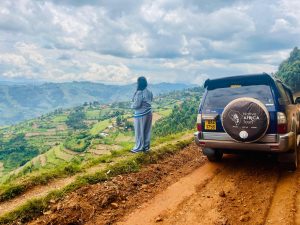
Great Wildebeest Migration Calendar: Where Are the Herds Each Month?
One of the most important decisions when planning a gorilla trekking and wildebeest migration safari is choosing the right time of year. The Great Wildebeest Migration does not begin on one particular date and end on another. It is a continuous natural cycle that moves through the Serengeti and Maasai Mara ecosystems throughout the year. The herds respond primarily to rainfall, fresh grazing and water availability, meaning their exact location can change from one year to another. However, the annual migration follows broad seasonal patterns that make it possible to plan a safari around the type of experience you most want to see.
For travelers combining gorilla trekking in Uganda or Rwanda with the Great Migration in Tanzania or Kenya, the month of travel becomes even more important. Gorilla trekking is available throughout the year, while the wildebeest herds move between different regions of the Serengeti-Mara ecosystem. A safari designed around February, for example, can focus on the southern Serengeti and the spectacular calving season, while a safari in August may be planned around the northern Serengeti and Maasai Mara, where travelers have opportunities to encounter large concentrations of wildebeest and potentially witness dramatic river crossings.
The calendar below should therefore be viewed as a planning guide rather than a guarantee of animal movements. Nature does not follow a fixed itinerary. Rainfall can arrive earlier or later than expected, grazing conditions can change, and different portions of the herd can be spread across different areas at the same time. The most successful migration safaris combine historical seasonal patterns with current information from experienced guides and local safari operators.
January -The Migration Concentrates in the Southern Serengeti
January is an excellent month for travelers interested in the beginning of the wildebeest calving season. Large concentrations of wildebeest are generally associated with the short-grass plains of the southern Serengeti and the wider Ndutu ecosystem during this period. The landscape can become increasingly productive following seasonal rains, attracting grazing animals to areas where fresh grass provides the nutrients required by pregnant females and their developing calves.
The character of the safari in January is very different from the famous river-crossing experience associated with the northern migration later in the year. Instead of concentrating on rivers and steep banks, travelers are more likely to spend their game drives across open plains where large herds are grazing. Zebra and gazelle can be seen alongside wildebeest, while predators patrol areas where prey concentrations are high.
January can therefore be particularly attractive to travelers who are interested in the ecological side of the migration rather than simply wanting to tick off a famous wildlife event. The southern Serengeti offers opportunities to understand why the herds move, how grazing conditions influence their distribution and how predators respond to the concentration of prey.
For a combined gorilla and migration safari, January can be an excellent choice for travelers who want to experience Uganda or Rwanda’s mountain forests together with the open grasslands of Tanzania. A traveler could spend several days trekking for mountain gorillas before flying or driving onward toward the Serengeti, creating a dramatic contrast between rainforest and savanna.
February – Peak Calving Season in the Southern Serengeti
February is widely regarded as one of the most significant months of the wildebeest migration because of the concentration of animals in the southern Serengeti and Ndutu area during the calving period. This is a particularly important time in the annual reproductive cycle, with large numbers of wildebeest giving birth within a relatively concentrated period.
The presence of newborn calves changes the entire wildlife dynamic. The plains can be filled with mothers and young animals, while predators take advantage of the abundance of vulnerable prey. Lions, cheetahs, hyenas and other predators can become particularly interesting to watch because the calving season creates opportunities for hunting and other predator-prey interactions.
For wildlife photographers, February can be one of the most rewarding periods of the year. The combination of green plains, large herds, newborn animals and predators creates a very different photographic experience from the dusty northern migration months.
Travelers should also understand that calving season is not only about seeing baby wildebeest. It is about observing an entire ecosystem responding to an enormous reproductive event. The behavior of the mothers, the movement of herds, the activity of predators and the presence of scavengers all form part of the experience.
If your priority is seeing wildebeest calves rather than river crossings, February is one of the strongest months to consider.
March – Late Calving and the Beginning of Change
March can continue to provide excellent opportunities for seeing wildebeest and their young in the southern Serengeti, although the precise distribution of the herds depends on rainfall and grazing conditions. The calving period may still be active, while some groups begin responding to changing environmental conditions and gradually preparing for their next stage of movement.
This transitional character makes March particularly interesting. Travelers may experience the southern plains at a time when the ecosystem is still strongly influenced by the calving season, while also beginning to see evidence of the migration’s northward movement.
Predator sightings can remain rewarding because young animals continue to provide opportunities for carnivores. At the same time, the enormous concentrations of grazing animals may begin to spread as the herds respond to changing pasture.
March can therefore be an attractive compromise for travelers who want to experience the calving period but prefer a month that sits slightly later in the season.
For a gorilla and migration combination, March also offers the possibility of building an itinerary around Uganda or Rwanda before continuing into Tanzania. The exact routing depends on flight schedules, safari duration, budget and whether the traveler prefers a private safari or a more compact itinerary.
April – Movement Through the Central Serengeti
By April, the migration begins entering a different phase. Rather than remaining concentrated exclusively around the southern plains, large groups begin moving toward central areas of the Serengeti as the search for fresh grazing continues.
April is often considered part of the green season in many East African safari destinations. Seasonal rains can transform the landscape, producing lush vegetation and dramatic skies. Although weather can be less predictable, the greener environment can create beautiful conditions for photography.
This is also a period when travelers should avoid thinking in terms of a single migration location. Different groups may occupy different parts of the ecosystem. Some animals can still be encountered in southern areas, while others are already moving toward central and western regions.
The advantage of traveling during this transitional period can be lower visitor numbers compared with the peak northern migration months, depending on the specific destination and accommodation. Travelers who value landscapes, photography and a quieter safari atmosphere may find April appealing.
For those whose primary objective is a Mara River crossing, however, April would not normally be the first choice. The migration calendar should always be matched to the specific experience the traveler wants.
May – The Migration Moves Toward the Western Corridor
May marks another important stage of the annual cycle as the herds increasingly move through central and western areas of the Serengeti. The exact route varies, but the Western Corridor and the Grumeti region can become significant parts of the migration landscape.
Large numbers of wildebeest and zebra may be encountered moving through the grasslands, while resident predators continue to take advantage of the availability of prey. The Grumeti ecosystem is also associated with riverine habitats and wildlife, creating opportunities for travelers to combine migration viewing with broader Serengeti game viewing.
May can be attractive for travelers who want a migration experience without necessarily targeting the intense visitor demand associated with the peak northern season. The landscape can remain green following seasonal rains, and the combination of moving herds and resident wildlife can make for a varied safari.
One important consideration is road conditions. Seasonal rainfall can affect some safari tracks, and travel times can be less predictable. This is another reason why choosing an experienced safari operator is valuable during periods when weather can influence road access.
June – Western Corridor and Northward Movement
June is a fascinating transitional month because the migration is increasingly associated with the western and central parts of the Serengeti while beginning its broader movement toward the north.
The landscape can start becoming drier as the year progresses, and the concentration of wildlife in particular areas can change rapidly. The herds may move through the Western Corridor and around the Grumeti ecosystem, while other groups are already beginning to head farther north.
June can be especially attractive to experienced safari travelers because it sits at the beginning of the broader northern migration period without necessarily carrying the same level of demand as August. Travelers may encounter large herds while also enjoying a more flexible safari environment.
This month can also work well for a traveler who wants to combine gorilla trekking with a Serengeti safari but does not specifically require a river crossing. A carefully designed itinerary can provide excellent wildlife viewing while avoiding the pressure of planning the entire journey around one unpredictable event.
July – The Northern Migration Begins to Take Center Stage
July marks the beginning of one of the most sought-after phases of the Great Migration. Large groups of wildebeest increasingly move into the northern Serengeti, and attention turns toward the ecosystem surrounding the Mara River and the border between Tanzania and Kenya.
This is the period when many travelers begin planning specifically around the possibility of seeing large herds approaching river systems. However, it is important to understand that the migration does not suddenly arrive in the north on July 1. The movement is gradual, and the timing can vary significantly from year to year.
The northern Serengeti itself can provide spectacular wildlife viewing even when a river crossing is not taking place. Large herds, zebra, resident predators and other wildlife create excellent game-drive opportunities across the region.
For travelers considering the best time for a gorilla trekking and Great Migration safari, July can be an excellent option if the priority is to experience the northern migration while still allowing some flexibility around the exact location of the herds.
August -Northern Serengeti, Maasai Mara and River-Crossing Opportunities
August is one of the most famous months for the Great Wildebeest Migration. Large numbers of travelers come to northern Tanzania and Kenya hoping to witness the herds moving through the Mara ecosystem and, if circumstances allow, crossing the Mara River.
The images associated with August are among the most dramatic in African safari tourism: thousands of wildebeest gathering near riverbanks, animals entering the water, crocodiles waiting below and herds climbing the opposite bank.
Yet the reality is more nuanced.
A river crossing is never guaranteed. The animals may reach the river and wait. They may move along the bank without entering the water. They may cross at a location outside the viewing area. A crossing may happen before a traveler arrives or after the vehicle has left. Even when the herd is nearby, there is no way to instruct wild animals when to cross.
This uncertainty is one of the reasons why spending several nights in the northern Serengeti or Maasai Mara is preferable for travelers whose main objective is to witness a crossing. More time gives the guide more opportunities to locate active herds and respond to changing conditions.
August is therefore an excellent month for the potential of dramatic river-crossing experiences, but it should never be sold as a guaranteed crossing month.
September – Continued Northern Migration and River Crossings
September can continue to provide excellent opportunities for experiencing the northern migration. Depending on the year’s rainfall patterns and the movement of the herds, substantial concentrations of wildebeest may remain in the northern Serengeti and Maasai Mara ecosystem.
For travelers interested specifically in the Mara River, September can be attractive because the migration may still be active in the region. However, the same rule applies: river crossings are unpredictable.
A common mistake is to assume that every day during August and September will produce a dramatic crossing. In reality, the experience can involve long periods of waiting, observing herds moving along the riverbank, watching animals test the water and sometimes witnessing an extraordinary crossing that happens within minutes.
This unpredictability is precisely what makes the experience authentic. Unlike a scheduled attraction, the migration operates entirely according to the behavior of wild animals.
September can also offer excellent general game viewing. Even travelers who do not witness a crossing can encounter huge herds, predators and the broader wildlife of the Mara ecosystem.
October – Northern Migration and the Beginning of the Return Journey
October represents another transitional period. Some herds can remain in the northern Serengeti or Maasai Mara ecosystem, while other groups begin responding to changing rainfall and grazing conditions and start moving south.
This creates a highly dynamic safari environment. The exact distribution of animals can vary considerably, meaning that guides need to remain flexible.
For travelers who want to avoid the peak crowds associated with the heart of the northern migration but still hope to encounter migrating wildebeest, October can be an interesting month to consider.
It is also a good reminder that the Great Migration is not simply a July-to-September event. The ecological cycle continues after the most famous river-crossing period.
November – The Herds Begin Moving South
As seasonal rains affect the southern Serengeti and surrounding grasslands, the migrating herds begin moving back toward areas where fresh grazing is available.
November is therefore associated with the beginning of the southward phase of the migration. The precise location of the herds can vary considerably depending on rainfall.
For travelers who have already experienced the northern migration, this period demonstrates another important part of the ecological cycle: the animals are not simply leaving Kenya because the “migration season is over.” They are responding to changing environmental conditions.
November can also offer good opportunities for travelers who prefer a quieter safari atmosphere. The absence of the intense river-crossing focus can allow visitors to concentrate on landscapes, resident wildlife and the broader Serengeti experience.
December – Return Toward the Southern Serengeti
By December, the migration is increasingly associated with the southern Serengeti as the herds continue their movement toward the plains that will support the next calving season.
The annual cycle is beginning to close, but the migration itself never truly stops. Animals continue grazing, moving and responding to rainfall throughout the ecosystem.
For travelers planning a safari around the end of the year, December can therefore provide opportunities to see large herds in southern areas while enjoying the wider wildlife attractions of the Serengeti.
The approaching calving season also makes this an interesting period for travelers planning an early-year migration safari. Those visiting in December may encounter herds gathering in areas that will become increasingly important during January, February and March.
What Is the Best Month for the Great Wildebeest Migration?
There is no single best month for every traveler because the Great Migration offers several completely different experiences throughout the year.
- If your priority is newborn wildebeest and calving, the southern Serengeti during approximately January through March is one of the most compelling choices.
- If your priority is following large herds as they move north, the middle of the year can provide excellent opportunities.
- If your dream is to see the Mara River crossings, July through October is generally the period travelers consider, with August and September being particularly popular. However, the exact timing of crossings varies, and no safari company can responsibly guarantee a crossing on a particular day.
- If your priority is fewer crowds, green landscapes and a broader wildlife experience, shoulder and green-season periods can also be highly rewarding.
The best migration safari is therefore not necessarily the one advertised as having the “best month.” It is the one whose dates, destination and number of nights are aligned with the experience you actually want.
Best Time to Combine Gorilla Trekking With the Great Migration
Travelers combining gorilla trekking and wildebeest migration need to consider two separate wildlife calendars. Mountain gorilla trekking in Uganda and Rwanda can be undertaken throughout the year, while the Great Migration changes location during the annual cycle.
This makes the migration calendar the more important factor when choosing the overall travel dates.
For example, a traveler who wants to see newborn wildebeest could plan the trip around February, completing the gorilla trekking portion in Uganda or Rwanda before continuing to the southern Serengeti. Someone whose dream is to see the northern migration could instead travel around August or September and combine gorilla trekking with a safari in northern Tanzania or Kenya.
The most appropriate routing depends on the number of days available, preferred accommodation level, budget, flight connections and whether the traveler wants to visit Tanzania, Kenya or both.
This is why a professionally designed Uganda gorilla and Tanzania migration safari or Rwanda gorilla and Serengeti migration safari should be customized around the traveler’s priorities rather than copied from a standard itinerary.
The Most Important Rule When Planning Around the Migration
The most important rule is simple: plan for the migration season, not for a guaranteed wildlife event.
If your dates fall within a traditionally favorable period, the itinerary should place you in the ecosystem where the herds are most likely to be found. Your safari should then include enough time for your guide to search for the animals and adapt the game-drive strategy to current conditions.
This is especially important for the Mara River crossings. A traveler who spends only one night in the northern Serengeti during the peak season may technically be visiting at the right time, but they have a much smaller window of opportunity than someone who spends three or four nights in the region.
Similarly, travelers interested in calving should spend enough time around the southern Serengeti and Ndutu ecosystem rather than simply adding one game drive there to an itinerary designed primarily around another destination.
The Great Migration rewards patience. The animals decide when they move, where they stop and when they cross. The role of a good safari operator is to put travelers in the right ecosystem at the right time and then use local knowledge to maximize the opportunity for exceptional wildlife encounters.
For a combined gorilla trekking and wildebeest migration journey, this principle becomes even more important. The itinerary should be designed as one connected wildlife experience, with the gorilla trekking dates, migration season, flights, border crossings and safari routes all working together rather than being treated as separate bookings.
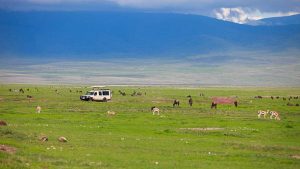
Uganda, Rwanda, Tanzania or Kenya: Which Countries Should You Combine?
Planning a gorilla trekking and wildebeest migration safari involves choosing between several of East Africa’s most remarkable wildlife destinations. Uganda and Rwanda are the principal destinations for mountain gorilla trekking, while Tanzania and Kenya are the two countries most closely associated with the Great Wildebeest Migration. Although it is possible to visit all four countries on a longer East African journey, most travelers have a limited number of days and therefore need to decide which combination provides the best balance of gorilla trekking, wildlife viewing, travel time, accommodation, cost and overall experience.
There is no single combination that is best for everyone. A traveler with ten days available may need a very different itinerary from someone with three weeks. Someone primarily interested in gorillas may prefer to spend more time in Uganda and add a shorter Serengeti safari, while someone whose dream is to witness the Mara River crossings may want to devote several nights to northern Tanzania or Kenya. Budget also matters, particularly because gorilla permit prices, safari accommodation and international or regional flights can significantly influence the final cost.
The most important thing is therefore to understand what each destination offers before deciding how to combine them.
Uganda for Gorilla Trekking and the Great Migration
Uganda is one of the strongest choices for travelers who want to combine mountain gorilla trekking with a broader Uganda safari before or after continuing to Tanzania. The country’s principal gorilla trekking destination is Bwindi Impenetrable National Park, while Mgahinga Gorilla National Park provides another opportunity to trek mountain gorillas in the Virunga ecosystem.
Uganda offers an especially interesting option for travelers who want their journey to include more than gorillas and wildebeest. Depending on the length of the trip, a safari can incorporate chimpanzee trekking in Kibale, wildlife viewing in Queen Elizabeth National Park, tree-climbing lions in the Ishasha sector, boat safaris, Murchison Falls and other attractions before continuing into Tanzania.
This makes Uganda particularly attractive for travelers who want a multi-experience East African safari rather than simply combining two headline attractions.
Another advantage is that Uganda can provide a broader range of safari styles and routes. A traveler could spend several days exploring Uganda before undertaking gorilla trekking and then continue to Tanzania for the Serengeti. Alternatively, a shorter Uganda gorilla itinerary can be combined with a longer Tanzania migration safari.
For travelers starting in Uganda, the route into Tanzania needs to be planned carefully. Depending on the itinerary and available flights, it may be more practical to connect through a regional aviation hub rather than attempting to cover the entire journey by road. The best routing depends on the exact gorilla trekking sector, safari dates and destination within Tanzania.
Rwanda for Gorilla Trekking and a Tanzania Migration Safari
Rwanda offers one of the most convenient gorilla trekking experiences for travelers who want a relatively compact primate-focused portion of their East African journey. Gorilla trekking takes place in Volcanoes National Park in the country’s northwestern region, close to Kigali.
One of the major advantages of Rwanda is the relatively straightforward connection between Kigali and the gorilla trekking area. Travelers can arrive in Kigali and transfer to the Volcanoes region without requiring a long domestic journey.
This can make Rwanda particularly attractive for travelers who have limited time and want to maximize the number of days available for the Great Migration.
A possible itinerary could involve arriving in Kigali, spending time around Volcanoes National Park for gorilla trekking, returning to Kigali and then continuing by air toward Tanzania for a Serengeti safari. Another option is to combine Rwanda gorilla trekking with Kenya’s Maasai Mara, depending on the available regional flights and the desired migration location.
Rwanda can therefore be an excellent choice when the traveler wants to keep the gorilla portion of the trip relatively compact while allocating more time to the migration safari.
The main consideration is cost. Rwanda’s gorilla trekking permit is priced at a premium compared with Uganda, meaning travelers need to evaluate the total cost of the itinerary rather than looking only at transport convenience.
Uganda vs Rwanda for Gorilla Trekking
The decision between Uganda and Rwanda is one of the most common questions for travelers planning a gorilla and migration safari.
Both countries provide access to mountain gorilla trekking, but the experience and overall logistics can differ.
Uganda offers gorilla trekking primarily in Bwindi Impenetrable National Park and Mgahinga Gorilla National Park. Bwindi has several trekking sectors, giving safari planners greater flexibility when matching accommodation and route options to a traveler’s itinerary.
Rwanda’s gorilla trekking takes place in Volcanoes National Park, which is close to Kigali compared with the longer transfers required to some parts of Uganda.
This creates a fundamental trade-off.
Rwanda can be attractive for convenience and shorter transfer times, while Uganda can be attractive for travelers looking for a broader safari experience and potentially more flexible pricing and routing. The right choice depends on the rest of the trip rather than gorilla trekking alone.
If a traveler has already decided to spend substantial time in Uganda for wildlife and primates, adding Uganda gorillas is logical. If the traveler is primarily interested in gorillas and then wants to devote most of the remaining trip to Tanzania or Kenya, Rwanda can provide a more compact gorilla component.
Tanzania vs Kenya for the Great Migration
The choice between Tanzania and Kenya depends heavily on the month of travel and the type of migration experience desired.
Tanzania’s Serengeti is central to the annual migration cycle and is especially important for the southern calving season. It also provides extensive opportunities to follow the herds as they move through the ecosystem.
Kenya’s Maasai Mara becomes particularly important when the herds move north into Kenya. The region is strongly associated with the famous Mara River crossings.
This means the choice should not be based simply on which country has the “best migration.”
Instead, ask:
Where are the herds most likely to be during my travel dates?
That question produces a much more useful answer.
A February traveler interested in calving should generally be looking toward the southern Serengeti rather than building the trip around the Maasai Mara. A traveler in August who specifically wants to attempt a Mara River crossing may consider northern Serengeti, Maasai Mara or a combination of both.
Can You Visit Tanzania and Kenya on the Same Migration Safari?
Yes. Travelers with enough time can combine northern Tanzania and Kenya to experience different parts of the migration ecosystem.
A Tanzania-Kenya migration safari can potentially include the northern Serengeti followed by the Maasai Mara, allowing travelers to experience the ecosystem on both sides of the international border.
This can be particularly attractive during the northern migration season. However, crossing between the two countries introduces additional logistical considerations, including border procedures, vehicle arrangements, accommodation and the amount of time required to move between destinations.
For travelers whose main priority is maximizing wildlife viewing rather than collecting countries, it may sometimes be better to spend more nights in one migration region instead of adding another border crossing.
A well-designed safari should therefore ask whether the second country genuinely improves the experience.
Can You Combine Uganda, Rwanda, Tanzania and Kenya?
Technically, yes, but doing so is not necessarily the best option.
A four-country East African itinerary can become extremely complicated, particularly when gorilla trekking, migration viewing and international flights are all involved. Every additional destination introduces another transfer, another border or flight connection and another opportunity to lose valuable safari time.
For travelers with three weeks or more, however, a carefully planned multi-country journey can be spectacular.
For example, a longer itinerary could include Uganda’s wildlife parks and gorillas, Rwanda’s cultural or gorilla experiences, northern Tanzania’s Serengeti and Kenya’s Maasai Mara.
But such an itinerary should be designed around geographical logic, not simply around the desire to see as many destinations as possible.
The question should always be: Does adding another destination create a better safari, or does it simply create more travel?
For most travelers, fewer destinations with more time in each ecosystem will produce a more rewarding experience.
Best Combination for a Short Gorilla and Migration Safari
For travelers with approximately one week to ten days, the simplest combination is usually the strongest.
A compact itinerary could focus on gorilla trekking in Rwanda or Uganda followed by a carefully selected migration destination in Tanzania or Kenya.
For example, a traveler could spend several days in Rwanda around Volcanoes National Park before continuing to northern Tanzania. Alternatively, a traveler could undertake a short Uganda gorilla itinerary before connecting to Tanzania.
The key is to avoid adding too many parks.
If the migration is the main reason for the trip, several nights in the correct migration region are usually more valuable than rushing through three or four additional destinations.
Best Combination for a Two-Week Gorilla and Migration Safari
Two weeks provides significantly more flexibility.
A traveler could combine gorilla trekking with a longer Serengeti safari and still have time for additional wildlife destinations.
One possible approach is to spend three to four days around gorilla trekking, followed by several days in Tanzania focusing primarily on the Serengeti. Depending on the season, Ngorongoro or another northern Tanzania destination could be added.
Another option is to combine gorilla trekking in Rwanda with the Maasai Mara, particularly during the northern migration season.
The best route depends on the month.
A February itinerary should be built differently from an August itinerary because the migration location is completely different.
Best Combination for Travelers With Three Weeks or More
With three weeks or more, travelers can consider a much broader East African experience.
This may allow time for Uganda gorilla trekking, chimpanzee trekking, wildlife safaris, the Serengeti and potentially the Maasai Mara.
A longer itinerary also makes it easier to build in additional nights around the migration. This is especially valuable for travelers hoping to witness a river crossing because additional time improves the opportunity to encounter the herds in the right place.
However, even with three weeks, the itinerary should not become unnecessarily complicated.
A safari that spends one night in every destination may look impressive on paper but can become exhausting in practice. The best journeys usually combine a few carefully selected ecosystems and allow sufficient time to experience each one.
Which Combination Is Best for You?
The answer ultimately depends on four factors: your travel month, your primary wildlife goal, the number of days available and your budget.
- If your primary goal is the gorilla experience, Uganda may be particularly attractive because you can combine gorilla trekking with a wider Ugandan safari.
- If convenience around the gorilla portion is the priority, Rwanda can be an excellent option because Volcanoes National Park is relatively close to Kigali.
- If your main migration goal is calving season, Tanzania’s southern Serengeti should be a major consideration.
- If your dream is Mara River crossings, northern Tanzania and Kenya’s Maasai Mara become particularly relevant during the northern migration season.
- If you want the broadest possible migration experience and have sufficient time, combining northern Serengeti and Maasai Mara can provide exposure to both sides of the ecosystem.
And if your dream is to combine endangered mountain gorillas with one of Africa’s greatest wildlife spectacles, the most important thing is not simply choosing four famous destinations. It is creating a route in which the gorilla trekking dates and migration location work together.
A well-designed gorilla trekking and wildebeest migration safari should feel like one continuous journey through East Africa rather than two unrelated tours joined together.
That is why the travel month should come first, the desired wildlife experience second, the countries third and the individual itinerary last.
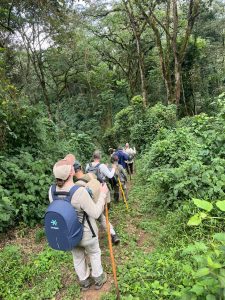
How to Combine Gorilla Trekking and the Great Wildebeest Migration
Combining gorilla trekking with the Great Wildebeest Migration creates one of the most extraordinary wildlife journeys in Africa. One part of the trip takes you into the misty montane forests of Uganda or Rwanda to search for endangered mountain gorillas, while the other takes you across the vast grasslands of the Serengeti or Maasai Mara to experience one of the world’s greatest wildlife movements. Although these destinations are in different parts of East Africa, they can be combined into one safari with the right planning.
The key to making this type of journey successful is understanding that the gorilla trekking portion and the migration portion require different planning strategies. Gorilla trekking revolves around securing a trekking permit, choosing the right sector or park, selecting suitable accommodation and arranging transfers to the forest. The migration portion depends much more heavily on the travel month, the current location of the herds, the number of nights available and the safari route.
A good itinerary therefore does not simply place “gorilla trekking” and “Serengeti safari” next to each other on a calendar. It considers the entire journey from arrival to departure, including regional flights, road transfers, border crossings where applicable, accommodation, safari time and the amount of time needed in the migration ecosystem.
The Basic Structure of a Gorilla and Migration Safari
At its simplest, a combined safari has two major components. The first is gorilla trekking in Uganda or Rwanda. The second is a Great Migration safari in Tanzania or Kenya. The order can be reversed depending on international flight schedules and regional connections.
A typical journey might therefore look like this:
International arrival → Gorilla trekking → Regional flight → Tanzania safari → Serengeti migration experience → International departure
Or:
International arrival → Tanzania safari → Serengeti → Regional flight → Gorilla trekking → Departure
Both approaches can work, but the best sequence depends on flight availability, travel dates, the location of the gorilla trekking sector and the desired migration area.
For most travelers, the simplest planning principle is to avoid unnecessary backtracking. If a flight connection allows the traveler to move efficiently between destinations, flying is generally preferable to spending an entire day driving across multiple borders and countries.
How Many Days Do You Need?
The number of days required depends on how much of each destination the traveler wants to experience.
A very short combination can theoretically be completed in around seven to eight days, but such a trip leaves little room for delays and provides limited time in each destination.
A more comfortable trip is around 10 to 14 days.
Travelers with two weeks can realistically allow several days for gorilla trekking and several nights for the migration safari without making the itinerary excessively rushed.
A journey of 14 to 18 days provides even more flexibility and allows additional wildlife experiences, such as chimpanzee trekking, Ngorongoro Crater, Queen Elizabeth National Park or the Maasai Mara, depending on the chosen route.
Travelers with three weeks or more can consider a broader East African safari that combines gorillas, chimpanzees, multiple national parks and different sections of the migration ecosystem.
However, more days do not automatically mean a better safari. The quality of the itinerary depends on how those days are allocated.
If the migration is the main purpose of the trip, it is usually better to spend several nights in the most relevant migration region than to spend one night each in multiple parks.
A 10-Day Gorilla and Great Migration Safari
A 10-day itinerary can work very well for travelers who want both experiences but have limited vacation time.
One possible structure is to spend the first few days in Uganda or Rwanda for the gorilla experience, followed by several days in Tanzania.
For example, a Uganda-based journey could include arrival, transfer toward Bwindi, gorilla trekking and a return toward the airport before connecting onward to Tanzania.
The Tanzanian portion could then focus heavily on the Serengeti rather than attempting to visit every major park in northern Tanzania. During the migration season, the exact Serengeti region should be selected according to the month. A February traveler could focus on the southern Serengeti and Ndutu area, while an August traveler could prioritize northern Serengeti. This seasonal approach is much more important than simply booking a generic “Serengeti safari.”
A 12-Day Gorilla and Migration Safari
Twelve days provides more breathing room and allows the itinerary to include additional wildlife viewing.
A typical structure could involve:
- Days 1–3: Arrival and transfer toward the gorilla trekking destination.
- Day 4: Gorilla trekking.
- Day 5: Transfer toward the airport or another wildlife destination.
- Day 6: Regional flight toward Tanzania or Kenya.
- Days 7–10: Migration-focused safari.
- Day 11: Ngorongoro safari
- Day 12: Final safari or transfer toward the international departure point
The exact sequence would depend on the country selected for gorilla trekking and the migration destination.
With 12 days, travelers should still resist the temptation to add too many destinations. The trip is already covering two major ecosystems, so efficient routing becomes extremely important.
A 14-Day Gorilla and Great Migration Safari
Fourteen days is one of the most comfortable durations for a combined gorilla and migration journey.
It provides enough time for the gorilla trekking experience while also allowing several nights in the migration ecosystem. A 14-day itinerary can potentially include additional wildlife experiences without turning the trip into a continuous series of transfers.For example, a Uganda-based itinerary could combine gorilla trekking with Queen Elizabeth National Park before flying onward to Tanzania.
Alternatively, Rwanda can be used as the gorilla destination, leaving more time for the Serengeti or Maasai Mara. During the northern migration season, travelers could also consider spending several nights in northern Serengeti before continuing toward the Maasai Mara. The advantage of fourteen days is flexibility. If one part of the journey takes longer than expected, there is generally more room to absorb the additional travel time.
Uganda Gorillas + Tanzania Serengeti
One of the strongest combinations is Uganda gorilla trekking and a Tanzania Serengeti safari.
This route combines two completely different landscapes and wildlife experiences.
Uganda provides the forest experience, with gorilla trekking taking place in the mountainous southwestern region. Tanzania then provides the enormous open landscapes of the Serengeti.
The contrast is extraordinary.
One day the traveler can be walking through dense forest searching for a habituated gorilla family; a few days later, they may be sitting in a safari vehicle watching thousands of wildebeest spread across an open grassland. This combination is particularly attractive for travelers who want to experience Uganda beyond gorillas. The itinerary can potentially include chimpanzee trekking, Queen Elizabeth National Park or other Ugandan wildlife destinations before continuing to Tanzania.
The main logistical consideration is the connection between the two countries. The route should be planned around available regional flights rather than assuming that driving is always the most efficient option.
Rwanda Gorillas + Tanzania Serengeti
Rwanda gorilla trekking and Tanzania Serengeti is another highly attractive combination.
The major advantage is the compact geography of the Rwandan gorilla experience. Volcanoes National Park is located in the northwestern part of Rwanda, while Kigali provides the country’s principal international and regional aviation gateway.
This can make Rwanda particularly attractive to travelers who want to devote more of their holiday to Tanzania. A possible journey could involve arrival in Kigali, transfer to Volcanoes National Park, gorilla trekking, return to Kigali and onward travel toward Tanzania.
The precise flight routing should always be checked for the travel dates because regional aviation schedules change. Once in Tanzania, the safari can be designed around the migration calendar. For February, this may mean focusing on the southern Serengeti. For July through October, northern Serengeti may become more appropriate.
The advantage of this combination is that the traveler can experience the gorillas without spending a large proportion of the holiday traveling overland between destinations.
Rwanda Gorillas + Maasai Mara
Another option is combining Rwanda gorilla trekking with Kenya’s Maasai Mara.
This can be particularly attractive during the northern migration season when travelers want to focus specifically on the Mara ecosystem. After gorilla trekking in Volcanoes National Park, the traveler returns toward Kigali before continuing to Kenya by air. The Maasai Mara portion can then be designed around several nights of game drives.
This combination is particularly appealing to travelers whose main objective is to experience the classic East African safari atmosphere alongside gorilla trekking. However, if the travel dates fall outside the northern migration period, the Maasai Mara can still provide excellent wildlife viewing but should not necessarily be marketed as a guaranteed migration experience.
Uganda Gorillas + Maasai Mara
Uganda gorillas can also be combined with Kenya’s Maasai Mara, although the logistics need to be carefully planned. The traveler may need to use regional flights or a combination of air and road transport depending on the exact itinerary. This combination can make sense for travelers who specifically want the gorilla experience in Uganda and the Mara experience in Kenya. It becomes particularly interesting during the northern migration season.
However, travelers should consider whether adding Kenya creates a better experience than spending additional nights in Tanzania. The answer depends on the traveler’s priorities, budget and preferred safari style.
Should You Drive or Fly Between Destinations?
For a combined gorilla and migration safari, flying can save a substantial amount of time.
East Africa is geographically large. Uganda, Rwanda, Tanzania and Kenya may appear relatively close together on a map, but road journeys can take many hours and may involve border formalities.
A traveler with only ten or twelve days should therefore think carefully before adding long overland transfers. Regional flights can turn a full day of driving into a much shorter connection, allowing more time for gorilla trekking or game drives.
However, road travel can still be valuable when the journey itself forms part of the safari. For example, traveling between parks within Uganda or Tanzania can provide opportunities for game viewing and scenic experiences.
How Much Time Should You Spend With the Gorillas?
For most travelers, one gorilla trekking experience is the central attraction rather than the number of nights spent trekking.
The trekking day itself can vary considerably in duration because mountain gorillas live in a natural forest environment and move through difficult terrain. Travelers should therefore avoid scheduling an exhausting long-distance transfer immediately after trekking whenever possible.
Ideally, the itinerary should provide enough time to rest, particularly after a demanding trek. Travelers interested in a more specialized experience can also consider gorilla habituation experiences where available, although these require different permits and planning. For a combined migration safari, the standard gorilla trekking experience is often sufficient because it leaves more days available for the Serengeti or Maasai Mara.
How Many Nights Should You Spend in the Migration Area?
This is one of the most important planning decisions.
If your main objective is simply to see wildebeest and other wildlife, two or three nights can provide a good introduction. If your main objective is to follow the migration, more nights are preferable. If your specific dream is a Mara River crossing, spending multiple nights in the northern Serengeti or Maasai Mara gives you more opportunities to encounter active herds.
A river crossing can take place in a matter of minutes, while the herd may spend hours or even days moving along the riverbank. This means that a one-night stay creates a very narrow window.
For travelers spending significant money on an international safari specifically to experience the migration, adding an extra night or two can sometimes be more valuable than upgrading accommodation.
Planning Around the Mara River Crossings
River crossings deserve special consideration because they are among the most unpredictable experiences in African wildlife tourism. Travelers should never be promised that they will see a crossing on a specific date.
Instead, a responsible itinerary places travelers in an area where crossings are historically possible during the relevant season and provides enough time to allow the natural event to happen. Guides monitor herd movements, river activity and local conditions. When a herd begins showing signs of crossing, vehicles may reposition accordingly.
Even then, there are no guarantees. The animals may change direction, retreat from the river or cross at a different location. The best approach is therefore to treat the crossing as a potential highlight of a broader northern migration safari rather than as a scheduled attraction.
Why a Private Safari Is Often Better for This Journey
- A private safari can be particularly valuable when combining gorilla trekking with the Great Migration.
- Private travel provides greater flexibility around departure times, game-drive schedules, accommodation choices and route planning. This becomes especially important during the migration because the guide may need to adjust the day’s plan according to wildlife movements.
- A private safari also allows the itinerary to be customized around the traveler’s priorities.
- A photographer may want longer time at wildlife sightings.
- A family may prefer shorter driving days.
- A couple may prioritize premium accommodation.
- A traveler focused specifically on migration crossings may want additional nights in the northern ecosystem.
Accommodation Strategy for a Gorilla and Migration Safari
Accommodation should be selected according to location rather than simply star rating. During gorilla trekking, staying close to the selected trekking sector can significantly reduce the amount of early-morning travel required. During the migration safari, staying in the right ecosystem is even more important. A luxury lodge several hours away from the herds may be less useful for a migration-focused traveler than a comfortable tented camp positioned close to the seasonal movement. This is particularly important during the northern migration season.
Mobile or seasonal camps can sometimes provide an advantage because they are positioned according to wildlife movements. The best accommodation choice therefore depends on whether the traveler values luxury, location, exclusivity, wildlife access or a combination of all four.
Planning Your Gorilla and Wildebeest Migration Safari With Native Africa Tours
At Native Africa Tours, we can design a combined gorilla trekking and Great Migration safari around the traveler’s preferred dates, budget and wildlife priorities.
Rather than starting with a fixed itinerary and simply inserting gorilla trekking into it, the journey can be designed around the migration calendar. This allows the route to take into account whether the traveler is targeting the southern Serengeti calving season, the western migration, the northern Serengeti or the Maasai Mara during the potential river-crossing period.
For travelers choosing Uganda, the gorilla experience can also be combined with additional wildlife and primate destinations where time allows. For travelers choosing Rwanda, the itinerary can be structured around Volcanoes National Park before continuing toward Tanzania or Kenya.
Accommodation can be selected according to the preferred travel style, from comfortable mid-range lodges to luxury properties and strategically positioned tented camps.
Transport can also be customized, with private 4×4 safari vehicles for the relevant safari sections and regional flights used where they provide a significant time advantage.
The result should not simply be a trip that checks “gorillas” and “wildebeest migration” off a list. It should be a carefully connected East African wildlife journey in which each destination adds something different to the overall experience.
How the Itinerary Changes During Calving Season
A gorilla and migration safari during the calving season should be designed differently from a northern migration safari.
If traveling around February, the safari should focus on the southern Serengeti and Ndutu region.
The main attraction is the concentration of wildebeest and newborn calves, together with the resulting predator activity.
The itinerary should therefore provide several nights in the southern Serengeti rather than spending most of the safari in northern Tanzania.
A traveler combining this with Uganda gorilla trekking could spend the first part of the journey in Uganda and then fly toward northern Tanzania before continuing into the southern Serengeti.
How the Itinerary Changes During the Northern Migration
During the northern migration period, the itinerary should shift toward northern Serengeti and, where appropriate, Maasai Mara.
This is the period when travelers may encounter large herds moving toward and through the Mara ecosystem.
If river crossings are the main objective, additional nights become particularly valuable.
Instead of trying to visit every famous attraction in northern Tanzania, the itinerary can concentrate on the migration zone.
This allows guides to respond to herd movements and increases the amount of time available for potential crossing activity.
Should You Add the Ngorongoro Crater?
The Ngorongoro Crater is one of Tanzania’s most famous wildlife destinations and can be an excellent addition to a gorilla and migration safari.
However, whether it should be included depends on the number of days available. For a seven-day or eight-day trip, adding Ngorongoro may make the itinerary too rushed. For a 14-day or longer trip, it can be an excellent complement to the Serengeti. The crater provides a different wildlife environment and can offer excellent opportunities to see a wide variety of animals within a relatively concentrated area. But if the traveler’s primary objective is the Great Migration, the number of nights in the Serengeti should not be reduced excessively simply to include Ngorongoro.
Should You Add Queen Elizabeth National Park?
For Uganda-based itineraries, Queen Elizabeth National Park can be a very worthwhile addition. The park offers classic savanna wildlife and the famous Kazinga Channel boat safari. The Ishasha sector in the southern portion of the park is also known for its tree-climbing lions. Adding Queen Elizabeth can transform a simple gorilla trip into a broader Uganda safari. However, travelers with very limited time may prefer to go directly to Bwindi before continuing to Tanzania.
The decision therefore depends on whether the traveler wants a gorilla and migration combination or a more comprehensive Uganda primates and wildlife plus migration safari.
Should You Add Chimpanzee Trekking?
Chimpanzee trekking can be another excellent addition, particularly in Uganda. Kibale National Park is internationally recognized for its primate diversity and provides opportunities to encounter chimpanzees in a forest environment.
For travelers interested in primates, combining chimpanzees and gorillas before continuing to the Serengeti creates a particularly diverse wildlife journey. The experience is also very different from gorilla trekking.
Chimpanzees are generally more mobile and vocal, while gorilla trekking often involves locating a family group and spending time observing their social behavior. A traveler interested in primates may therefore find Uganda particularly attractive as the first half of a gorilla and migration safari.
How to Choose the Right Itinerary Length
The ideal duration depends on what the traveler considers the main purpose of the journey.
For gorillas + a taste of the Great Migration, around 8–10 days can work.
For gorillas + several days of migration-focused safari, 10–14 days is more comfortable.
For gorillas + chimpanzees + multiple wildlife parks + migration, 14–18 days is preferable.
For a comprehensive East African safari, three weeks or more provides the greatest flexibility.
The most important thing is not to fill every available day with another destination.
A safari should have a rhythm. There should be exciting wildlife days, scenic journeys, opportunities to rest and enough time in each ecosystem to appreciate what makes it special.
Private, Luxury and Mid-Range Itinerary Options
The same route can be designed at different accommodation levels.
A mid-range gorilla and migration safari can use comfortable lodges and tented camps while maintaining a private safari vehicle and professional guide.
A luxury gorilla and migration safari can include premium lodges, luxury tented camps, private experiences and carefully selected properties positioned close to the relevant wildlife areas.
A budget-conscious itinerary can reduce accommodation costs while keeping the key experiences intact.
The most important thing is to distinguish between reducing unnecessary luxury and reducing the quality of the wildlife experience.
For example, spending less on accommodation may be worthwhile if it allows the traveler to add another night in the migration area.
Why Customized Itineraries Are Better Than Fixed Routes
A fixed itinerary can be convenient, but the Great Migration does not behave like a fixed itinerary.
The location of the herds changes.
Weather changes.
Flight schedules change.
Road conditions change.
Accommodation availability changes.
For this reason, a customized safari allows the itinerary to be adapted to the traveler’s actual dates and priorities.
At Native Africa Tours, the itinerary can be designed around the combination of gorilla trekking, migration season, preferred accommodation, available time and budget, rather than forcing every traveler into exactly the same route.
This is particularly important for travelers who have a specific migration objective, such as calving season or the potential Mara River crossings.
Designing Your Own Gorilla and Migration Safari
The sample itineraries above demonstrate the possibilities, but your own journey can be designed around your specific travel dates.
If you already know when you want to travel, the next step is to identify which migration phase corresponds with those dates.
From there, we can determine whether Uganda or Rwanda is the better destination for your gorilla trekking experience and whether Tanzania, Kenya or both provide the strongest migration opportunities.
The final itinerary can then be built around the number of days available, accommodation preference, private or shared travel, desired wildlife experiences and budget.
The result is a safari that combines two of Africa’s greatest wildlife experiences without unnecessarily rushing between destinations.
Mountain gorillas in the misty forests of East Africa. Wildebeest stretching across the Serengeti plains. Lions following the herds. Zebra moving alongside them. And, during the northern migration season, the possibility of witnessing one of nature’s most dramatic spectacles at the Mara River. That is the essence of a well-planned gorilla trekking and Great Wildebeest Migration safari.

How Much Does a Gorilla Trekking and Great Wildebeest Migration Safari Cost?
The cost of a gorilla trekking and Great Wildebeest Migration safari depends on several factors, including the country where you trek gorillas, the month of travel, the number of safari days, accommodation category, transportation, number of travelers, park and conservation fees, regional flights and the type of safari experience you choose. Because this is a combination of two major wildlife experiences, it will normally cost more than a conventional safari focused on a single destination. However, the final price can vary considerably depending on how the itinerary is designed.
A traveler planning a short gorilla trekking experience followed by a few days in the Serengeti will have a very different budget from someone planning three weeks through Uganda, Rwanda, Tanzania and Kenya. Likewise, a traveler staying in luxury lodges and private camps will have a substantially different total from someone choosing comfortable mid-range accommodation.
For this reason, the best way to understand the cost of a gorilla and migration safari is to look at each component separately and then understand how those components come together to form the final package price.
Gorilla Trekking Permit Cost
The gorilla permit is one of the largest individual costs in the first part of the journey.
In Uganda, mountain gorilla trekking takes place primarily in Bwindi Impenetrable National Park and Mgahinga Gorilla National Park.
In Rwanda, gorilla trekking takes place in Volcanoes National Park.
The permit gives the traveler access to the regulated gorilla trekking experience and is therefore fundamentally different from an ordinary national park entrance fee. Because gorilla trekking is a highly controlled conservation activity, the number of visitors is limited and permits need to be secured in advance, particularly during periods of high demand. The permit cost should therefore be treated as a core part of the safari budget rather than an optional activity added at the last minute.
Travelers should also understand that the gorilla permit is normally tied to a particular trekking date and location or sector according to the relevant park’s booking system. This is one reason why planning the gorilla portion early is important.
Uganda Gorilla Permit vs Rwanda Gorilla Permit
One of the most common questions is whether it is cheaper to trek gorillas in Uganda or Rwanda.
The answer depends on the current permit rates and the traveler’s overall itinerary. Uganda has historically been the more cost-effective option for many international travelers, while Rwanda has positioned its gorilla trekking experience at a premium price point.
However, comparing permit prices alone can be misleading.
Suppose one traveler saves money on a gorilla permit in Uganda but requires considerably more overland transportation to reach the trekking sector. Another traveler may pay a higher permit price in Rwanda but benefit from shorter transfers from Kigali.
The correct comparison is therefore: Total safari cost = permit + accommodation + transport + flights + park fees + other services. A lower permit price does not automatically mean a lower overall safari price.
Why Gorilla Permits Are Expensive
Gorilla trekking is not a conventional wildlife viewing activity.
Mountain gorillas are critically protected animals, and tourism is carefully regulated to reduce disturbance while generating revenue for conservation and surrounding communities.
The cost of a gorilla permit contributes to the broader conservation and tourism system surrounding the gorillas.
Travelers are therefore not simply paying for a few hours in the forest. They are participating in a highly controlled conservation experience involving park management, ranger teams, monitoring, community programs and tourism infrastructure.
This is one reason gorilla trekking is more expensive than many ordinary wildlife activities.
Great Migration Safari Costs in Tanzania
The Tanzania portion of the journey can vary significantly in price. The Serengeti is a large ecosystem, and the cost of reaching the relevant migration area depends partly on the route selected.
A safari that includes multiple northern Tanzania destinations such as Tarangire, Ngorongoro and Serengeti will generally have a different price from a migration-focused itinerary that concentrates primarily on the Serengeti. Park and conservation fees are an important component of the cost. There are also vehicle costs, guide costs, accommodation, meals and potentially domestic or regional flights. The further the itinerary travels and the more parks it includes, the more transportation and accommodation costs can increase.
Great Migration Safari Costs in Kenya
A Maasai Mara migration safari also varies according to accommodation, vehicle type, number of nights and the time of year.
Peak migration periods can result in higher accommodation prices because demand increases substantially. A luxury tented camp positioned close to the migration area can cost considerably more than a basic lodge outside the main wildlife zone.
The number of nights is another major factor. A traveler staying two nights will naturally have a lower accommodation bill than someone staying five or six nights, but the longer stay may provide a better opportunity to experience changing wildlife activity. This is especially relevant for travelers hoping to witness a Mara River crossing.
Accommodation: Budget, Mid-Range and Luxury
Accommodation can represent one of the largest differences between safari quotations.
A budget-conscious traveler may choose simple but comfortable lodges or camps.
A mid-range traveler may prefer well-located lodges with comfortable rooms, private bathrooms, good meals and attractive surroundings.
A luxury traveler may choose high-end safari lodges, luxury tented camps, private villas or exclusive seasonal camps.
The choice of accommodation should also be evaluated geographically.
During a migration safari, location can be more important than the number of stars.
A beautifully designed luxury lodge that is several hours from the herds may be less convenient for a migration-focused traveler than a well-positioned tented camp close to the wildlife.
This is particularly important during the northern migration season.
Why Migration Season Affects Price
Safari prices can change depending on the time of year.
The Great Migration attracts particularly strong demand during periods when travelers hope to witness major wildlife events such as calving or river crossings. Accommodation in high-demand areas may therefore become more expensive. Travelers seeking lower prices may consider shoulder or low seasons, but they should understand what this means for the migration experience.
Saving money is less useful if the main objective of the trip is to witness a particular phase of the migration that does not occur during the selected travel dates. The best strategy is therefore to balance price and wildlife priority.
Safari Vehicle and Driver-Guide Costs
Private safari transportation is another major component of the overall cost.
A professional safari vehicle provides transportation between destinations and serves as the platform from which most game viewing takes place. The vehicle is accompanied by a professional driver-guide who manages the route, navigation, wildlife viewing and day-to-day safari logistics.
For private safaris, the vehicle cost can be spread among the travelers in the group. This means a safari for four people can sometimes offer better per-person value than the same vehicle being used by only one or two travelers. This is one reason group size can have a significant effect on the final price per person.
Why Traveling as a Couple Can Cost More Per Person
A common misunderstanding is that a private safari always becomes dramatically cheaper when more people join. Although sharing a vehicle can reduce the transportation cost per person, many safari expenses remain individual. Gorilla permits are charged per person.
Accommodation may be charged per room or per person depending on the property and room arrangement. Park fees and other tourism charges may also apply per person. Therefore, increasing the group size does not reduce every part of the safari equally.
Nevertheless, traveling as a small private group can often provide a better balance of privacy, flexibility and value.
Regional Flights
Regional flights can add a significant amount to the cost of a multi-country itinerary, but they can also save valuable safari time. A journey involving Uganda or Rwanda and Tanzania or Kenya may require one or more regional flight connections. The exact fare depends on the route, airline, travel date and baggage requirements. Travelers should therefore avoid comparing two safari packages solely on the advertised land-tour price. One quotation may include regional flights while another may not. When comparing proposals, always ask whether flights between countries or safari regions are included.
Road Transfers
Some travelers assume that driving between all East African destinations will be cheaper than flying. That is not always the case. Long-distance road transfers require fuel, vehicle time, driver time and potentially additional accommodation or border-related arrangements. They can also consume an entire day that could otherwise have been spent on safari. For short trips, a regional flight can therefore represent better value even if its initial price appears higher. The right choice depends on the route and the amount of time available.
Visa Costs
Travelers may also need to budget for visas depending on their nationality and the countries included in the itinerary. A traveler visiting multiple East African countries should check the current visa requirements before finalizing the route. Where an East Africa Tourist Visa is applicable and suitable, it can sometimes simplify travel between participating countries.
However, visa rules can change, and travelers should verify the requirements applicable to their nationality and itinerary before departure. Visa costs should be considered separately from the safari package unless the operator specifically includes them.
Travel Insurance
Travel insurance should be part of the budget for a gorilla and migration safari. This is particularly important because the journey may involve international travel, regional flights, remote safari areas, hiking and outdoor activities. A suitable policy should be reviewed carefully to determine whether it covers the activities included in the itinerary, medical expenses, evacuation, trip interruption and other relevant risks.
Travel insurance is not simply an additional administrative expense. It can provide important protection for a high-value international trip.
Tips and Personal Expenses
Tips for guides, trackers, lodge staff and other safari personnel are normally not included in the advertised safari price unless explicitly stated. Travelers should therefore allow a separate budget for gratuities. Personal expenses may include drinks, laundry, souvenirs, telephone charges, additional activities and other purchases. These costs vary significantly from traveler to traveler.
A clear safari quotation should distinguish between included services and personal expenses so that travelers know exactly what they are paying for.
What Is Usually Included in a Gorilla and Migration Safari?
A professionally prepared safari package may include:
Private transportation in a 4×4 safari vehicle where applicable, professional English-speaking driver-guide, accommodation according to the selected category, meals according to the itinerary, gorilla trekking permit, national park and conservation fees specified in the itinerary, game drives, applicable boat activities, airport transfers and other activities specifically listed in the quotation.
However, inclusions vary between operators and packages. Travelers should never assume that an item is included simply because it is normally part of a safari. Always check the final quotation.
What Is Usually Excluded?
Common exclusions can include international flights, visas, travel insurance, alcoholic drinks, personal purchases, laundry, tips, additional activities not listed in the itinerary and expenses arising from personal changes to the itinerary. Regional flights may also be excluded in some packages and included in others. This is why two apparently similar safari prices can actually represent very different packages.
How Much Does a Budget Gorilla and Migration Safari Cost?
A lower-cost itinerary is possible, but the traveler must be realistic about what can and cannot be reduced.
The biggest savings usually come from accommodation, number of travelers, route design and the number of nights.
The gorilla permit itself is generally a fixed major expense and cannot simply be negotiated away.
Likewise, park fees and certain government-regulated charges are not costs that a tour operator can arbitrarily remove.
A budget-conscious traveler should therefore focus on optimizing the flexible components.
This could mean selecting comfortable budget or mid-range accommodation, traveling with a small group, reducing unnecessary transfers and choosing a migration itinerary focused on one principal ecosystem.
How Much Does a Mid-Range Gorilla and Migration Safari Cost?
For many travelers, mid-range accommodation provides the best balance between comfort and overall value.
A mid-range safari can include comfortable lodges and tented camps, private transportation, professional guiding, good meals and carefully selected locations without requiring the premium rates associated with the most exclusive properties.
This category is particularly suitable for travelers who want to invest more in wildlife experiences than in ultra-luxury accommodation. Instead of spending the majority of the budget on a premium lodge, some travelers may prefer to use that money for additional safari nights, a regional flight or an upgraded migration camp.
How Much Does a Luxury Gorilla and Migration Safari Cost?
Luxury safaris can become substantially more expensive because premium accommodation can command high nightly rates, particularly during peak migration periods.
A luxury itinerary may include high-end safari lodges, luxury tented camps, private rooms or suites, premium dining, exclusive experiences and strategically positioned accommodation.
The final cost can rise significantly when luxury accommodation is combined with private flights, private vehicles and multiple countries. For travelers who value exclusivity and comfort, however, the additional expense can provide a very different style of safari. The important point is to decide whether luxury accommodation is the priority or whether wildlife access is the priority.
Why a Gorilla and Migration Safari Costs More Than a Normal Safari
- First, the trip combines two premium wildlife experiences.
- Second, gorilla trekking requires a specialized permit.
- Third, the itinerary may involve multiple countries.
- Fourth, regional flights may be necessary.
- Fifth, the migration itself can require strategically located accommodation during high-demand periods.
- Sixth, the itinerary often involves private transportation and specialized safari logistics.
The traveler is therefore paying not simply for accommodation and transport but for a complex journey connecting several high-value wildlife experiences.
How to Reduce the Cost without Losing the Main Experience
Travelers who want to reduce the total cost do not necessarily need to remove gorilla trekking or the migration safari. Instead, the itinerary can be optimized. Traveling as a small group can reduce the per-person transportation cost. Choosing mid-range accommodation instead of luxury properties can produce significant savings. Reducing unnecessary destinations can lower transportation costs. Using regional flights only where they provide a genuine time advantage can help control the budget. Choosing the gorilla destination that fits the overall route can also make a difference. Most importantly, travelers should prioritize the experiences that matter most. If the Great Migration is the main objective, it may be better to spend less on accommodation and more nights in the migration area. If the gorilla experience is the main objective, staying close to the trekking sector may be more valuable than paying for a premium lodge far away.
Is It Cheaper to Book a Gorilla and Migration Safari Separately?
Booking separate components can sometimes appear cheaper because travelers can compare flights, hotels and activities individually. However, this does not necessarily mean the final trip will be cheaper. A multi-country safari requires coordination between permits, transportation, accommodation, flights and park schedules. A professional safari operator can coordinate these components and reduce the risk of incompatible bookings.
For gorilla trekking in particular, securing the correct permit for the correct date is extremely important. Travelers who book components independently should make sure that every part of the itinerary is compatible before paying non-refundable deposits.
Why the Cheapest Gorilla Safari Is Not Always the Best Value
Price should never be the only factor when comparing safari operators.
A very low quotation may exclude important services, use accommodation far from the wildlife area, involve long transfers or provide less flexibility. Two operators may advertise apparently similar 10-day gorilla and migration safaris while offering very different levels of accommodation, transport and guiding.
A better comparison is therefore based on value rather than headline price.
Ask:
- What accommodation is included?
- Which gorilla permit is included?
- Which park fees are included?
- Are regional flights included?
- Is the safari private?
- What type of vehicle is used?
- How experienced is the guide?
- How many nights are actually spent in the migration area?
- Where are the camps located?
- What happens if flights change?
These questions reveal much more than the advertised price alone.
The Cost of Adding Chimpanzee Trekking
Adding chimpanzee trekking in Uganda can increase the total price, but it also significantly broadens the wildlife experience. Travelers who are already visiting Uganda for gorilla trekking may find that adding Kibale National Park creates a logical primate-focused route.
The additional cost includes the chimpanzee permit, accommodation, transportation and the extra days required. For travelers with sufficient time, this can be a valuable addition. For travelers with only seven or eight days, however, it may make more sense to concentrate on gorillas and migration.
The Cost of Adding Queen Elizabeth National Park
Queen Elizabeth National Park can also be incorporated into a Uganda-based itinerary. The additional cost depends on the number of nights, accommodation, park fees and activities such as game drives or the Kazinga Channel boat safari. The park can provide an excellent transition between the forest environment of Bwindi and the open savanna of Tanzania. For a 12- to 14-day itinerary, it can be a particularly attractive addition.
The Cost of Adding Ngorongoro Crater
For Tanzania-based migration itineraries, adding Ngorongoro can increase the overall cost through additional accommodation, conservation fees and transportation. However, it can also provide significant value because it introduces another major wildlife environment. The decision should depend on the traveler’s priorities. Someone primarily interested in the Great Migration may prefer additional Serengeti nights. Someone who wants a broader northern Tanzania safari may consider Ngorongoro essential.
How Group Size Changes the Price
Group size can have a major influence on the per-person cost. A private vehicle has a fixed operating cost that can be shared among several travelers. For example, a group of four people may share the same vehicle and guide, reducing the transportation component per person compared with a solo traveler. A larger private group can therefore sometimes achieve better value without sacrificing the privacy of having their own vehicle. Families and groups of friends should ask for a customized quotation rather than relying on a generic per-person rate.
Solo Traveler Cost
Solo travelers generally face a higher per-person cost because they are not sharing the vehicle and guide expenses with other travelers. However, a solo safari can still be customized to use suitable accommodation and transport arrangements. For travelers who want to reduce the cost, joining a small group may be an alternative where available. The decision ultimately depends on whether privacy and flexibility are more important than minimizing the per-person price.
Couple Safari Cost
Couples often find private safaris particularly attractive because they can share transportation costs while maintaining a personalized itinerary. The accommodation arrangement can also be designed around double occupancy. For honeymooners or couples celebrating a special occasion, the safari can be upgraded with premium accommodation, romantic dinners or other special arrangements where available.
Family Safari Cost
Families need to consider the ages of the children because gorilla trekking and certain safari activities may have age restrictions or suitability considerations. Accommodation may also require family rooms or additional rooms depending on the group. The safari vehicle can be particularly valuable for families because it provides flexibility around meal stops, rest breaks and game-drive schedules. A family safari should therefore be quoted according to the actual ages and number of travelers rather than using a generic adult price.
When Is the Cheapest Time to Go?
If budget is the main priority, travelers may consider periods outside the highest-demand migration windows. However, the cheapest period is not necessarily the best period for a specific migration objective. For example, someone whose lifelong dream is to witness the northern migration should not choose a completely different travel month solely because accommodation is cheaper. The better strategy is to identify the experience first and then optimize the rest of the budget.
When Should You Book?
Gorilla trekking permits and desirable migration accommodation can become limited during high-demand periods. Travelers should therefore begin planning well in advance, particularly when traveling during peak seasons. Early planning can provide better accommodation choices and make it easier to construct an efficient route. It is particularly important when the traveler has fixed dates and wants a specific gorilla trekking sector or migration region.
What is the best time for a Gorilla Trekking and Wildebeest Migration Safari?
Rather than asking only for the “best month,” it is more useful to match the month with the desired wildlife experience.
Best Time for Wildebeest Calving
January to March is generally the period to consider for the southern Serengeti and Ndutu calving season. February is particularly associated with peak calving activity. This period can provide extraordinary concentrations of wildebeest, newborn calves and predators.
Best Time for Mara River Crossing Opportunities
July to October is the broad period travelers commonly consider for the northern migration and potential Mara River crossings. August and September are particularly popular. However, no month guarantees a crossing. The timing depends on rainfall, herd movement, river conditions and the animals themselves.
Best Time for General Migration Viewing
The migration can be experienced throughout the year, but June through October is particularly popular among travelers who want to follow the northward movement and potentially experience the northern Serengeti. January through March is equally important for travelers interested in the southern calving grounds.
Best Time for Fewer Crowds
Travelers looking for fewer visitors may consider periods outside the busiest migration months. However, lower visitor numbers can coincide with wetter conditions or a migration phase that does not match the traveler’s primary objective. This is why “low season” should never automatically be interpreted as “bad season.”
Best Time for Photography
Photography preferences vary. January through March can provide green landscapes, concentrated wildlife and dramatic predator-prey interactions. June through October can provide clearer skies, drier landscapes and strong wildlife visibility. The northern migration season can provide opportunities for dramatic herd photography, especially around river ecosystems. The best period depends on the type of photographs the traveler wants.
Best Time for Gorilla Trekking
Gorilla trekking is available throughout the year in both Uganda and Rwanda. The forest environment is inherently wet, and rain can occur at any time. Some travelers prefer the generally drier periods because trails may be easier to navigate. Others deliberately travel during wetter months because of lower visitor numbers, greener scenery and potentially more favorable safari rates. The important point is that there is no true “closed season” for gorilla trekking simply because it is raining. The gorillas live in the forest year-round.
Gorilla Trekking During the Dry Season
During generally drier periods, forest trails can sometimes be easier to navigate. This can be attractive to travelers who are concerned about slippery terrain. However, even during traditionally drier months, rain remains possible because Bwindi and the Virunga mountain forests have their own microclimates. Travelers should always pack waterproof clothing and appropriate footwear.
Gorilla Trekking During the Wet Season
Wet-season gorilla trekking can be incredibly beautiful. The forest becomes lush, vegetation is vibrant and the atmosphere can feel particularly dramatic. Rain may make trails muddy and slippery, however. Travelers should therefore be physically prepared and carry appropriate rain protection. The advantage is that wet-season travel can sometimes coincide with lower tourist demand.
Weather and the Great Migration
Weather is one of the major forces driving the migration. Rainfall determines where fresh grass grows. Fresh grazing attracts herbivores. Herbivores attract predators. As environmental conditions change, the herds continue moving. This is why the migration cannot be understood simply as an annual calendar event. The calendar provides a useful framework, but the environment determines the actual movement.
The Dry Season
Dry conditions can make wildlife easier to spot because vegetation is less dense and animals may concentrate around water sources. Road conditions can also be more predictable. This is one reason why the dry season is popular with safari travelers. However, popularity also means higher demand and potentially higher accommodation costs.
The Wet Season
Wet-season safaris can offer dramatic skies, green landscapes and fewer tourists. Road conditions may be more challenging in some areas, and rain can interrupt game drives. However, wildlife does not disappear because it rains. In fact, rainfall is one of the fundamental drivers of the Great Migration. The wet season should therefore be viewed as a different safari experience rather than simply an inferior one.
Peak Season vs Shoulder Season
The busiest migration months can offer excellent wildlife opportunities but also bring increased demand. Accommodation near major wildlife areas can become limited. Safari vehicles may be more numerous around famous sightings. Travelers who prefer a quieter experience may therefore consider shoulder periods. A shoulder-season safari can sometimes offer an excellent compromise between wildlife, weather, availability and price. The exact value depends on the traveler’s objective.
Best Time for Families
Families often prefer periods with relatively predictable travel conditions. Dry-season months can be attractive because road conditions may be easier and wildlife viewing can be straightforward.
However, family travel also needs to consider the age of children, the physical demands of gorilla trekking and the number of long transfers. A family planning gorilla trekking and migration should therefore prioritize a comfortable itinerary rather than trying to maximize the number of destinations.
Best Time for Honeymooners
Couples and honeymooners may prefer a period with favorable weather and a combination of wildlife and scenic experiences. A honeymoon itinerary can be designed around either the southern calving season or northern migration. Accommodation can then be upgraded to suit the couple’s preferences. The most important consideration is to match the migration objective with the travel dates. A luxury honeymoon safari is still disappointing if the itinerary is built around the wrong migration region.
Best Time for First-Time Safari Travelers
First-time safari travelers often want a combination of good wildlife visibility, comfortable travel conditions and a memorable migration experience. For many, the dry northern migration season is an attractive introduction. However, a first-time traveler interested in newborn animals and predator activity may prefer the February calving season. There is no universally superior choice. The most important thing is to choose the season that matches the traveler’s expectations.
Can You See the Migration and Gorillas in the Same Month?
Yes. In fact, this is one of the strengths of a combined itinerary. Gorilla trekking does not have a short annual viewing season in the same way that some wildlife spectacles do. The gorillas remain in their forest habitat throughout the year. The seasonal component is primarily the migration. Therefore, once the traveler selects the desired migration experience, the gorilla portion can be fitted around the same travel window. This is what makes a combined gorilla trekking and wildebeest migration safari possible throughout the year.
What Should You Pack for Gorilla Trekking?
Packing correctly can make the forest experience much more comfortable.
Travelers should bring comfortable waterproof hiking boots with good grip. Long trousers are preferable because they provide protection from vegetation, mud and insects. Long-sleeved shirts are also useful.
A lightweight waterproof jacket or poncho is essential.
A small backpack can carry water, snacks where permitted, a camera and personal items.
Gardening-style gloves can be useful for travelers who need to hold vegetation while navigating the forest.
Gaiters are also helpful because they reduce the amount of mud and debris entering hiking boots.
A walking stick or trekking pole can provide additional stability on steep terrain.
Travelers should also carry waterproof protection for cameras, phones and important documents.
What Should You Pack for the Migration Safari?
The savanna portion of the journey requires a different approach.
Lightweight, breathable clothing is useful during the day.
A warm layer can be valuable for early morning game drives because temperatures can be surprisingly cool.
A wide-brimmed hat, sunglasses and sunscreen are useful for protection from the sun.
Binoculars can significantly improve the wildlife-viewing experience.
A camera with an appropriate telephoto lens is ideal for wildlife photography.
Travelers should also carry a small daypack and reusable water bottle where appropriate.
Gorilla Trekking Dress Code
Neutral-colored outdoor clothing is generally practical.
Long trousers are preferable to shorts.
Bright colors are best avoided where possible because they can be visually distracting in natural environments.
Comfort matters more than fashion.
The forest can be humid, muddy and wet.
Clothing should therefore be selected for functionality.
Safari Clothing
Safari clothing should prioritize comfort.
Khaki, brown, green and other natural tones are practical.
A lightweight fleece or jacket is useful for early mornings.
Comfortable closed shoes are recommended.
The objective is not to look like a movie character.
The objective is to remain comfortable during several hours in a safari vehicle.
Gorilla Trekking Rules
Gorilla trekking is governed by conservation rules designed to protect both people and gorillas.
Travelers must follow the instructions of guides and park personnel.
Maintaining the required distance from gorillas is important.
Flash photography should not be used where prohibited.
Travelers should avoid sudden movements and loud behavior.
Food should not be consumed around the gorillas unless specifically permitted.
Anyone who is sick should inform the appropriate authorities before trekking because respiratory illnesses can pose a serious risk to habituated gorillas.
The rules are not simply bureaucratic requirements.
Mountain gorillas are vulnerable to human-borne diseases, and responsible tourism helps protect the animals that make the experience possible.
How Long Do You Spend With the Gorillas?
The permitted viewing period is controlled by conservation authorities and can change according to current regulations.
The important point is that the experience is not designed to become an all-day encounter.
The limited viewing period helps reduce stress and human exposure for the gorillas while allowing travelers to observe natural behavior.
Great Migration Safari Rules
The Great Migration is a natural event and should be observed responsibly.
Safari vehicles should follow park regulations.
Drivers should avoid unnecessarily approaching animals or blocking their movement.
During river crossings, responsible drivers should avoid creating dangerous congestion.
The objective should be to observe rather than interfere.
A good safari guide understands that the quality of the experience does not depend on being the closest vehicle to an animal.
What Wildlife Can You See?
Although the Great Migration is primarily associated with wildebeest, the Serengeti-Mara ecosystem contains an enormous variety of wildlife.
Wildebeest are accompanied by large numbers of zebra and several species of antelope.
The abundance of herbivores supports predators including lions, cheetahs, leopards and spotted hyenas.
Elephants, giraffes, buffalo, hippos and many other species can also be encountered.
Birdlife is equally impressive.
This means a migration safari should never be viewed simply as a trip to watch wildebeest.
The migration is an ecological event that influences an entire food web.
The Big Five
Travelers often want to know whether a gorilla and migration safari can include the Big Five.
The answer is generally yes.
Lions are widespread in the Serengeti ecosystem.
Leopards can be found in suitable habitats, although they are naturally elusive.
Elephants occur throughout many safari areas.
Buffalo are also widespread.
Rhinoceros sightings are more specialized and depend heavily on the destination and current conditions.
A safari should never promise sightings of a particular wild animal.
Wildlife is unpredictable.
Predator Action During the Migration
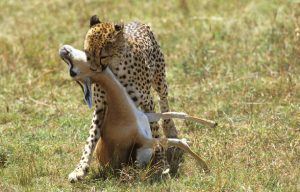
The migration creates extraordinary opportunities for observing predator behavior.
Large concentrations of herbivores provide predators with abundant opportunities.
Lions may follow migrating herds.
Cheetahs can hunt in open grasslands.
Hyenas may exploit vulnerable calves and carcasses.
Crocodiles wait in rivers during periods when wildebeest attempt crossings.
The interaction between predators and prey is one of the reasons the migration is such an important ecological phenomenon.
Photography During Gorilla Trekking
Gorilla photography requires a different approach from safari photography.
The forest is often darker than travelers expect.
Light can change rapidly beneath the canopy.
A camera capable of performing well in lower light can be advantageous.
Travelers should avoid using flash where prohibited.
The most meaningful photographs are often not posed images but photographs showing natural gorilla behavior.
Patience is important.
The gorillas may move through vegetation, sit quietly, feed or interact with one another.
Allowing the scene to develop naturally often produces better photographs.
Photography During the Great Migration
Safari photography benefits from a longer lens.
A telephoto lens allows travelers to photograph wildlife without needing to approach too closely.
A wide-angle lens is also useful for large herds and landscapes.
Early morning and late afternoon often provide attractive light.
During river-crossing opportunities, patience is essential.
The animals may not cross immediately.
Photographers should be prepared for long periods of waiting followed by sudden action.
Photography at a River Crossing
River crossings are among the most challenging wildlife photography opportunities.
The animals may enter the water unpredictably.
Dust, spray and large numbers of animals can make focusing difficult.
A fast shutter speed can help capture movement, while a slower shutter speed can sometimes create artistic effects.
However, travelers should not spend the entire experience looking through a camera.
The spectacle is worth experiencing directly.
Flights and Transportation
A combined gorilla and migration safari usually involves a combination of road transfers and regional flights.
The precise route depends on the countries involved.
Travelers arriving in Uganda may use Entebbe International Airport.
Travelers visiting Rwanda generally arrive through Kigali International Airport.
Tanzania’s safari network includes several airports serving different parts of the country.
Kenya’s Maasai Mara is also served by airstrips connecting to Nairobi and other regional destinations.
Flying between major safari regions can save substantial amounts of time.
For short itineraries, regional flights can therefore be extremely valuable.
Why Not Drive Everywhere?
East Africa is geographically large.
A road journey that looks simple on a map can take much longer than expected because of road conditions, border procedures and traffic.
Travelers with limited time should avoid spending entire days driving when a practical regional flight is available.
Road travel still has value, especially when the journey itself forms part of the experience.
The right balance depends on the itinerary.
International Arrival and Departure Planning
Travelers should ideally avoid scheduling important activities immediately after a long international flight. A delayed international flight can disrupt a tightly packed safari. Allowing some flexibility on the first day can make the journey considerably more comfortable. The final day should also include sufficient time to reach the international departure airport.
Health Preparation
Travelers should consult an appropriate medical professional or travel-health service before visiting East Africa. Health requirements vary according to nationality, itinerary and current regulations. Travelers should discuss vaccinations, malaria prevention and any personal medical considerations with qualified professionals. The safari operator can provide logistical information, but medical advice should come from an appropriate healthcare provider.
Hydration During Gorilla Trekking
The forest environment can be humid and physically demanding.
Travelers should carry sufficient drinking water for the trek according to park guidance.
Hydration is particularly important during longer hikes.
Travelers should also avoid carrying unnecessary weight.
A lightweight daypack is generally preferable to a large backpack.
Responsible Gorilla Tourism
Mountain gorilla tourism exists alongside conservation.
Gorilla permits help finance conservation activities, monitoring and protection, while tourism also creates employment and economic opportunities for surrounding communities.
Responsible tourism therefore has a direct relationship with the long-term survival of the gorillas.
Travelers can contribute further by respecting park regulations, supporting local businesses and avoiding activities that exploit wildlife.
The goal should be to ensure that tourism remains compatible with conservation.
Responsible Great Migration Tourism
The same principle applies to the Serengeti-Mara ecosystem.
The migration is a natural ecological process, not a performance arranged for tourists.
Safari vehicles should respect wildlife and park regulations.
Travelers should avoid encouraging guides to drive irresponsibly simply to obtain a photograph.
Choosing an operator that values conservation and responsible wildlife viewing is an important part of planning the trip.
Supporting Local Communities
A safari involves much more than wildlife.
Local communities provide accommodation, food, guiding services, transportation, cultural experiences and other services.
Travelers can support these communities by purchasing locally produced products, using responsible tourism businesses and treating local people with respect.
A successful safari should create benefits beyond the visitor.
Common Mistakes to Avoid
One of the biggest mistakes is booking a migration safari without considering the expected location of the herds.
The Serengeti is enormous.
A traveler can technically be in Serengeti National Park and still be far from the migration.
The second common mistake is assuming that a river crossing is guaranteed.
It is not.
The third mistake is trying to fit too many destinations into a short itinerary.
The fourth is selecting accommodation without considering its location.
The fifth is waiting too long to secure gorilla permits when travel dates are fixed.
The sixth is comparing safari prices without comparing inclusions.
One operator’s price may include flights, permits, accommodation, park fees and meals while another quotation may exclude several of these.
The cheapest quotation is therefore not necessarily the cheapest safari.
Another mistake is underestimating the physical demands of gorilla trekking.
The forest is beautiful but challenging.
Travelers should prepare accordingly.
Another mistake is packing only for warm weather.
Early mornings in the savanna can be cool, while mountain forests can be wet.
A good packing list should account for both environments.
Why Safari Price Comparisons Can Be Misleading
Two safari quotations can look very different even when they appear to describe the same trip.
The difference may come from accommodation category, vehicle type, park fees, permits, flights, meals, guide services, airport transfers or the number of travelers sharing the vehicle.
Travelers should always ask for a detailed list of inclusions and exclusions.
For gorilla safaris, the gorilla permit is a particularly significant component of the total price.
For migration safaris, accommodation and transportation can have a major effect on cost.
Is a Private Gorilla and Migration Safari Worth It?
For many travelers, yes.
A private safari provides flexibility.
The driver-guide can adapt the pace to the travelers’ interests.
If a group wants to spend more time watching a pride of lions, the itinerary can be adjusted within park rules.
Photographers can spend more time positioning for photographs.
Families can maintain their own pace.
Couples can enjoy a more intimate experience.
However, private travel costs more when fewer people are sharing the vehicle.
The decision ultimately depends on priorities and budget.
Can You Do This Safari on a Budget?
Yes, but expectations should be realistic.
The gorilla permit itself represents a significant portion of the cost.
International flights, regional flights, park fees, accommodation and safari vehicles also contribute substantially.
Budget travelers can reduce costs through carefully selected accommodation and shared transportation where practical.
However, reducing the number of safari days too aggressively can undermine the experience.
The goal should be to optimize value rather than simply minimize price.
What If the Migration Is Not Where Expected?
This is one of the most important realities travelers should understand.
The migration follows environmental conditions. Rainfall patterns can vary. The herds can move earlier or later than expected. Different groups can move in different directions. A responsible safari operator should not guarantee an exact herd location months in advance. Instead, the itinerary should be designed around the most likely migration zone for the travel dates, with flexibility where possible. Local safari guides and operators can then adapt the daily game-drive strategy based on current conditions.
Can the River Crossing Be Guaranteed?
No. No responsible safari operator should promise a specific river crossing on a specific date. The best that can be done is to travel during the appropriate seasonal period, stay in the correct ecosystem and allow sufficient time for opportunities. This distinction is important. A safari operator can maximize the probability of seeing a crossing. It cannot control the wildebeest.
What Happens If It Rains?
Rain does not stop the safari. Game drives generally continue unless conditions become unsafe.
Gorilla trekking can also continue in wet conditions. The experience may simply become more challenging. Rain can create muddy trails in the forest and difficult road conditions in some safari areas. At the same time, rain can produce spectacular landscapes and influence wildlife behavior.
Travelers should therefore pack appropriately rather than assuming that rain means the safari is ruined.
Can You Combine Uganda and Tanzania?
Yes.
This is one of the most rewarding combinations for travelers interested in both gorillas and the Great Migration.
Uganda provides gorilla trekking and opportunities for chimpanzees and savanna wildlife. Tanzania provides the Serengeti and other northern safari destinations. The most efficient route depends on the airports, travel dates and number of days available.
Can You Combine Rwanda and Tanzania?
Yes.
This is particularly attractive for shorter trips. A traveler can trek gorillas in Volcanoes National Park and then continue by air toward Tanzania. The route minimizes long overland transfers and can provide an efficient combination of gorillas and migration.
Can You Combine Rwanda and Kenya?
Yes.
Rwanda can be paired with Kenya’s Maasai Mara, particularly during the northern migration season. This can be an excellent option for travelers interested in the Mara ecosystem and potential river-crossing experiences.
Can You Visit Serengeti and Maasai Mara on One Trip?
Yes. However, the decision should be based on the length of the trip. For a short safari, adding both can create excessive travel. For a longer itinerary, the combination can provide a broader view of the Serengeti-Mara ecosystem. The route should be designed to maximize wildlife time rather than simply increasing the number of countries visited.
Frequently Asked Questions About Gorilla Trekking and the Great Wildebeest Migration
Can I combine gorilla trekking with the Great Wildebeest Migration?
Yes. Gorilla trekking in Uganda or Rwanda can be combined with a Great Migration safari in Tanzania or Kenya. The best route depends primarily on your travel dates and which phase of the migration you want to experience.
What is the best country for gorilla trekking?
Uganda and Rwanda are both excellent destinations for mountain gorilla trekking. Rwanda is often convenient for shorter trips because Volcanoes National Park is close to Kigali, while Uganda can be particularly attractive for travelers who want a longer safari including additional wildlife parks and primate experiences.
What is the best month for a gorilla and migration safari?
There is no single best month for everyone. January to March is particularly attractive for travelers interested in calving and predator activity in southern Serengeti. July to October is popular for northern migration experiences and potential Mara River crossings.
When is the Great Wildebeest Migration?
The Great Migration occurs throughout the year. The herds continuously move through the Serengeti-Mara ecosystem in response to rainfall, grazing and water availability. Different parts of the ecosystem become more important during different months.
When is the wildebeest calving season?
The main calving period generally occurs around January through March in the southern Serengeti and Ndutu ecosystem, although the exact timing varies with environmental conditions.
When is the Mara River crossing?
River crossings generally occur during the northern migration period, commonly around July through October. However, crossings are unpredictable and cannot be guaranteed on a specific date.
Can I see the Great Migration in February?
Yes. February is one of the most important months for the southern Serengeti calving season.
Can I see the Great Migration in August?
Yes. August is one of the most popular months for the northern migration and potential Mara River crossing opportunities.
Is gorilla trekking safe?
Gorilla trekking is conducted under controlled conditions with trained guides, trackers and park authorities. Travelers must follow all safety instructions and maintain the required distance from the gorillas.
Is gorilla trekking difficult?
The difficulty varies. Some treks are relatively short, while others require several hours of hiking through steep, muddy and dense forest. Travelers should have a reasonable level of physical fitness and prepare for uneven terrain.
How long does gorilla trekking take?
The total duration varies depending on the location of the gorilla family. The trek can take a few hours or significantly longer. The actual time spent observing the gorillas is controlled by conservation regulations.
What should I wear for gorilla trekking?
Comfortable hiking boots, long trousers, long sleeves, a waterproof jacket and protective gloves are useful. Clothing should prioritize comfort and protection rather than appearance.
Do I need hiking experience?
Professional hiking experience is not required, but travelers should be prepared to walk on steep and uneven terrain. Basic physical preparation is strongly recommended.
Can older travelers trek gorillas?
Yes, provided they are physically capable and meet the applicable park requirements. Travelers should discuss any mobility concerns with their safari operator before the trip.
Can children trek gorillas?
Minimum age requirements apply to gorilla trekking and should be confirmed according to the current regulations at the time of booking. As of 2026, the minimum age for gorilla trekking is 15 years.
Can I see gorillas and chimpanzees on the same trip?
Yes. Uganda is particularly suitable for combining gorilla trekking in Bwindi with chimpanzee trekking in Kibale National Park.
Can I see the Big Five during a gorilla and migration safari?
Potentially, yes. Tanzania and Kenya offer opportunities to see lions, leopards, elephants and buffalo, while rhinoceros sightings depend on the specific destination and current conditions. Wildlife sightings are never guaranteed.
How much does a gorilla and migration safari cost?
The price depends on the gorilla destination, permit category, accommodation level, number of travelers, transportation, flights, safari duration and migration region. A detailed quotation should clearly separate included and excluded services.
Is Uganda cheaper than Rwanda for gorilla trekking?
The total cost depends on the complete itinerary, not only the permit. Uganda and Rwanda have different permit prices, accommodation options, transport requirements and safari possibilities. Comparing the complete safari package provides a more accurate picture.
Is a private safari better than a group safari?
A private safari provides more flexibility and is particularly useful for families, couples and photographers. Group travel can reduce the cost per traveler. The better option depends on budget and travel preferences.
How many days should I spend in the Serengeti?
For a migration-focused safari, several nights are generally preferable to a single night because the ecosystem is enormous and wildlife movement is unpredictable. The exact number depends on the season and overall itinerary.
How many nights should I spend near the Mara River?
Travelers specifically hoping for a river crossing should ideally allow enough time for multiple opportunities. A single night gives limited flexibility because the animals may not cross while you are there.
Is the Great Migration guaranteed?
No. The migration is a natural phenomenon and its exact movement depends on environmental conditions. A responsible operator should never guarantee a specific wildlife event.
Can I travel during the rainy season?
Yes. Rainy-season travel can provide green landscapes, fewer visitors and different photographic opportunities. Travelers should simply be prepared for wet conditions and potentially challenging roads.
Do I need travel insurance?
Travel insurance is strongly recommended for international safari travel. Travelers should choose coverage appropriate to their itinerary and activities.
Which airport should I fly into?
The best airport depends on whether the itinerary begins in Uganda, Rwanda, Tanzania or Kenya and where it ends. A safari operator can design the route around the most practical international and regional airports.
Can I combine gorilla trekking with a honeymoon?
Absolutely. Gorilla trekking provides an adventurous component while luxury lodges, private game drives and carefully selected camps can provide a romantic safari experience.
Can I combine gorilla trekking with a family safari?
Yes, subject to applicable age requirements for gorilla trekking. The itinerary should be designed around the family’s physical ability and should include sufficient rest between activities.
Why Book Your Gorilla and Great Migration Safari With Native Africa Tours?
A safari of this complexity benefits from local knowledge.
At Native Africa Tours, we understand that planning a gorilla trekking and Great Wildebeest Migration safari is not simply a matter of putting two famous attractions on the same itinerary. The route needs to be designed around seasonal wildlife movement, permit availability, accommodation location, transportation, border requirements and the individual traveler’s expectations.
Our experience in Uganda and Rwanda allows us to help travelers choose between Bwindi, Mgahinga and Volcanoes National Park according to their overall itinerary.
We can also design the Tanzania portion around the expected migration pattern, whether the traveler is interested in southern Serengeti calving, the western corridor, central Serengeti, northern Serengeti or the Mara ecosystem.
For travelers interested in Kenya, the itinerary can also be extended toward the Maasai Mara when the season and available travel time make this worthwhile.
We believe that a good safari should be personalized.
A honeymoon couple should not receive the same itinerary as a group of wildlife photographers.
A family should not necessarily follow the same schedule as an experienced hiker.
A traveler with seven days needs a different route from someone with three weeks.
This is why we design safaris around the traveler rather than forcing every traveler into one standard package.
Start Planning Your Gorilla Trekking and Great Wildebeest Migration Safari
A journey combining mountain gorillas with the Great Wildebeest Migration is more than an ordinary safari.
It connects two of Africa’s most extraordinary wildlife experiences: the intimate encounter with endangered mountain gorillas in a misty mountain forest and the enormous ecological spectacle of millions of grazing animals moving across the Serengeti-Mara ecosystem.
Whether you want to experience the wildebeest calving season in southern Serengeti, follow the northward migration, look for Mara River crossings, trek gorillas in Uganda, experience Rwanda gorilla trekking, explore the Serengeti, visit the Maasai Mara, or combine several of these experiences into one extended East African adventure, the itinerary should be built around your dates, interests and available time.
But careful planning can put you in the right place at the right time and give you the best realistic opportunity to experience these extraordinary natural events. That is the essence of a great East African safari.
Contact Native Africa Tours to begin planning your personalized Gorilla Trekking and Great Wildebeest Migration Safari.