
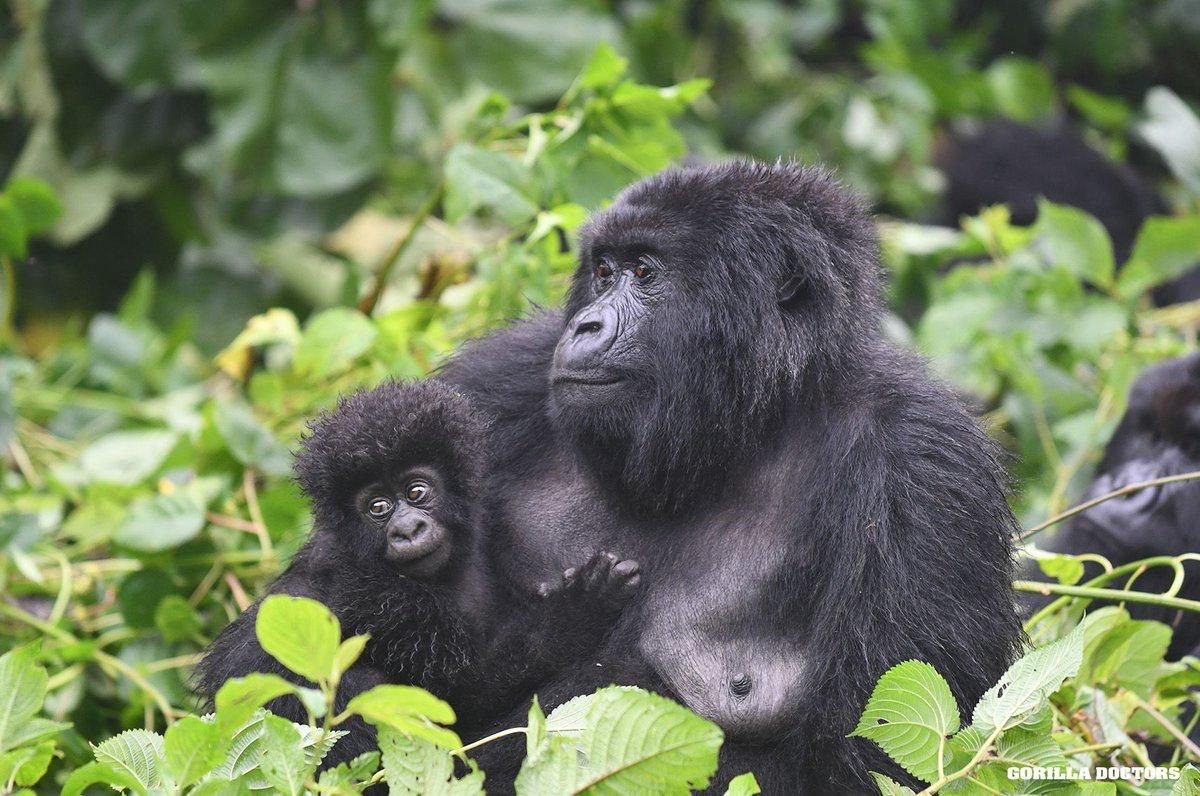
Gorilla Habituation Tours Uganda give travelers the opportunity to spend up to four hours observing a habituated mountain gorilla family in Bwindi Impenetrable National Park. This extended experience offers more time to watch gorilla behavior, follow the family through the forest, and learn from the trackers and researchers taking part in the habituation process.
At Native Africa Tours, we help travelers arrange their Gorilla Habituation permits and organize the rest of their journey around the experience. From checking your preferred dates and arranging transportation to selecting accommodation and building a private Uganda safari, our team can handle the practical details while you focus on preparing for your time in Bwindi.
The experience takes place in the southern part of Bwindi, particularly around the Rushaga sector, which has become closely associated with Uganda’s gorilla habituation experience. Reaching the forest can form part of a wider Uganda safari, or you can travel to Bwindi specifically for the habituation experience. Travelers arriving through Kigali can also combine Rwanda and Uganda in one itinerary, making the southern Bwindi route an attractive option for a cross-border East African adventure.
A gorilla habituation permit differs from the permit used for standard gorilla trekking. The two experiences have different purposes, costs, and time commitments. Understanding those differences before you book can help you decide which experience suits your interests, available time, and budget.
This guide explains everything you need to know before booking. We cover the Gorilla Habituation Experience in Uganda, permit costs, how the booking process works, where the experience takes place, what to expect in the forest, how difficult the trek can be, what to pack, the best time to visit, and how to combine habituation with a wider Uganda safari.
Whether you are planning your first visit to Uganda or returning specifically for a deeper gorilla experience, Native Africa Tours can help you arrange the permit and create a private itinerary around your travel dates.
What is the Gorilla Habituation Experience?
The Gorilla Habituation Tours Uganda allow visitors to spend an extended period observing a mountain gorilla family that is still undergoing the habituation process. Habituation is the gradual process through which gorillas become accustomed to the presence of people without losing their natural behavior. Rather than rushing through a short wildlife encounter, visitors have more time to watch how the gorillas move, feed, communicate, interact with one another, and respond to their surroundings.
The experience takes place in the natural environment of Bwindi Impenetrable National Park, a UNESCO World Heritage Site and one of Uganda’s most important destinations for mountain gorilla conservation. The thick vegetation, steep slopes and dense forest create a genuinely wild setting, so the experience involves much more than simply arriving at a viewing point and waiting for the gorillas.
During a Gorilla Habituation Experience, visitors enter the forest with experienced trackers and rangers who follow signs left by the gorilla family. The team may look for footprints, broken vegetation, feeding sites, nests, and other clues that help determine where the animals have moved. Because these are wild animals, their location and behavior can change throughout the day. Patience, therefore, becomes an important part of the experience.
Once the gorilla family is located, visitors can observe the animals while following the instructions given by the ranger and tracking team. The longer observation period creates more opportunities to witness natural behavior. A gorilla may spend time feeding quietly, move through the vegetation, interact with another member of the family, or simply rest beneath the forest canopy.
One of the most interesting aspects of habituation is that the experience is not only about seeing gorillas. You also gain a better understanding of the work involved in monitoring and habituating them. Trackers and researchers pay close attention to individual animals, their relationships, movements, and behavior. Their observations contribute to a wider understanding and conservation of mountain gorillas.
For travelers considering Gorilla Habituation Tours, this distinction is important. The experience suits people who want to slow down, observe wildlife, and spend more time immersed in the forest. Photographers may also appreciate the additional observation time, although photography conditions depend on the dense forest environment, available light, and the behavior of the gorillas on the day.
The experience also requires respect for the animals and their habitat. Visitors must follow the guidance of the ranger team throughout the encounter, maintain the required distance, avoid unnecessary noise, and never attempt to touch or feed the gorillas. These rules help minimize disturbance while allowing the habituation process to continue responsibly.
If you would like to understand exactly how a habituation day unfolds from the early morning briefing to the return from the forest, we have also prepared a detailed guide on what happens during Gorilla Habituation in Bwindi. That article goes deeper into the practical experience itself, while this page focuses on booking your permit and planning your complete Gorilla Habituation Tour in Uganda.
For travelers booking Gorilla habituation tours in Uganda through Native Africa Tours, we can combine this experience with accommodation, transportation, and other destinations in the Country. This makes it possible to build a private itinerary around your permit date rather than treating the gorilla experience as a separate activity.
Where does gorilla habituation take place in Uganda?
Gorilla Habituation Tours in Uganda take place in the southern part of Bwindi Impenetrable National Park, one of the country’s most important destinations for mountain gorilla conservation. For travelers planning Gorilla Habituation Tours in Uganda, understanding the location is important because the forest is remote, the terrain is challenging in places, and your accommodation and transportation need to match the date and location of your habituation experience.
Gorilla Habituation in Bwindi Impenetrable National Park
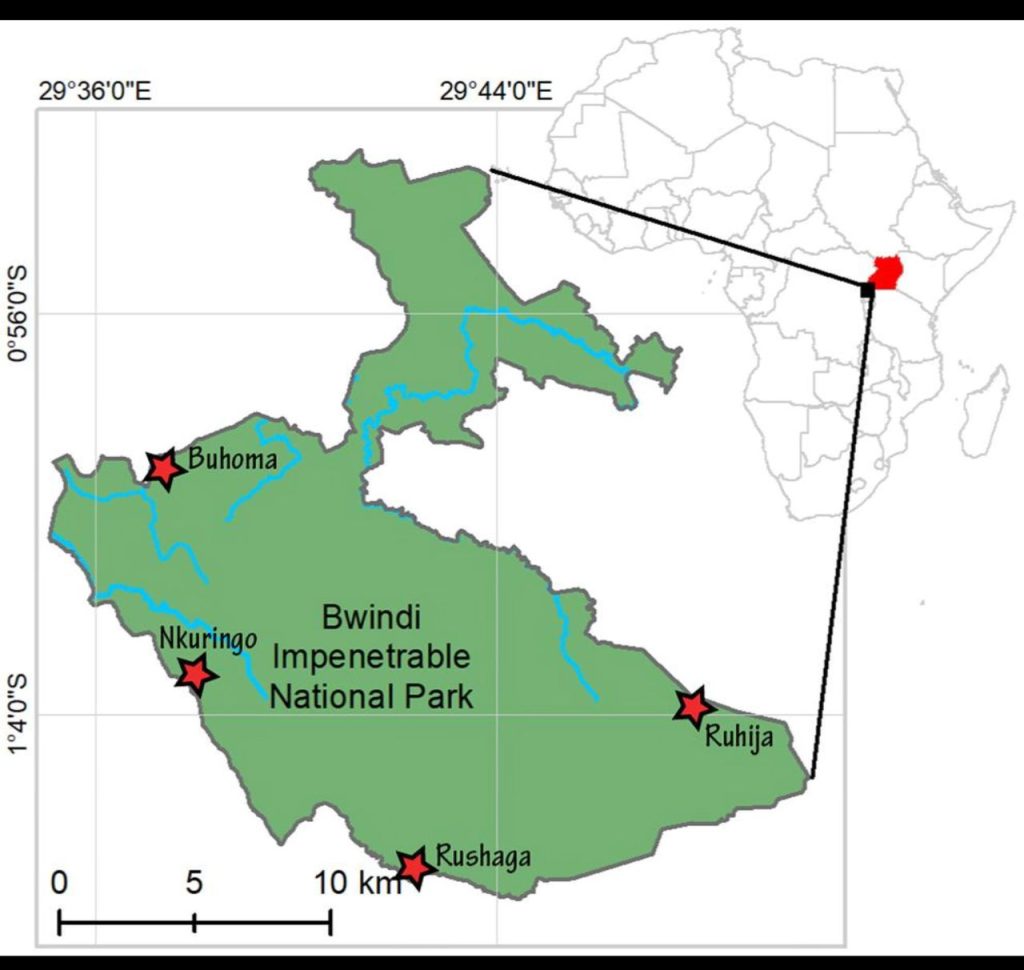
Bwindi Impenetrable National Park lies in southwestern Uganda, near the borders with Rwanda and the Democratic Republic of Congo. The park protects a remarkable stretch of ancient rainforest and provides habitat for a large population of endangered mountain gorillas. Its thick vegetation, steep hills, and a network of forest trails create the natural environment in which the habituation experience takes place.
Bwindi has several tourism sectors, including Buhoma, Ruhija, Nkuringo, and Rushaga. Each sector has its own access routes, accommodation options, and trekking experiences. However, travelers specifically interested in Gorilla Habituation Tours normally focus on the southern part of the park, where the habituation experience is conducted.
The location also makes Bwindi particularly attractive for travelers who want to combine gorilla experiences with other destinations. A journey to the forest can form part of a longer Uganda safari that includes Queen Elizabeth National Park, Kibale Forest, Lake Mburo, or other destinations. Travelers arriving in Rwanda can also cross into Uganda and continue to Bwindi, creating a convenient Rwanda-Uganda itinerary.
Gorilla Habituation in Rushaga
Rushaga is located in the southern part of Bwindi and is particularly important for visitors booking Gorilla Habituation Tours in Uganda. The sector provides access to the forest where travelers can participate in the extended gorilla observation experience alongside the ranger and tracking teams.
The journey to Rushaga can take several hours depending on where you begin your safari. Travelers coming from Kampala or Entebbe spend more time on the road because southwestern Uganda is a considerable distance from the capital. However, the journey can become part of the safari itself, especially when you include stops and overnight stays along the way.
For travelers coming from Kigali, the route can be considerably more convenient. Kigali is relatively close to southwestern Uganda, which allows visitors to combine a stay in Rwanda with a Gorilla Habituation Experience in Uganda. This option can work particularly well for travelers who want to experience both countries during one East African holiday.
Getting to Rushaga for a Gorilla Habituation Tour
Your starting point has a significant influence on the overall itinerary. Native Africa Tours can organize Gorilla Habituation Tours in Uganda starting from Kigali, Kampala, or Entebbe, depending on your travel plans and preferred route.
Travelers starting in Kampala or Entebbe can travel westward through Uganda before continuing toward southwestern Uganda. Depending on the itinerary, you can include destinations such as Queen Elizabeth National Park along the way. This creates an opportunity to combine your gorilla experience with wildlife viewing rather than spending the entire journey focused only on transportation.
Those starting in Kigali can take a different route through southwestern Rwanda before crossing into Uganda. After completing the necessary border formalities, the journey continues toward Bwindi and the Rushaga area. This route is especially useful for travelers who are already visiting Rwanda or arriving through Kigali International Airport.
For either route, we recommend planning your accommodation around the location of your habituation experience. Staying reasonably close to the starting point helps reduce unnecessary early-morning driving and gives you more time to prepare for the forest experience.
Accommodation Near Rushaga
Accommodation forms an important part of planning Gorilla Habituation Tours, particularly because the experience requires an early start. Rushaga and the surrounding area offer several accommodation options, ranging from comfortable budget properties to mid-range and high-end lodges.
The right choice depends on your budget, preferred level of comfort, and wider itinerary. At Native Africa Tours, we can recommend accommodation based on your travel style and coordinate it with your permit date. This is especially useful when travelers are combining habituation with other destinations and need the entire route to work smoothly.
Rather than choosing a lodge simply because it appears close on a map, it is worth considering road conditions, actual driving time, the location of the briefing point, and your activities before and after the habituation experience.
Why Location Matters When Booking Gorilla Habituation?
The location of your permit should influence the entire safari plan. A common mistake is to book a permit first and only later discover that the chosen accommodation or transportation arrangement creates unnecessary travel on the day of the experience.
Native Africa Tours helps travelers plan these details together. Once your Gorilla Habituation permit and preferred travel dates are established, we can build the accommodation, transportation, and other safari activities around them.
This approach is particularly useful for travelers who want more than a single gorilla experience. You can combine your time in Bwindi with wildlife viewing, primate experiences, or a visit to Rwanda, creating a complete itinerary rather than treating Gorilla Habituation as an isolated activity.
Gorilla Habituation Permit in Uganda
Before planning accommodation, transportation, or the rest of your safari, the most important thing to secure is your Gorilla Habituation Permit. The permit gives you access to the habituation experience in Bwindi and allows you to join the ranger and tracking team as they follow and observe a gorilla family that is still undergoing habituation.
Unlike a normal park entrance ticket, this is a specialized wildlife permit with limited availability. Your chosen date therefore becomes an important part of the entire safari plan. Once the date is confirmed, it becomes much easier to arrange where you will stay, how you will reach Rushaga, and which destinations you can comfortably include before or after your time in the forest.
What is a gorilla habituation permit?
A gorilla habituation permit is the authorization required to participate in the extended gorilla observation experience in Bwindi. It is separate from the permit used for standard gorilla trekking, and the two experiences should not be treated as interchangeable.
The chief attraction is the opportunity to spend up to four hours with the gorilla family once you locate them. That longer observation period gives you more time to watch their behavior, movements, and interactions than you would normally have during a standard trek.
It is important to understand that four hours does not mean four hours of continuously walking behind gorillas. The actual forest experience involves trekking, tracking, and waiting, followed by periods of observation when the family is located. The gorillas remain wild animals, so their movements determine how the encounter develops.
How much does a gorilla habituation permit cost?
The price of a habituation permit depends on the visitor category and the UWA tariff applicable to your travel dates. For this reason, we recommend confirming the current rate when you begin planning rather than relying on figures published several years ago.
For a foreign non-resident, the current Uganda Wildlife Authority 2027 tariff lists the habituation permit at US$1,800 per person. Permit rates for other visitor categories differ, so your nationality and residency status should be confirmed when requesting a quotation.
The permit is also only one part of the overall cost of your trip. Your final safari price can include transportation, accommodation, meals, guiding, airport transfers, and other activities depending on how you design the itinerary.
This distinction is particularly important when comparing gorilla habituation tour prices. A quotation that appears more expensive may include several nights of accommodation and private transportation, while another price may cover the permit alone.
How do you book a gorilla habituation permit?
The process begins with your preferred travel dates. Once you tell Native Africa Tours when you would like to visit, we can check the available arrangements and advise you on the next steps.
If your dates are flexible, that can make planning easier. We may suggest alternative dates that fit better with permit availability, accommodation, or your wider Uganda itinerary.
After confirming the arrangements, we proceed with the permit booking according to the applicable UWA requirements. Once the permit is secured, we can build the rest of your safari around that fixed date.
This approach is particularly useful when you are combining Bwindi with other destinations. A confirmed habituation date can determine when you should arrive in the region and when you should continue to your next destination.
How early should you reserve your permit?
There is no reason to wait until the last moment if you already know your travel dates. Gorilla habituation permits are limited, and travelers with fixed international flights have less flexibility if their preferred date is unavailable.
Early planning also gives you more choice when selecting accommodation. You can decide whether you prefer a comfortable mid-range lodge, a high-end property, or a more budget-conscious option without having to reorganize the entire itinerary around whatever remains available.
The same principle applies when combining Uganda with Rwanda. If you plan to travel from Kigali to Bwindi, your border crossing, accommodation, and transportation can all be arranged around the confirmed habituation date.
Can you book the Gorilla Habituation permit without a full safari?
Yes. Some visitors already have their accommodation or transportation arranged and only need assistance with the permit. Others prefer a complete private safari where we coordinate everything from arrival to departure.
Native Africa Tours can therefore work with different types of travelers. If you only need help with the permit, tell us your dates and requirements. If you want the complete experience, we can arrange the permit, safari vehicle, driver-guide, accommodation, and other activities as one itinerary.
For visitors arriving through Kigali, we can also organize the Uganda portion of the journey while leaving the rest of your Rwanda travel independent.
Why Your Gorilla Habituation Permit Date Matters
A habituation permit should not be treated as an isolated booking. The date influences where you sleep the night before, when you leave your previous destination, and how much time you have to continue your journey afterward.
For example, someone traveling from Queen Elizabeth National Park needs to consider the road journey to Bwindi. A visitor coming from Kigali has a different route altogether. Someone flying into Entebbe may choose to spend several days exploring Uganda before reaching Rushaga.
Planning these details together helps create a smoother journey and reduces unnecessary driving.
For anyone interested in Gorilla Habitituation Tours in Uganda, the permit is the foundation of the entire experience. Once that important date is secured, the rest of your Uganda safari can be built around it.
Gorilla Habituation Permit Cost and Tour Prices
The cost of a Gorilla Habituation Tour depends on much more than the price of the permit. The permit is the largest single expense for many international visitors, but your final safari budget also depends on where you begin your journey, how many nights you spend in Bwindi, your accommodation level, transportation, and whether you combine the experience with other destinations in Uganda or Rwanda. When planning Gorilla Habituation Tours Uganda, the permit is one of the most important costs to consider because it covers the extended time spent observing a habituating gorilla family.
For the 2027 UWA tariff, the Gorilla Habituation permit for a foreign non-resident is listed at US$1,800 per person. Uganda Wildlife Authority is the government agency responsible for managing Uganda’s protected areas and wildlife tourism, so its published tariff should be the reference point when discussing current permit prices.
It is worth separating the habituation permit price from the price of a complete safari. When someone searches for “Gorilla Habituation cost,” they may actually be asking two different questions: how much they need to pay for the permit and how much the entire journey to Bwindi will cost.
How much is a gorilla habituation permit?
For a foreign non-resident visiting Uganda during the 2026-2027 tariff period, the habituation permit costs US$1,500 per person. Rates for other visitor categories can differ, so the correct price should always be confirmed according to nationality, residency status, and the applicable Uganda Wildlife Authority tariff at the time of booking.
The permit gives you access to the designated habituation experience, but it does not turn into an all-inclusive safari simply because it carries a higher price than standard gorilla trekking. You still need to consider how you will reach Bwindi, where you will sleep, what you will eat, and whether you want to visit other destinations during the same trip.
That distinction helps explain why Gorilla Habituation Tour prices can vary significantly between travelers. Two people could participate in the same forest experience while paying different amounts for their overall holidays.
What is included in the total tour price?
A complete quotation from Native Africa Tours can bring together several elements of the journey rather than leaving you to arrange each part separately.
Depending on the itinerary, the package can include your habituation permit, private 4×4 safari transportation, an experienced driver-guide, accommodation, meals, airport transfers, and additional activities. The exact inclusions depend on the number of days, accommodation category, and route you choose.
Someone traveling directly to Rushaga for a short private trip will naturally have a different budget from a couple spending several days exploring Queen Elizabeth National Park before continuing to Bwindi.
Your starting point also matters. A traveler arriving through Kigali may require a different route from someone landing at Entebbe International Airport. Likewise, adding wildlife viewing or chimpanzee trekking will increase the overall cost but can create a much richer Uganda safari.
Why Uganda Gorilla Habituation Tours Cost More Than Standard Trekking?
The difference in price reflects the nature of the two experiences. Standard gorilla trekking focuses on locating a habituated family and spending a limited period observing the gorillas. Habituation gives visitors the opportunity for a much longer encounter, with up to four hours of observation once the gorilla family has been located.
That additional time changes the character of the experience. Instead of worrying about seeing the gorillas quickly before the encounter ends, you have more opportunity to sit quietly and observe their behavior. A mother caring for her infant, a silverback interacting with younger gorillas, feeding activity, or movement through the vegetation can all become part of the encounter.
The longer observation period is particularly attractive to wildlife photographers and travelers who have a strong interest in gorilla behavior. It also appeals to visitors who have already completed a conventional gorilla trek and want to experience something more specialized.
Does the permit price cover accommodation and transport?
No, the permit and the safari services are separate components of the trip.
Your accommodation is selected according to your preferred comfort level and budget. Transportation depends on your starting point and the route you choose. A private vehicle also gives you considerably more flexibility than joining an itinerary designed around a fixed group schedule.
For example, a traveler starting in Kigali might spend one night near Rushaga before the experience and return toward Rwanda afterward. Another guest might begin in Entebbe, spend several days exploring Uganda’s wildlife parks, and then continue to Bwindi.
This is why we recommend asking for a complete gorilla habituation safari quotation rather than looking only at the permit price. A proper quotation should show you what you are paying for and make the inclusions clear.
How much does a complete gorilla habituation safari cost?
There is no single price that applies to every gorilla habituation safari in Uganda.
The ultimate cost depends on several variables, including the number of travelers, duration, accommodation category, transportation route, and additional activities. A solo traveler will also normally have a different per-person rate from a couple sharing a private vehicle and room.
As a general planning principle, start with the permit as the fixed major expense, then build the rest of the surrounding trip. Once we know your dates, number of travelers, and preferred route, Native Africa Tours can calculate the remaining costs and provide a personalized quotation.
We can arrange anything from a short habituation-focused journey to a longer Uganda itinerary that combines Bwindi with destinations such as Queen Elizabeth National Park, Kibale Forest or Lake Mburo.
Budget, Mid-Range, and Luxury Options
Your accommodation choice can make a noticeable difference to the ultimate price without changing the habituation experience itself.
A budget Gorilla Habituation safari can focus on practical accommodation and efficient transportation while keeping unnecessary extras to a minimum. This can work well for travelers who would rather allocate more of their budget to the forest experience.
A mid-range itinerary provides a balance between comfort and cost. You can stay in a comfortable lodge near the trekking area while still having enough flexibility to include other destinations.
Luxury travelers can choose higher-end lodges and more exclusive arrangements, creating a slower-paced safari with additional time for wildlife viewing and relaxation.
The important point is that the gorilla permit remains a separate, fixed component, while many other aspects of the safari can be adjusted to suit your preferences.
Can I book a gorilla habituation permit without a full tour?
Yes. If you have already arranged your accommodation and transportation, you can contact us about permit arrangements separately.
However, many international visitors find that combining the permit with transportation and accommodation makes the trip much easier to manage. Bwindi is not a destination where you want to discover at the last minute that your lodge is far from your meeting point or that your planned driving schedule leaves you exhausted before the experience.
For this reason, Native Africa Tours can either assist with the habituation permit booking or build the complete safari around your confirmed date.
What Makes a Gorilla Habituation Safari Good Value?
Value does not necessarily mean choosing the cheapest quotation. The more useful question is what you receive for the total amount you spend.
A well-planned itinerary should give you enough time to reach Bwindi comfortably, stay in suitable accommodation, and arrive at the forest prepared for the experience. It should also avoid unnecessarily long-distance driving where possible.
For some visitors, the greatest value comes from spending more time with gorillas. Others may prefer to use the same trip to explore Uganda’s wildlife, landscapes, and primate destinations.
That is why we build private itineraries around individual travel plans rather than applying one fixed price to every guest.
Gorilla Habituation Tours Uganda vs Gorilla Trekking Tours in Uganda
Choosing between gorilla trekking and habituation often comes down to one simple question: How much time do you want to spend observing the gorillas? Both experiences take you into Bwindi’s rainforest and involve tracking mountain gorillas with an experienced ranger team. The difference lies in the encounter, the amount of time available for observation, the type of gorilla family visited, and the overall cost.
Standard gorilla trekking works particularly well for visitors who want to experience mountain gorillas without dedicating a large part of their safari to the activity. Habituation appeals to people who want a longer, more immersive encounter and have the time and budget for a specialized experience.
What is the main difference?
During ordinary trekking, the objective is to locate a habituated gorilla family and spend a limited period observing the animals once the group has been found. The trek itself can take considerably longer than the actual viewing period because the gorillas may move through thick forest or across difficult terrain.
With habituation, the experience goes further. Visitors can spend up to four hours observing the gorilla family after the group has been located. This additional time creates more opportunities to watch natural behavior rather than feeling that every moment has to count during a shorter encounter.
The experience therefore suits different types of travelers. Someone visiting Uganda for the first time and working with a tight itinerary may be perfectly happy with standard trekking. A wildlife photographer, primate enthusiast, or repeat gorilla visitor may find the extended observation period more rewarding.
Gorilla Trekking and Habituation Comparison
| Feature | Gorilla Trekking | Gorilla Habituation |
|---|---|---|
| Main Purpose | Observe an already habituated gorilla family | Spend extended time observing a gorilla family undergoing habituation |
| Observation Time | Up to one hour with the gorilla family | Up to four hours with the gorilla family |
| Experience | A focused wildlife encounter | A longer and more immersive wildlife experience |
| Permit Cost | Lower | Higher |
| Best For | First-time visitors and travelers with limited time | Wildlife enthusiasts, photographers, and travelers seeking extended observation |
| Gorilla Family | Habituated gorilla family | Gorilla family undergoing habituation |
| Photography | Excellent opportunities within the permitted viewing period | More time can provide additional opportunities for wildlife photography |
| Physical Effort | Depends on where the gorillas are located | Depends on where the gorillas are located and the length of the forest experience |
| Overall Experience | Shorter, focused encounters with mountain gorillas | Extended observation and a deeper understanding of gorilla behavior |
The table provides a useful overview, but the choice becomes clearer when you consider what you actually want from your time in the forest.
Which experience gives you more time with gorillas?
If your priority is spending longer observing mountain gorillas, habituation is the obvious choice.
The opportunity to spend up to four hours with the gorillas gives you a different rhythm from ordinary trekking. You may watch the group feeding, resting, climbing, playing, or interacting with one another. There can also be quiet periods when little appears to happen. Those moments are part of observing wild animals, and they can be just as interesting for someone who enjoys understanding animal behavior.
Standard trekking can still produce an unforgettable encounter. You might find the gorillas quickly and enjoy a close, dramatic interaction within the permitted viewing period. The shorter encounter does not make the experience less meaningful; it simply serves a different purpose.
Which is better for photography?
Photographers often lean toward habituation because additional observation time can provide more opportunities to work with the changing conditions of the forest.
Bwindi’s rainforest does not offer the controlled lighting of a studio. Dense vegetation, shadows, and movement can make photography challenging. The gorillas may also move behind leaves, climb into vegetation, or change position just as you prepare your shot.
Having more time allows you to wait rather than feeling pressured to capture everything immediately. You can observe first, anticipate behavior, and adjust your position or camera settings when appropriate.
That does not guarantee perfect photographs. Wildlife remains unpredictable, and the forest environment can be demanding. However, travelers who enjoy wildlife photography may appreciate the slower pace of the habituation experience.
Is Uganda Gorilla Habituation More Difficult Than Trekking Tours?
Not necessarily.
The physical difficulty depends heavily on where the gorillas are located on the day of your visit. Both activities take place in challenging forest terrain, and you may encounter steep slopes, thick vegetation, muddy paths, and uneven ground.
The difference is that habituation involves a longer overall experience. You should therefore prepare for a substantial amount of time in the forest rather than thinking only about the period spent watching the gorillas.
A reasonable level of fitness helps, but you do not need to be an elite hiker. Porters can also assist with your backpack and provide support during the trek. If you have concerns about mobility or fitness, discuss them with us before your trip so that we can help you prepare appropriately.
Which experience is better for first-time visitors? Gorilla Trekking or Gorilla Habituation
There is no universal answer.
For many first-time visitors, standard trekking provides everything they want: a chance to enter Bwindi, track mountain gorillas, and observe them in their natural environment. It also costs less and can fit more easily into a shorter itinerary.
However, a first-time visitor who has a strong interest in primates may prefer habituation from the beginning. If you have always dreamed of spending several hours observing gorilla behavior, there is little reason to choose ordinary trekking simply because it is your first visit.
Is Gorilla Habituation Worth the Higher Price?
For some people, absolutely.
The higher permit cost makes more sense when you value extended time observing gorillas rather than simply wanting to see them. Wildlife photographers, serious primate enthusiasts, and travelers who want a slower encounter may consider the additional expense worthwhile.
On the other hand, if you have only a few days in Uganda or want to combine gorillas with several other destinations, standard trekking may be the more practical option.
The best choice is the one that matches your reason for coming to Uganda. There is no need to pay for a longer experience if a standard trek already provides what you are looking for.
Can you combine gorilla habituation with a wider Uganda safari?
Yes, and this is one advantage of arranging the experience as a private safari.
You could spend time viewing wildlife in Queen Elizabeth National Park before continuing toward Bwindi. Another itinerary might combine gorilla habituation with chimpanzee trekking in Kibale Forest. Travelers arriving through Kigali can also create a Rwanda-Uganda itinerary that includes both countries.
The important part is to build the route around the confirmed habituation date. Once that date is secured, the rest of the journey can be arranged before and after it.
For travelers who want a deeper wildlife experience, this approach turns the habituation permit into one part of a much larger East African adventure rather than a standalone activity.
Why Choose Gorilla Habituation Tours?
A standard gorilla trek can be unforgettable, but some visitors want more than a brief encounter with a mountain gorilla. They want to sit quietly in the forest, watch the animals for longer, and have enough time to notice details that might be missed during a shorter visit. Choosing Gorilla Habituation Tours Uganda gives travelers a different perspective on mountain gorilla conservation, with considerably more time in the forest than a standard trekking experience.
The experience is particularly appealing to people who see wildlife as more than a checklist of animals to photograph. Instead of focusing only on finding the gorillas and taking a few photographs before the viewing period ends, you have an opportunity to slow down and observe their behavior as the encounter develops.
Spend More Time Observing Mountain Gorillas
Perhaps the biggest reason people choose habituation is the opportunity to spend up to four hours with gorillas after locating the family.
Four hours can make a significant difference in how you experience the forest. During a shorter encounter, you may see a gorilla feeding or resting and then suddenly find yourself moving on because the permitted viewing period has ended. With habituation, there is more time to remain patient and see how the group behaves over a longer period.
The gorillas may move between feeding areas, interact with one another, rest beneath the vegetation, or change their position as the day progresses. Sometimes very little happens for several minutes. Then, without warning, an interesting interaction begins. Having additional time gives you a better chance of witnessing those moments.
Observe Gorilla Behavior in Greater Detail
If you are fascinated by primates, the behavior of the animals can become just as important as the sighting itself.
You may notice differences between individuals within the family. Younger gorillas can be particularly active, while adults may spend considerable time feeding or resting. Silverbacks can display a wide range of behaviors depending on what is happening around them.
Rather than simply asking, “Did I see the gorillas?”, habituation encourages a different question: “What were the gorillas doing?”
That change in perspective is one reason the experience attracts wildlife enthusiasts and travelers who have a deeper interest in mountain gorilla conservation.
A Unique Experience for Wildlife Photographers
Photography is another reason some visitors choose the longer experience. Bwindi’s rainforest presents challenging conditions, with dense vegetation, changing light,, and animals that rarely remain in one convenient position for a photograph.
More observation time gives photographers greater opportunity to watch before taking a photograph. You can study the group’s movements, anticipate behavior, and wait for a clearer view rather than feeling pressured to capture everything immediately.
Of course, additional time does not guarantee perfect photographs. Mountain gorillas remain wild animals, and the forest environment can be unpredictable. Leaves may obscure an animal, the light may be low, or the family may move into thicker vegetation.
For photographers, however, extended gorilla observation creates more possibilities than a brief encounter.
Ideal for travelers who have already trekked gorillas
Some visitors arrive in Uganda after experiencing standard gorilla trekking elsewhere in East Africa. Returning for habituation allows them to approach the experience from a different perspective.
Instead of repeating the same type of trek, they can spend considerably longer observing a gorilla family and paying closer attention to behavior, interactions,, and the surrounding forest.
This makes habituation particularly interesting for repeat visitors to Uganda or travelers who have already completed a conventional gorilla trek and now want a more specialized encounter.
Learn more about gorilla conservation
The experience also provides insight into the work involved in getting gorillas accustomed to controlled human observation.
Researchers, trackers, and rangers spend considerable time monitoring gorilla families and learning about individual animals. Their work contributes to conservation efforts and helps teams understand changes within the group.
Visitors should therefore approach the experience with curiosity and respect. You are not simply entering the forest for a longer photographic session. You are entering an environment where conservation work and responsible tourism are closely connected.
That makes Uganda’s gorilla habituation especially attractive to travelers who want their wildlife experience to have an educational element.
Enjoy a more immersive forest experience
There is also something special about simply having more time in Bwindi’s rainforest.
The forest itself becomes part of the experience. You hear birds calling through the canopy, notice insects and other small creatures moving through the vegetation, and gradually become more aware of the sounds and movements around you.
The journey can feel less like moving from one attraction to another and more like spending meaningful time inside a living ecosystem.
For visitors who enjoy nature, photography, and quiet observation, that slower pace can be one of the most rewarding aspects of the day.
Combine Habituation with a Complete Uganda Safari
You do not have to choose between a gorilla experience and a wider wildlife holiday. Your habituation permit can become the centerpiece of a much larger private safari.
For example, you could begin with wildlife viewing in Queen Elizabeth National Park, continue toward Bwindi for the habituation experience, and then travel onward to another destination. Visitors interested in primates can also consider adding Kibale Forest for chimpanzee trekking.
Those arriving via Kigali have another option. A Rwanda-Uganda itinerary can combine time in Rwanda with the longer gorilla experience in Uganda, allowing you to explore both countries during one journey.
The best route depends on your available days, arrival point, and interests. Native Africa Tours can arrange the itinerary around your confirmed habituation date so that the different parts of the journey work together.
Who should consider gorilla habituation?
Habituation is not necessarily the right choice for every visitor. If your primary goal is simply to see mountain gorillas and you have limited time or a tighter budget, standard trekking may make more sense.
However, the experience deserves serious consideration if you:
- Want to spend more time with gorillas
- Have a strong interest in primate behavior
- Enjoy wildlife photography
- Have already completed standard gorilla trekking
- Prefer slower and more immersive wildlife experiences
- Want to learn more about gorilla conservation
- Have enough time to dedicate to an extended forest experience
- Are building a private Uganda safari around a specialized wildlife experience
Ultimately, the decision comes down to what you want from your time in Bwindi. If seeing a gorilla is enough, standard trekking can provide an extraordinary encounter. If you want to observe the animals for longer and understand their behavior in greater depth, gorilla habituation offers a strange way to experience Uganda’s mountain gorillas.
What to Expect During a Gorilla Habituation Experience in Bwindi
A day of gorilla habituation in Bwindi begins long before you come face to face with the gorillas. The forest experience combines preparation, tracking, hiking, observation, and conservation. Unlike a typical sightseeing activity where you arrive at a fixed attraction, much of the day unfolds according to the movements of wild animals and the conditions inside the forest.
Your exact experience will depend on where the gorilla family is located, the terrain, weather,, and how the group behaves that day. Some mornings involve a relatively manageable walk through the forest, while others require considerably more effort before the tracking team reaches the gorillas.
The Morning Briefing Before Entering the Forest
The day normally starts early. After breakfast, you make your way to the designated meeting and briefing point, where the ranger team explains what to expect before you enter the forest.
This briefing is an important part of the experience rather than a formality. The rangers explain how visitors should behave around the gorillas, how to maintain the required distance, what to do if a gorilla approaches, and why minimizing disturbance matters.
You will also receive guidance on walking conditions, photography, and general safety. If you have arranged a porter, this is usually the time to meet your porter and prepare your belongings before setting off. Once the briefing is complete, the tracking team begins the journey into Bwindi.
Trekking Through Bwindi’s Forest
Finding the gorillas is part of the adventure. They do not remain in one designated location waiting for visitors, so the tracking team follows signs that indicate where the family has moved.
The forest can feel completely different from one section to another. You may walk along established paths for part of the journey before moving through thicker vegetation. Slopes can become steep, and muddy sections are possible, particularly after rain.
Your rangers and trackers lead the way while looking for clues such as feeding areas, footprints, broken vegetation and nests. These signs help the team establish the direction the gorillas have taken.
The trek can therefore take considerably longer than expected. On another day, the family might be relatively close to the starting point. There is no guaranteed walking time because the animals determine where the tracking team needs to go.
Finding the Gorilla Family
There is a noticeable change in atmosphere when the tracking team realizes that the gorillas are nearby.
The group becomes more attentive to sounds and movement within the vegetation. Your guide may ask everyone to remain quiet while the trackers carefully approach the area where the gorillas are located.
The first sighting can be surprisingly emotional. After walking through dense vegetation and following signs left by the animals, suddenly seeing a gorilla only a short distance away puts the entire journey into perspective.
At this point, the experience shifts from searching to observation.
Spending Up to Four Hours With the Gorillas
The defining feature of habituation is the opportunity to spend up to four hours observing the gorilla family once the group has been located.
That does not mean four hours of continuous hiking behind the animals. Instead, you may spend periods standing, sitting quietly, watching the group feed, or waiting as the gorillas move through the forest.
This additional time allows you to notice details that can easily disappear during a shorter encounter. You might watch young gorillas playing, adults feeding, individuals interacting with one another, or a silverback monitoring the surrounding area.
Sometimes the family may remain relatively calm for an extended period. At other moments, their behavior can change quickly. The extra time allows you to watch these developments rather than having to leave shortly after finding the group.
What might you see during the observation?
Every habituation experience is unique because gorillas do not follow a planned itinerary.
One day, the family might spend much of the morning feeding. On another, younger gorillas may provide most of the action as they play and interact with each other. You could also observe adults resting, grooming, moving between trees, or communicating with members of the group.
The forest itself adds another dimension to the encounter. Gorillas may disappear behind thick vegetation and reappear somewhere completely different. A clear view can last only a few seconds before leaves or branches block your line of sight.
That unpredictability is part of what makes wildlife observation so rewarding.
Rather than expecting a sequence of guaranteed events, approach the experience with patience. The more time you spend quietly observing, the more likely you are to notice subtle behaviors.
Photography During the Habituation Experience
If you enjoy wildlife photography, a longer observation period can be a major advantage.
Bwindi’s dense rainforest presents its own challenges. Light levels can change quickly beneath the canopy, while vegetation may partially obscure the gorillas. You may also find that your best photographic opportunity arrives unexpectedly when an animal moves into a clearer opening.
Having more time with gorillas means you can spend less time worrying about getting one photograph immediately and more time observing what the animals are doing.
However, photography should never take priority over the welfare of the gorillas. Follow the ranger’s instructions, avoid disturbing the animals and respect all applicable photography rules.
The Role of the Rangers and Trackers
The people accompanying you are an important part of the experience. Rangers and trackers know the forest and understand the behavior and movements of the gorilla families they monitor.
Trackers work ahead of the dominant group and communicate information about the family’s location. Rangers help manage the encounter and ensure visitors follow the established guidelines.
Their knowledge can also add considerably to the experience. You can learn about individual gorillas, their social relationships, feeding habits and the wider conservation work taking place in Bwindi.
Do not hesitate to ask questions. The experience becomes much more interesting when you understand what you are observing rather than simply taking photographs.
When the Gorilla Encounter Comes to an End
Eventually, the observation period comes to an end, and the team begins the journey back through the forest.
The return can feel surprisingly different from the morning walk. You may be tired from the terrain, but there is also the satisfaction of knowing that you have spent several hours observing one of the world’s most remarkable primates in its natural environment.
After leaving the gorilla family, you continue back toward the designated meeting area. Depending on the route and the time spent in the forest, you may return around midday or later. That is why we recommend keeping the rest of the day relatively flexible rather than scheduling another demanding activity immediately afterward.
What makes the experience different from ordinary trekking?
The biggest difference is not simply the number of hours spent in the forest. It is the pace of observation.
Standard trekking can produce an extraordinary encounter within a shorter viewing period. Habituation gives you more time to settle into the environment and watch what happens without feeling that the encounter will end almost immediately.
You begin to notice smaller details: the way an individual gorilla responds to another member of the group, how youngsters behave around adults, changes in feeding activity, and the sounds coming from the surrounding forest.
For someone who enjoys wildlife beyond the initial sighting, that additional time can transform the experience.
Expect the unexpected
No two days in Bwindi are identical. The gorillas may be closer or farther away, the weather can change, and forest conditions can influence how quickly you move.
For that reason, the best mindset is to arrive prepared for an experience rather than a fixed schedule. You may have imagined exactly how your photographs will look or where you will see the gorillas, but the reality will always depend on the animals.
That unpredictability is not a disadvantage. It is what keeps the experience genuinely wild.
When you finally sit quietly in the forest and watch a mountain gorilla family going about its day, you are not watching a rehearsed wildlife performance. You are witnessing animals behaving in their own environment, with the tracking team allowing you to observe them responsibly.
How difficult is gorilla habituation?
One of the first questions travelers ask when considering this experience is whether they need to be extremely fit to participate. The answer is not necessarily. You do not need to be a professional hiker or an experienced mountaineer. However, you should be prepared for a genuine day of walking through Bwindi’s rainforest terrain, which can be steep, muddy, and uneven.
The physical challenge varies considerably from one day to another. Mountain gorillas do not stay in the same place, so the tracking team cannot predict exactly how far you will walk before finding the family. Some days involve a relatively manageable hike, while others require considerably more effort through dense vegetation and sloping ground.
How long do you walk during gorilla habituation?
There is no fixed distance for a gorilla habituation trek.
The amount of walking depends largely on the location of the gorilla family on the day of your visit. Your trackers begin by following signs from the previous day and then adjust their route according to fresh evidence of where the animals have moved.
This means you could spend a shorter period walking before reaching the family, or you could have a much longer hike through the forest. The four-hour observation period should also not be confused with four hours of hiking. Once the gorillas are located, the emphasis changes from walking to watching and following the family’s movements under the direction of the ranger team.
For this reason, it is better to prepare for a full forest excursion rather than planning around a specific number of kilometers.
What is the terrain like in Bwindi?
Bwindi is not a flat wildlife park with wide vehicle tracks. Much of the experience takes place on forest trails, slopes, and uneven ground.
You may encounter exposed roots, rocks, muddy sections, narrow paths, and areas where the vegetation is thick. Rain can make some sections particularly slippery. At other times, the ground may be relatively dry and easier to negotiate.
The terrain is one of the reasons good footwear matters. A pair of sturdy hiking boots with good grip can make a noticeable difference, especially when walking on wet or sloping ground.
You should also expect your clothes to get dirty. This is a rainforest experience, not a walk along a paved tourist trail.
Do you need to be physically fit?
A reasonable level of fitness is helpful, particularly because you may spend several hours on your feet.
You should be comfortable walking for an extended period, managing slopes, and maintaining a steady pace. However, the experience is not a race. The ranger team understands that visitors have different levels of fitness, and the pace can be adjusted where practical.
If you regularly walk, hike, or participate in other outdoor activities, that is a good foundation. If you have not exercised for some time, adding regular walking before your trip can help you feel more comfortable during the Bwindi gorilla experience.
It is also useful to avoid arriving exhausted from a long journey immediately before the habituation day. A good night’s sleep and a proper breakfast can make the morning much easier.
Can you hire a porter?
Yes, hiring a Bwindi gorilla trekking porter is one of the most practical ways to make the experience more comfortable.
A porter can carry your daypack, water, and other belongings while you concentrate on walking. Depending on the terrain, a porter can also provide physical assistance on difficult sections of the trail.
Beyond the practical benefits, hiring a porter has a wider community impact. Pottering provides income to people living around Bwindi and allows visitors to contribute directly to the local economy.
You do not need to carry a large backpack into the forest. Keeping your personal load light is usually much more comfortable, particularly during a demanding section of the trail.
What happens if the trek becomes difficult?
There is no need to feel embarrassed if you find a particular section challenging.
The forest contains natural obstacles, and even experienced hikers can find wet slopes or thick vegetation demanding. The important thing is to communicate with your guide and avoid pushing yourself unnecessarily.
Take your time on steep sections. Use your walking stick for additional stability where appropriate, drink water regularly and take short breaks when needed.
The objective is not to reach the gorillas as quickly as possible. The journey itself is part of the experience, and the tracking team is there to guide you through the forest.
Does the weather make gorilla habituation harder?
Weather can have a significant influence on hiking conditions in Bwindi.
Rain can arrive even during periods traditionally considered drier, because Bwindi is a rainforest environment. A wet morning can make paths slippery and increase the physical effort required to move through certain sections.
On the other hand, cloudy or rainy conditions do not automatically mean that the experience will be cancelled. Gorilla tracking takes place in a natural forest environment where conditions can change throughout the day.
This is why waterproof clothing, suitable footwear, and a small backpack with essential supplies are important regardless of the season.
Is Gorilla Habituation Harder Than Standard Gorilla Trekking?
Not necessarily.
The difficulty of either activity depends more on the location of the gorilla family than on the name of the experience. A standard trek can involve a demanding hike if the gorillas have moved deep into the forest. Likewise, a habituation experience may sometimes involve a relatively manageable walk.
What makes habituation different is the longer overall observation period once the gorillas have been located. You therefore need to be prepared for a longer day in the forest, even if the initial hike is not particularly difficult.
If physical effort is a major concern, tell us when planning your safari. We can discuss the practical arrangements, accommodation location, porter options, and other aspects that can make your experience more manageable.
How can you prepare for the hike?
You do not need an intensive training program before traveling to Uganda. Simple preparation can make a considerable difference.
In the weeks before your safari, increase your regular walking distance and include some uphill walking if possible. Comfortable walking shoes, hydration, and appropriate outdoor clothing are also important.
For the actual day, wear lightweight layered clothing, carry enough drinking water, and protect your belongings from rain. Avoid carrying unnecessary equipment simply because you think you might need it.
Most importantly, come prepared for an adventure rather than expecting a perfectly predictable route. Gorilla habituation in Bwindi takes place in a living rainforest, and the conditions are part of what makes the experience authentic.
If you are reasonably active and properly prepared, the physical challenge should not discourage you from considering the experience. The forest may test your legs at certain points, but the reward is the opportunity to experience one of Uganda’s most remarkable wildlife encounters in an environment where the animals remain wild.
What to pack for a gorilla habituation experience
Packing for a Gorilla Habituation Experience in Uganda is less about bringing a large amount of equipment and more about choosing practical items that can handle Bwindi’s forest environment. The rainforest can be wet, muddy, humid, and unpredictable, so comfortable clothing and reliable footwear are far more useful than unnecessary luggage.
Your packing list may also depend on the season, the length of your safari, and whether you plan to continue to another destination afterward. For the habituation day itself, however, a few essentials deserve particular attention.
Sturdy Hiking Boots
Good footwear should be at the top of your list. Choose to waterproof hiking boots with good ankle support and strong grip because the trails can become slippery, particularly after rain.
Avoid completely new boots on the morning of your trek. Wear them beforehand so that you know they are comfortable and do not cause blisters.
Lightweight and Protective Clothing
Long trousers and a lightweight long-sleeved shirt are practical choices for the forest. They protect your skin from vegetation, insects, and branches while remaining comfortable during extended walking.
Neutral or natural-looking clothing is also preferable to very bright colors. You should dress for a wildlife environment rather than a city sightseeing excursion.
Because temperatures and conditions can change during the day, wearing light layers for gorilla trekking gives you more flexibility.
Waterproof Jacket and Rain Protection
Rain is always a possibility in Bwindi. Even when the forecast looks favorable, rainforest weather can change quickly.
A lightweight, waterproof rain jacket should therefore be part of your daypack. You can also use a rain cover for your backpack to protect cameras, phones, documents, and other sensitive equipment.
If you are carrying expensive camera equipment, consider using additional waterproof protection rather than relying only on your backpack’s rain cover.
Water and Snacks
Gorilla habituation can involve several hours in the forest, so carrying enough drinking water is essential.
Your tour operator can advise you on the arrangements for meals and refreshments, but you should still have accessible drinking water during the trek. A reusable water bottle is a practical option.
A small energy snack can also be useful if you expect a long day on the trail. Keep food securely packed and follow the instructions of your ranger regarding eating around the gorillas.
Walking Stick
A walking stick can be surprisingly useful on steep or slippery sections of the trail.
You may obtain one locally before entering the forest, and your guide or ranger can advise you about its use. It provides additional stability when navigating muddy slopes, roots, and uneven ground.
This is particularly useful for travelers who are less accustomed to hiking on uneven terrain.
Gloves for Forest Walking
Light gardening or hiking gloves can protect your hands when you need to steady yourself against vegetation.
They are not essential for every visitor, but they can be useful when moving through thick vegetation or negotiating sections where you need to use your hands for balance. Choose a lightweight pair that allows you to maintain a good grip.
Camera and Extra Batteries
If photography is important to you, bring your camera, spare batteries, and sufficient memory cards. Gorilla photography in Bwindi can be challenging because the forest canopy creates changing light conditions. A camera with good low-light performance can therefore be useful.
However, avoid carrying excessive equipment. You may have to walk for a considerable distance before reaching the gorillas, and a heavy camera bag can become uncomfortable.
A lightweight setup is often more practical than bringing every lens and accessory you own.
Insect Repellent and Personal Essentials
Although gorillas are the chief attraction, Bwindi is still a tropical forest containing insects and other wildlife.
A suitable insect repellent for Uganda safaris can be useful, particularly when spending several hours outdoors. Sunscreen, lip balm, personal medication, and basic toiletries should also be considered. Keep personal items to a minimum because everything you carry has to come with you into the forest.
What Should You Leave Behind?
There is no need to take large suitcases, unnecessary electronics, or heavy equipment into the forest.
Your primary objective should be to remain comfortable and mobile. A small backpack containing water, rain protection, photography equipment, and essential personal items is usually more practical than a heavily packed day bag.
Your main luggage can remain at your lodge or with your safari vehicle according to the arrangements made with your guide.
A Simple Gorilla Habituation Packing List
For convenience, your essential list can look like this:
| Item | Why You Need It |
|---|---|
| Hiking boots | Provide grip and protection on uneven forest trails. |
| Long trousers | Protect your legs from vegetation, branches and insects. |
| Long-sleeved shirt | Provides protection while keeping you comfortable during the hike. |
| Waterproof rain jacket | Protects you from rain and changing rainforest weather. |
| Backpack rain cover | Helps keep your camera, phone and personal belongings dry. |
| Drinking water | Keeps you hydrated during the forest walk. |
| Energy snacks | Useful when the trek becomes long or physically demanding. |
| Walking stick | Provides additional stability on steep, muddy and uneven sections. |
| Insect repellent | Helps reduce exposure to insects while walking through the forest. |
| Camera | Allows you to capture photographs of the gorillas and surrounding rainforest. |
| Spare batteries | Useful for extended wildlife photography when charging is not available. |
| Waterproof phone protection | Protects your phone from rain and moisture. |
| Lightweight gloves | Protect your hands when moving through vegetation or using branches for support. |
The best approach is to pack light but prepare properly. Bwindi rewards visitors who arrive ready for changing weather, uneven terrain and a genuine rainforest experience. You do not need expensive specialist equipment to enjoy the habituation experience. Comfortable boots, suitable clothing, rain protection and enough water will often be more valuable than a suitcase full of gear.
Best Time for Gorilla Habituation in Uganda
Gorilla habituation in Uganda can be experienced throughout the year, so there is no single month when the forest suddenly becomes suitable for the activity. Bwindi Impenetrable National Park is a rainforest environment, which means rainfall can occur even during the traditionally drier months. Uganda Wildlife Authority confirms that Bwindi can be visited year-round, while its climate information identifies distinct wetter and drier periods.
For most travelers, however, the best time for Gorilla Habituation in Uganda is during the relatively drier months. These periods generally make forest trails easier to navigate and can provide more comfortable conditions for spending a long day outdoors. The main dry periods are commonly associated with June to July and December to February, although conditions can vary from year to year.
Gorilla Habituation During the Dry Season
The dry months are popular because the forest trails are generally less muddy than during the heavier rainfall periods. This can make a difference when you are climbing slopes, crossing uneven ground, or moving through thick vegetation.
June and July are part of Bwindi’s shorter dry season. December, January and February form another relatively drier period. UWA climate information identifies December to February as a particularly favorable period for visiting Bwindi, while also noting that occasional rain can still occur.
For visitors who are concerned about the physical side of the experience, these months can be appealing because the walking conditions may be more manageable. However, you should still bring rain protection. Bwindi is a rainforest, and a dry-season booking does not guarantee a completely rain-free day.
Gorilla Habituation During the Rainy Season
The wetter months should not automatically discourage you from booking.
Bwindi receives substantial rainfall throughout the year, with particularly wet periods occurring around March to May and another wetter period later in the year. Rain can make the forest trails muddy and slippery, which may add to the physical challenge of the trek.
At the same time, rain is part of what keeps Bwindi so lush and productive. The vegetation remains vibrant, streams and forest channels are active, and the atmosphere can be particularly dramatic when mist moves through the hills.
For travelers who do not mind getting wet and who are prepared with suitable clothing and footwear, the rainy season can still provide an excellent Uganda gorilla habituation experience.
Is Gorilla Habituation Better in June, July or August?
June and July are among the more attractive months if your priority is generally more manageable hiking conditions. August falls into a period when rainfall patterns can become more variable, so conditions may not be as consistently dry as during the earlier part of the season. UWA’s description of Bwindi identifies June and July as a shorter dry season followed by another wetter period.
That does not mean August is a bad month. Gorilla habituation continues throughout the year, and the actual conditions on your chosen date can differ considerably from the general seasonal pattern.
If your travel dates are fixed, I would not recommend changing an entire Uganda safari simply to move from August to another month unless you have a specific reason to do so.
What About December to February?
December through February is another attractive period for a Bwindi gorilla safari.
UWA identifies the second dry season from December to February and describes it as the optimal period for gorilla trekking, while noting that light rain can still occur.
These months can therefore work particularly well for visitors who want to combine gorilla habituation with other activities around Uganda. You can build your itinerary around Bwindi and include wildlife viewing, chimpanzee trekking or other destinations without relying entirely on perfectly dry weather.
Is the Rainy Season a Bad Time for Gorilla Habituation?
No. In fact, travelers who have flexibility and do not mind wetter conditions can sometimes find the rainy season appealing.
The biggest consideration is trail condition rather than whether the gorillas will be there. The forest remains their home regardless of the season. Rain can make the hiking more demanding, but it does not remove the opportunity to observe the animals.
You should simply prepare differently. Waterproof hiking boots, a rain jacket, backpack protection, and clothing that dries reasonably quickly become particularly important.
For photographers, wet conditions can also create challenges with camera protection and low light beneath the forest canopy. Carrying waterproof protection for your equipment is therefore essential.
When is the best month for gorilla photography?
There is no guaranteed month for perfect gorilla photography in Bwindi.
Light conditions depend on the dense forest canopy, cloud cover, weather, and where the gorillas happen to move. Even during a relatively dry period, you can encounter dark sections of forest where additional camera capability or careful positioning becomes useful.
The advantage of habituation is the extended observation period. Having more time can allow you to wait for the gorillas to move into a clearer position or for the light to improve rather than relying on one short opportunity.
For serious photographers, this additional time can be more important than choosing one particular month.
So, when should you book your gorilla habituation tour?
If you have complete flexibility, December to February and June to July are strong periods to consider because they generally offer more favorable walking conditions.
However, the best month for you ultimately depends on your wider travel plans. A traveler visiting Uganda in April should not automatically cancel the trip because it is a wetter period. With the right preparation, the experience can still be exceptional.
More importantly, permit availability should be considered alongside weather. Once you have fixed international flights, it may make more sense to secure a suitable habituation date and prepare for the prevailing conditions rather than delay your entire safari waiting for a supposedly perfect month.
In short, there is no bad season for Gorilla Habituation in Uganda. The drier months can make hiking more comfortable, while the wetter months offer their own rainforest atmosphere. What matters most is choosing dates that work for your itinerary and arriving properly prepared for Bwindi’s unpredictable mountain weather.
Gorilla Habituation Tours From Kigali
For travelers arriving in Rwanda, Gorilla Habituation Tours Uganda can be combined with a Kigali stay before crossing the border into southwestern Uganda. Kigali is geographically close to the southern side of Bwindi, and the road journey allows you to combine a stay in Rwanda with Uganda’s more extended gorilla experience.
This route is particularly useful for travelers who want to experience mountain gorillas in Uganda without first traveling all the way to Entebbe or Kampala. Uganda Wildlife Authority identifies Rushaga as one of Bwindi’s designated gorilla entry points, and the park can be accessed from the southern side through the Kisoro area.
Why Start Your Gorilla Habituation Safari in Kigali?
The main advantage is logistics.
If you are already in Rwanda, traveling from Kigali toward southern Bwindi can save considerable road time compared with making the journey from central Uganda. The route generally passes through Rwanda’s southern highlands toward the Uganda border before continuing toward Kisoro and the southern Bwindi area.
Current travel information places the Kigali to Rushaga journey at roughly four to five hours, depending on the border crossing, road conditions, and stops along the way.
That makes Kigali a particularly attractive starting point for travelers with limited time. Instead of spending a full day traveling deep into Uganda before reaching the gorilla region, you can make the cross-border journey and arrive in the Bwindi area within the same day.
Kigali to Bwindi Through the Cyanika Border
For travelers heading toward southern Bwindi, the Cyanika border crossing is commonly used because it connects Rwanda with the Kisoro side of southwestern Uganda.
A typical route follows:
Kigali → Musanze → Cyanika Border → Kisoro → Rushaga → Bwindi
After crossing into Uganda, the journey continues through the highlands around Kisoro before reaching the southern side of Bwindi.
Travel times should always be treated as estimates rather than guaranteed journey times. Border formalities, traffic, road conditions, weather, and stops can all affect the total duration.
For this reason, we recommend leaving Kigali early enough to reach your accommodation comfortably before evening, particularly when your gorilla habituation permit is scheduled for the following morning.
Can You Do Gorilla Habituation From Kigali in a Short Trip?
Yes. A short cross-border safari is possible, although we recommend allowing enough time rather than trying to rush the experience.
A 3 days Gorilla Habituation Tour from Kigali can work well for travelers whose main objective is the habituation experience. A typical arrangement could involve traveling from Kigali to Bwindi on the first day, spending the following day in the forest with the gorillas, and returning toward Kigali on the third day.
However, adding an extra night can make the journey much more relaxed. For example, a four-day itinerary could include time to travel from Kigali to Bwindi, enjoy the habituation experience without rushing, relax after the forest activity, and then return to Rwanda.
This is particularly worthwhile because the habituation experience itself can be physically demanding. You do not want the entire safari to feel like a race against the clock.
Why Rushaga Is Important for Gorilla Habituation From Kigali?
When your objective is specifically gorilla habituation, the choice of sector matters. Rushaga is one of Bwindi’s southern sectors and is a designated gorilla tracking entry point. Uganda Wildlife Authority’s conservation guidelines specifically identify Rushaga among the official gorilla entry points.
The southern location also makes Rushaga a logical choice for travelers approaching Bwindi from Rwanda through the Kisoro area.
Most importantly for this page, the Gorilla Habituation Experience is a specialized activity associated with the Rushaga area, rather than something available at every gorilla trekking sector. UWA’s current tariff lists Gorilla Habituation separately from standard gorilla tracking, with the habituation activity priced at US$1,500 for foreign non-residents under the applicable tariff.
Therefore, when planning your journey from Kigali, it is important to confirm the correct sector and permit before arranging accommodation and transportation.
Crossing From Rwanda Into Uganda for Gorilla Habituation
Because this is an international journey, you will cross from Rwanda into Uganda.
Travelers should carry their valid passport and the immigration documents required for entry into Uganda. Visa requirements depend on your nationality and existing travel documents, so we recommend checking the current requirements before departure rather than relying on information from older safari itineraries.
If you are traveling through both countries as part of a wider East African holiday, an East Africa Tourist Visa may be relevant depending on your nationality and travel plans.
Our team can also help you plan the border-crossing logistics as part of your safari, but immigration admission remains subject to the requirements of the relevant authorities.
What Is the Road Like From Kigali to Bwindi?
The journey offers more than simply getting from one destination to another.
You travel through Rwanda’s famously hilly landscape before entering southwestern Uganda, where the scenery gradually changes as you approach the Kisoro and Bwindi highlands. The final approach toward the southern sectors includes winding roads and sections where conditions can become more challenging, particularly after heavy rainfall.
A private 4×4 safari vehicle is therefore a practical choice for this route. Uganda Wildlife Authority also recommends a 4WD vehicle for accessing Bwindi, particularly because some approaches involve dirt and winding roads.
Traveling privately also gives you greater flexibility. You can stop for photographs, take breaks after the border crossing, and adjust the journey according to your arrival time.
Combining Rwanda and Uganda Gorilla Experiences
One of the biggest advantages of beginning your trip in Kigali is that you can create a Rwanda and Uganda gorilla safari rather than treating the two countries as completely separate destinations.
For example, travelers interested in primates can spend time in Rwanda before crossing into Uganda for Gorilla Habituation. This creates an opportunity to experience two different conservation environments and two different approaches to gorilla tourism within the same journey.
You could also combine the habituation experience with other attractions in Rwanda or Uganda, depending on the number of days available.
For visitors with more time, the itinerary can extend beyond Bwindi to destinations such as Queen Elizabeth National Park, where wildlife viewing and a Kazinga Channel boat safari can add a completely different dimension to the trip.
Why Book a Gorilla Habituation Tour From Kigali With Native Africa Tours?
Planning a cross-border safari involves more than simply calculating the distance between Kigali and Bwindi. The gorilla habituation permit, border arrangements, accommodation, vehicle, driver-guide, and timing of the forest activity all need to work together. A mistake with the sector or overnight location can create unnecessary driving on a day when you need to reach the park early.
At Native Africa Tours, we can organize the journey from Kigali through Rwanda into Uganda and arrange the safari around your confirmed habituation date.
You can arrive at Kigali International Airport, spend time in Rwanda if desired, and then continue by private 4×4 toward Bwindi. Alternatively, we can build the habituation experience into a larger Rwanda-Uganda itinerary based on your available travel dates.
For travelers already planning to visit Rwanda, starting a Uganda Gorilla Habituation Tour from Kigali can therefore be a practical way to experience Uganda’s mountain gorillas while making better use of your overall East African itinerary.
The key is to book the correct permit first and then build the transportation and accommodation around it. That allows the rest of your journey to fit naturally around the most important day of your safari.
Gorilla Habituation Tours From Kampala and Entebbe
For travelers arriving through Uganda’s main international gateway, an Entebbe or Kampala Gorilla Habituation Tour provides a straightforward way to reach Bwindi Impenetrable National Park by road. This option is particularly suitable for visitors who are beginning their Uganda safari in the central part of the country and want to combine the gorilla experience with wildlife viewing or other destinations.
Unlike the Kigali route, this journey remains entirely within Uganda. It also allows you to experience some of the country’s most important safari destinations along the way, depending on how much time you have available.
Starting Your Gorilla Habituation Safari From Entebbe
Most international visitors arriving in Uganda land at Entebbe International Airport. From here, your journey to Bwindi can begin with a private safari vehicle and professional driver-guide. The distance is substantial, so we generally recommend treating the journey as part of the safari rather than trying to reach Bwindi immediately before your habituation date.
A well-planned itinerary can include an overnight stop or wildlife destination along the route. This makes the journey more enjoyable and prevents you from spending the majority of your holiday simply sitting in a vehicle.
For travelers with limited time, however, a direct transfer from Entebbe toward southwestern Uganda can also be arranged.
Traveling From Kampala to Bwindi for Gorilla Habituation
Travelers already staying in Kampala can begin their Uganda gorilla safari from Kampala.
The journey heads west and then southwest toward the Bwindi region. Depending on the itinerary, you can travel through areas around Mbarara, continue toward Kabale or Kisoro, and eventually reach the appropriate side of Bwindi.
The road journey is long, which is why we recommend allowing sufficient time before your habituation date. Arriving in the area the evening before the forest experience gives you a much more comfortable start the following morning.
It also allows you to deal with unexpected delays without putting your permit at risk.
How Many Days Do You Need From Kampala or Entebbe?
The number of days depends on whether your priority is simply reaching Bwindi or experiencing a broader Uganda wildlife and gorilla safari.
For a traveler interested almost exclusively in habituation, a short itinerary can be designed around transportation, accommodation and the forest experience. However, adding extra days makes much more sense if this is your first visit to Uganda. A longer itinerary can include destinations such as Queen Elizabeth National Park, Kibale Forest or Lake Mburo before or after Bwindi.
This transforms the trip from a simple transfer into a complete Uganda safari holiday.
Combining Gorilla Habituation With Queen Elizabeth National Park
One of the most practical combinations is Gorilla Habituation and Queen Elizabeth National Park.
Queen Elizabeth National Park lies on a natural route toward southwestern Uganda and offers a completely different wildlife experience. Visitors can enjoy game drives looking for elephants, buffaloes, lions, leopards, and other savanna species before continuing toward Bwindi.
The Kazinga Channel is another major attraction. A boat safari provides opportunities to see hippos, crocodiles and numerous bird species along the waterway.
For travelers coming from Entebbe or Kampala, this combination can create a well-balanced itinerary: savanna wildlife first, followed by the rainforest and mountain gorillas.
Adding the Ishasha Sector to Your Route
Travelers with additional time can also consider the Ishasha sector of Queen Elizabeth National Park.
Ishasha is particularly known for its tree-climbing lions, although sightings are never guaranteed. The landscape is also different from the northern areas of Queen Elizabeth, with open woodland, grassland and fig trees creating a distinctive safari environment.
A route incorporating Ishasha can work particularly well before continuing south toward Bwindi. However, the exact arrangement depends on your accommodation, road conditions and the location of your habituation permit.
This is one reason we recommend designing the route around the permit date rather than adding destinations randomly.
Entebbe to Bwindi: Why We Recommend a Private Safari Vehicle
For a private Gorilla Habituation safari, a dedicated 4×4 vehicle gives you considerably more flexibility than joining a fixed departure.
You can determine your departure time, stop when necessary, and adjust the itinerary according to your interests. If you want to spend longer photographing wildlife in Queen Elizabeth, for example, the itinerary can be structured accordingly.
A private vehicle is also useful because the final roads approaching Bwindi can be winding and uneven. Your driver-guide will be familiar with the route and can manage the journey according to the conditions. Most importantly, you are not working around the timetable of other travelers.
Should You Travel Directly or Add a Safari Stop?
This depends on your available holiday time.
If you only have a few days in Uganda and Gorilla Habituation is the main reason for your visit, traveling directly toward Bwindi can be the most practical choice.
If you have a week or more, however, it would be a missed opportunity to spend all your time traveling between Entebbe and Bwindi without experiencing Uganda’s other wildlife destinations.
A five- to seven-day itinerary, for example, can combine Uganda gorilla habituation, wildlife viewing, and scenic stops while still leaving enough time for the main experience.
Recommended Route From Entebbe to Bwindi
There are several ways to structure the journey, but a popular private safari route can look like:
Entebbe → Kampala → Queen Elizabeth National Park → Ishasha → Bwindi → Entebbe
Depending on your interests, we can add a game drive, Kazinga Channel boat cruise, or other activities along the way.
Another option is to travel more directly toward Bwindi and spend additional time around the forest before returning to Entebbe.
The right route depends on your flight schedule, number of nights, budget, and whether gorilla habituation or wildlife viewing is the primary focus.
Why Book Your Gorilla Habituation Safari From Entebbe or Kampala With Native Africa Tours?
Planning a long-distance Uganda safari requires careful coordination because the permit date determines when you need to be in Bwindi.
At Native Africa Tours, we can arrange the Gorilla Habituation permit, accommodation, private transportation, a professional guide, and additional safari activities as one itinerary.
This means you do not have to organize each part independently. We can work backwards from your habituation date and build the rest of the journey around it.
For example, if your permit is on a Wednesday, we can determine where you should be staying on Tuesday night, when you should leave the previous destination, and which activities can comfortably fit before or after the forest experience.
That approach is particularly valuable when combining Bwindi with Queen Elizabeth National Park or other destinations.
A Better Way to Experience Uganda
Starting from Entebbe or Kampala gives you access to much more than the gorilla experience itself. You can travel through Uganda’s changing landscapes, experience savanna wildlife, explore local communities and eventually reach the misty forests of southwestern Uganda.
By the time you arrive at Bwindi, the habituation experience becomes part of a much larger journey rather than an isolated activity.
For visitors who want to experience mountain gorillas, wildlife and Uganda’s landscapes in one private safari, a Kampala or Entebbe departure can be an excellent choice.
How to Book Gorilla Habituation Tours With Native Africa Tours
If you are planning Gorilla Habituation Tours Uganda, booking your permit and safari arrangements in advance gives you more flexibility when choosing your travel dates and accommodation. Native Africa Tours can help arrange the permit, transportation, accommodation, and other parts of your itinerary according to your travel dates and preferences. Once we know your preferred travel dates, number of travelers, and starting point, we can begin putting the safari together.
Send Us Your Preferred Travel Dates
The first step is simple: tell us when you would like to travel.
You can contact Native Africa Tours with your preferred Gorilla Habituation date, number of people traveling, nationality, and where you would like to start the safari. You can also tell us whether you are arriving through Kigali, Entebbe, or already traveling elsewhere in Uganda.
If your dates are flexible, let us know. Flexibility can give us more options when checking permit availability and selecting accommodation.
We Check Gorilla Habituation Permit Availability
Once we receive your dates, we check the availability of the appropriate habituation permits.
This is an important step because you should not build the entire safari around an assumed permit date. The permit determines when you need to be in the Rushaga area, which means your accommodation, transportation, and other activities need to fit around it.
Once a suitable date is confirmed, we can proceed with planning the rest of your journey.
Choose the Right Accommodation
Your accommodation is selected according to your budget, preferred comfort level, and the location of your habituation experience.
Staying close to the appropriate park entrance can make the morning much easier because you do not have to travel a long distance before the briefing and forest activity.
We can arrange budget, mid-range, and luxury accommodation near Bwindi, depending on the style of safari you want.
If you are traveling from Kigali, for example, we can recommend accommodation that works well with the border crossing and your following morning’s activity. Travelers coming from Queen Elizabeth National Park can also be accommodated according to the route and arrival time.
Build the Safari Around Your Permit
The habituation date becomes the anchor around which we organize the rest of the itinerary.
If your permit is on Wednesday, we work backwards to determine where you should spend Tuesday night and how you should travel to Bwindi. We can then plan what happens after the forest experience. This approach allows you to combine gorilla habituation with a Uganda safari rather than treating the permit as a separate activity.
Depending on your available time, your itinerary could include Queen Elizabeth National Park, Ishasha, Kibale Forest, Lake Mburo or other destinations.
Choose Your Starting Point
Native Africa Tours can arrange Gorilla Habituation safaris from different starting points.
If you are already in Rwanda, we can organize the journey from Kigali to Bwindi through the appropriate border crossing.
If you are arriving internationally in Uganda, we can arrange your safari from Entebbe International Airport or Kampala.
For travelers already exploring Uganda, we can also join the habituation experience to an existing itinerary.
This flexibility is particularly useful for private travelers because your route does not have to follow a fixed group departure.
Arrange Private Transportation and a Safari Guide
Transportation is an important part of a successful gorilla safari.
Native Africa Tours uses suitable 4×4 safari vehicles for our Uganda journeys, with a professional driver-guide who handles the road logistics while you concentrate on enjoying the trip.
Your driver-guide can also provide information about the areas you pass through, help with timing, and coordinate the different parts of your itinerary.
For a longer Uganda safari, having the same vehicle and guide throughout the journey also makes the experience more seamless.
Confirm Your Booking
After the itinerary, accommodation and permit arrangements have been agreed upon, we provide the booking details and payment instructions.
Once the required payment has been received and the arrangements are confirmed, we proceed with the necessary reservations and provide you with the finalized safari information.
We recommend keeping all your booking documents together, including your itinerary, accommodation information, and relevant permit documentation.
Can Native Africa Tours Arrange the Entire Trip?
Yes. You do not have to book the habituation permit separately and then organize every other part of the journey yourself.
We can package the gorilla permit, accommodation, transportation, safari guide, and additional activities into one private itinerary.
This is particularly useful for international visitors who may not be familiar with distances between Uganda’s national parks or the practicalities of reaching Bwindi. Instead of asking you to coordinate multiple suppliers, we can structure the journey around your dates and interests.
Why Book Your Gorilla Habituation Safari With Native Africa Tours?
A specialized gorilla experience requires careful planning. The permit is only one part of the journey; the timing, accommodation, transportation, and route all need to work together.
Native Africa Tours specializes in Uganda gorilla safaris and tailor-made wildlife tours, allowing us to design the experience around what you actually want to see and how much time you have available. Whether you want a short trip focused almost entirely on habituation or a longer journey combining gorillas with Uganda’s wildlife parks, we can create an itinerary to match.
We also work with travelers arriving through both Uganda and Rwanda, making it possible to build cross-border itineraries when that suits your travel plans.
Ready to Plan Your Gorilla Habituation Experience?
If you already know your travel dates, send them to us, and we can start by checking the Gorilla Habituation permit availability.
If you have not decided on the exact itinerary yet, that is also fine. Tell us how many days you have, where you will arrive, and what else you would like to experience in Uganda or Rwanda.
From there, Native Africa Tours can help you turn the permit into a complete safari, from your first airport transfer to your time in Bwindi and your onward journey. The earlier you begin planning, the more flexibility you have when choosing your preferred habituation date and accommodation.
Gorilla Habituation Tours Uganda: Recommended Itineraries
Our Gorilla Habituation Tours Uganda can also be combined with other destinations in southwestern Uganda, allowing travelers to experience gorillas alongside wildlife, primates, lakes and other attractions. Because the habituation experience requires a dedicated day in Bwindi, we recommend building the rest of the journey around your confirmed permit date rather than trying to fit the gorillas into an overly tight schedule.
Native Africa Tours can customize the route according to your arrival point, accommodation preferences, and other places you would like to visit. Below are some of the most practical ways to organize your trip.
2 Days Gorilla Habituation Tour From Kigali
A 2 days Gorilla Habituation Tour from Kigali is designed for travelers whose main objective is to experience the gorillas and who do not have enough time for a longer Uganda safari.
The journey begins in Kigali, where you are picked up and driven toward southwestern Uganda. After crossing the Rwanda-Uganda border, you continue toward the Bwindi area and spend the night close to the appropriate park entrance.
The following morning is dedicated to the habituation experience. After the briefing, you enter the forest with the ranger and tracking team and begin searching for the gorilla family. Once the family is located, you can spend up to four hours observing the gorillas under the guidance of the ranger team.
After the forest experience, the safari ends according to your onward travel arrangements. This option is best suited to travelers who are already in Rwanda and want to add a specialized Uganda gorilla experience without committing to a long safari.
Because the schedule is tight, we recommend arriving in Kigali early enough to make the transfer to Bwindi practical and avoiding international flights immediately after the habituation activity.
3 Days Gorilla Habituation Safari
A 3 days itinerary provides considerably more breathing room.
Day 1 can begin in Kigali, Entebbe or Kampala, depending on your arrival point. You travel toward Bwindi and check into your accommodation near the relevant sector.
Day 2 is the main wildlife experience. After an early breakfast, you head to the briefing point before entering Bwindi for the Gorilla Habituation Experience. The remainder of the day can be used for relaxation after the forest activity.
Day 3 is reserved for your return journey or onward travel.
This arrangement is particularly useful for travelers who want the habituation experience without adding several days of traditional safari activities. It also provides a more comfortable schedule than trying to combine the forest experience with a long-distance transfer on the same day.
4 Days Gorilla Habituation and Queen Elizabeth Safari
Travelers who want more than gorillas can combine the experience with Queen Elizabeth National Park.
The itinerary could begin with your journey towards Queen Elizabeth National Park, where you enjoy a game drive or another scheduled activity. You can then continue toward the southern part of the park and onward to Bwindi.
The following day is dedicated to gorilla habituation.
Afterward, you can either return toward Kampala or Entebbe or continue to another destination depending on your international flight schedule.
This combination works particularly well because it brings together two very different wildlife environments. Queen Elizabeth offers savanna landscapes and opportunities to see elephants, buffaloes, lions, and other wildlife, while Bwindi provides a completely different rainforest experience.
For travelers visiting Uganda for the first time, this can be a much more rewarding option than flying in solely for the gorillas.
5 Days Uganda Gorilla Habituation and Wildlife Safari
With five days available, we can create a more balanced Uganda Gorilla Habituation and Wildlife Safari.
Our route is:
Day 1: Entebbe or Kampala to Queen Elizabeth National Park
Day 2: Game drive and/or Kazinga Channel boat safari
Day 3: Transfer toward Bwindi through the Ishasha sector
Day 4: Gorilla Habituation Experience
Day 5: Return journey towards Entebbe or Kampala
This itinerary gives you time for both savanna wildlife and the rainforest without making every day feel like a long transfer.
The Ishasha route can also add another interesting element to the journey. If conditions and timing allow, you may have an opportunity to search for the famous tree-climbing lions before continuing toward Bwindi.
Rwanda and Uganda Gorilla Habituation Safari
For travelers arriving in Rwanda, a Rwanda and Uganda safari can combine the attractions of both countries in one journey.
You could begin in Kigali and spend time exploring Rwanda before crossing into Uganda for the habituation experience. The itinerary can then continue into Uganda’s wildlife parks before returning to Kigali or continuing toward Entebbe.
This option is especially attractive to travelers who do not want their East African holiday to be limited to one destination.
Depending on the length of your trip, the itinerary could include Kigali, Volcanoes National Park, Bwindi, Queen Elizabeth National Park, and other destinations.
The exact route should be planned around your habituation permit because the permit date determines when you need to be in the Bwindi region.
Gorilla Habituation and Chimpanzee Safaris
If primates are your primary interest, another option is to combine gorilla habituation with chimpanzee trekking.
Kibale Forest is one of Uganda’s best-known destinations for chimpanzee experiences. Combining Kibale with Bwindi allows you to experience two of Uganda’s most important primate destinations during the same safari.
A longer itinerary could therefore travel from Entebbe toward Kibale, continue to Queen Elizabeth National Park, and then reach Bwindi for the habituation experience.
This is particularly suitable for travelers who are interested in primate behavior rather than focusing exclusively on the traditional Big Five safari experience.
Which Gorilla Habituation Itinerary Is Right for You?
The best itinerary depends largely on your starting point and the amount of time available.
If you are already in Rwanda and have very little time, a 2 or 3 days Gorilla Habituation Tour from Kigali can be practical.
If you are visiting Uganda for the first time, we recommend allowing additional days so you can combine the gorilla experience with wildlife viewing in Queen Elizabeth National Park.
Travelers with more time can add Kibale Forest, Ishasha, Lake Mburo, or other destinations depending on their interests.
The most important thing is not to make the itinerary unnecessarily complicated. A good safari should allow enough time for the journey, the forest experience, and rest between demanding activities.
At Native Africa Tours, we build the itinerary around your Gorilla Habituation permit date, starting location, budget, and preferred accommodation style. Whether you have two days or two weeks, we can help create a private Uganda safari that makes the most of your time without packing every day with unnecessary driving.
Gorilla Habituation Frequently Asked Questions
If you are considering a Gorilla Habituation Experience in Uganda, you may have several questions before committing to the trip. The experience is different from ordinary gorilla trekking, so understanding the permit, timing, location, physical requirements, and booking process can help you plan with confidence.
How many hours do you spend with gorillas during habituation?
The Gorilla Habituation Experience allows visitors to spend up to four hours with a gorilla family once the group has been located. This is considerably longer than the standard gorilla trekking experience, where the normal viewing period is limited to one hour.
The four-hour period does not mean that you will necessarily walk for four hours. Your time is divided between tracking the gorillas through the forest, observing their behavior, and following the guidance of the ranger and habituation team.
How much does a Gorilla Habituation permit cost in Uganda?
The Gorilla Habituation permit in Uganda currently costs US$1,500 per person for foreign non-residents, according to the applicable Uganda Wildlife Authority tariff.
The permit is separate from accommodation, transportation, meals, and other safari expenses. Therefore, the total price of a habituation safari will depend on the number of days, accommodation category, number of travelers, and activities included in your itinerary.
Because wildlife tariffs can change, we recommend confirming the current permit price when making your booking.
Where does Gorilla Habituation take place?
The Gorilla Habituation Experience takes place in Bwindi Impenetrable National Park, specifically in the Rushaga area in southwestern Uganda.
Rushaga is one of Bwindi’s southern sectors and is particularly important for travelers interested in the extended gorilla experience.
This location also makes it possible to organize the trip from Kigali in Rwanda, as well as from Kampala, Entebbe, and other destinations within Uganda.
What is the difference between Gorilla Habituation and gorilla trekking?
The biggest difference is the amount of time you spend with the gorillas.
Standard gorilla trekking in Uganda normally provides a shorter viewing period, while habituation allows visitors to spend up to four hours observing a gorilla family.
Habituation is also designed around groups of gorillas that are undergoing the habituation process. Visitors therefore have the opportunity to observe a wider range of natural behaviors and spend considerably more time learning about the animals and their environment.
Is Gorilla Habituation harder than normal gorilla trekking?
Not necessarily.
The difficulty depends largely on where the gorilla family is located on the day of your visit. Both activities can involve steep slopes, muddy trails, dense vegetation and uneven terrain.
The main difference is that habituation can make for a longer day in the forest because of the extended observation period.
A reasonable level of fitness is helpful, but you do not need to be an experienced mountaineer. You can also hire a porter to carry your belongings and assist you on difficult sections of the trail.
How far in advance should I book Gorilla Habituation?
We recommend booking as early as possible, particularly if you have fixed international flights or specific travel dates.
There are a limited number of habituation opportunities, and your preferred date may not always be available at short notice.
Booking early also gives you more flexibility when selecting accommodation and arranging transportation.
If your dates are flexible, tell us your preferred travel period, and we can help you identify suitable options.
Can I do Gorilla Habituation from Kigali?
Yes. Gorilla Habituation from Kigali is a popular option for travelers who are already visiting Rwanda.
The journey generally crosses from Rwanda into southwestern Uganda before continuing toward the Bwindi area. This can be particularly convenient for visitors who want to combine Rwanda and Uganda in the same holiday.
Native Africa Tours can arrange the transportation, accommodation, and border-crossing logistics around your confirmed habituation date.
What should I wear for Gorilla Habituation?
Wear comfortable clothing suitable for a tropical forest environment.
We recommend long trousers, a long-sleeved shirt, sturdy hiking boots, and a waterproof jacket. You should also carry protection for your backpack and camera equipment because rain can occur even during traditionally drier months.
Good footwear is especially important because the trails can be muddy, steep and uneven.
Can I take photographs during Gorilla Habituation?
Yes. Photography is an important part of the experience for many visitors.
The extended observation period can provide more opportunities to photograph gorillas behaving naturally in their forest environment. However, visitors must follow the instructions of the ranger team and maintain the required distance from the animals.
A camera with good low-light performance can be useful because Bwindi’s dense canopy can create challenging lighting conditions.
Can I hire a porter for Gorilla Habituation?
Yes. Hiring a porter is highly recommended, particularly if you are concerned about the physical demands of the forest.
A porter can carry your backpack and personal belongings, leaving you free to concentrate on the trail and the wildlife experience. They can also assist difficult sections where the terrain becomes steep or slippery.
Hiring a porter also provides an opportunity to contribute directly to communities around Bwindi by supporting local employment.
Can I combine Gorilla Habituation with a Uganda safari?
Absolutely.
A Uganda Gorilla Habituation and wildlife safari can combine the rainforest experience with destinations such as Queen Elizabeth National Park, Ishasha, Kibale Forest or Lake Mburo.
One of the most popular combinations is Bwindi and Queen Elizabeth National Park because the two destinations provide very different wildlife experiences.
Your itinerary can be designed around the habituation permit, allowing you to enjoy other activities before or after your time in the forest.
Is Gorilla Habituation worth the higher permit cost?
For travelers who want more than a brief encounter with mountain gorillas, the experience can be particularly rewarding.
The higher permit price provides access to an experience centered around extended gorilla observation, giving you considerably more time to watch the animals, understand their behavior, and follow the habituation process.
It is especially attractive to wildlife photographers, primate enthusiasts, and travelers who want a deeper experience rather than simply seeing the gorillas once.
Whether it represents good value for you depends on your interests and overall safari budget. If spending more time observing gorillas is one of the main reasons you are traveling to Uganda, habituation can be an excellent choice.
Can Gorilla Habituation be included in a Rwanda and Uganda safari?
Yes. A cross-border itinerary can begin in Rwanda and continue into Uganda for the habituation experience.
For example, you could explore Kigali and other parts of Rwanda before traveling toward Bwindi. After the habituation experience, the safari could continue through Uganda’s wildlife parks before returning to Rwanda or traveling onward to Entebbe.
This is an excellent option for travelers who want to experience Rwanda and Uganda in one safari rather than choosing only one country.
Can Native Africa Tours arrange the Gorilla Habituation permit and safari?
Yes. Native Africa Tours can organize the different components of your safari around your habituation date.
Depending on your requirements, this can include permit arrangements, accommodation, private 4×4 transportation, professional guiding, and additional wildlife activities.
We can also design the route around your starting point, whether you are coming from Kigali, Entebbe, Kampala, or another destination in East Africa.
The earlier you contact us, the more flexibility we have when planning the permit date, accommodation, and wider itinerary.
Is Gorilla Habituation available throughout the year?
Gorilla habituation can be experienced throughout the year, although weather and trail conditions vary between seasons.
The relatively drier periods can make hiking more comfortable, while the wetter months can bring more challenging trail conditions. Bwindi is a rainforest, so rain remains possible even during the drier seasons.
Rather than waiting for a supposedly perfect month, we recommend choosing dates that work well with your overall travel plans and preparing appropriately for the forest conditions.
Book Your Gorilla Habituation Tour in Uganda With Native Africa Tours
If spending more time observing mountain gorillas is one of the main reasons you want to visit Uganda, the Gorilla Habituation Experience offers a remarkable opportunity to see these animals beyond a short wildlife encounter. With up to four hours available with the habituating gorilla family, you have more time to observe their behavior, follow their movements, and experience Bwindi’s rainforest at a much deeper level.
At Native Africa Tours, we help travelers turn this experience into a complete, well-organized Uganda safari. We can arrange the Gorilla Habituation permit, accommodation, private transportation, a professional safari guide, and additional activities according to your travel dates and interests.
Let Us Plan Your Gorilla Habituation Safari
Your safari does not have to begin and end in Bwindi.
We can arrange your journey from Kigali, Entebbe, or Kampala and combine the habituation experience with some of Uganda’s other outstanding destinations. Depending on your available time, your itinerary can include Queen Elizabeth National Park, Ishasha, Kibale Forest, Lake Mburo or other attractions.
If you are traveling from Rwanda, we can also create a cross-border itinerary that combines Rwanda and Uganda in one trip.
Start With Your Preferred Travel Date
The easiest way to begin is to send us your preferred travel dates, number of travelers, and starting location.
We can then check the availability of the appropriate Gorilla Habituation permit and begin building the rest of your itinerary around the confirmed date.
If you are not sure how many days you need, that is not a problem. Tell us what you would like to experience and how much time you have, and we can recommend a suitable route.
Travel With Native Africa Tours
Native Africa Tours specializes in Uganda gorilla safaris, wildlife tours and tailor-made East African journeys. Our team can handle the practical details of your trip while you concentrate on enjoying the experience.
From your arrival to your time in Bwindi and your onward journey, we aim to make the safari straightforward, comfortable, and well-organized.
Whether you are looking for a short Gorilla Habituation Tour from Kigali, a longer Uganda wildlife safari or a combined Rwanda and Uganda adventure, we can design the itinerary around your priorities.
Ready to Experience Four Hours With the Gorillas?
If you already have your travel dates, contact Native Africa Tours and let us check the available habituation options for you.
Send us your dates, number of travelers, and preferred starting point, and we will help you plan your Gorilla Habituation Experience in Uganda.
Contact Native Africa Tours
If you are traveling from Kigali, our Rwanda operations make it easy to arrange your journey into Uganda for the Gorilla Habituation Experience. If you are arriving through Entebbe or Kampala, our Uganda team can organize the safari from your arrival point.
Send us your travel dates, number of travelers, and preferred starting point, and we will help you check Gorilla Habituation permit availability and design your safari.
Native Africa Tours – Your Local Gorilla & Wildlife Safari Specialist in Uganda and Rwanda.
OUR OFFICES
Uganda Office 📍
Plot 35, Stanley Street, Kasese
Office number 2.
Call/WhatsApp:
+256 759 392 905
Rwanda Office 📍
KN 4 St, LeGigi Marie Building
Kigali, Rwanda
Call/WhatsApp:
+250 793 531 103