

Plan your Uganda gorilla safari with Native Africa Tours and turn a gorilla trek into a well-organized Uganda adventure rather than treating the gorilla permit as a trip on its own. From choosing between Bwindi and Mgahinga to selecting the right trekking sector, arranging accommodation, transport, flights, permits, and wildlife experiences, the details matter. If you are not sure how to put the pieces together, Native Africa Tours can help you build a Uganda gorilla safari around your travel dates, budget, and interests.
Uganda is one of the world’s leading destinations for mountain gorilla trekking. The country’s gorilla experiences take place in Bwindi Impenetrable National Park and Mgahinga Gorilla National Park, with Bwindi divided into four main trekking sectors: Buhoma, Ruhija, Rushaga, and Nkuringo. A typical gorilla trek can last around 2–7 hours, depending on the location of the gorilla family, with one hour allowed for observation once the group is located.
But planning a successful gorilla safari involves more than booking a permit. The route, trekking sector, lodge location, vehicle, number of safari days, and activities before and after the trek all need to work together.
Why Plan Your Uganda Gorilla Safari with Native Africa Tours?
A gorilla safari can look straightforward on a map: arrive in Uganda, drive to Bwindi, trek the gorillas, and return home. The experience involves several decisions that can significantly change the journey.
Your safari may begin in Entebbe, Kampala, Kigali, or another East African destination. You may want to combine gorilla trekking with chimpanzee trekking, Queen Elizabeth National Park, Kibale Forest, Lake Bunyonyi, Murchison Falls, or another destination. You may also prefer to fly rather than spend several hours travelling by road.
Then there is the question of which gorilla sector to use. A traveller staying in Buhoma, for example, should not plan the same route as someone trekking in Rushaga. Likewise, a traveller arriving through Kigali may find southern Bwindi particularly practical, while someone travelling through Queen Elizabeth National Park may naturally fit Buhoma into the itinerary.
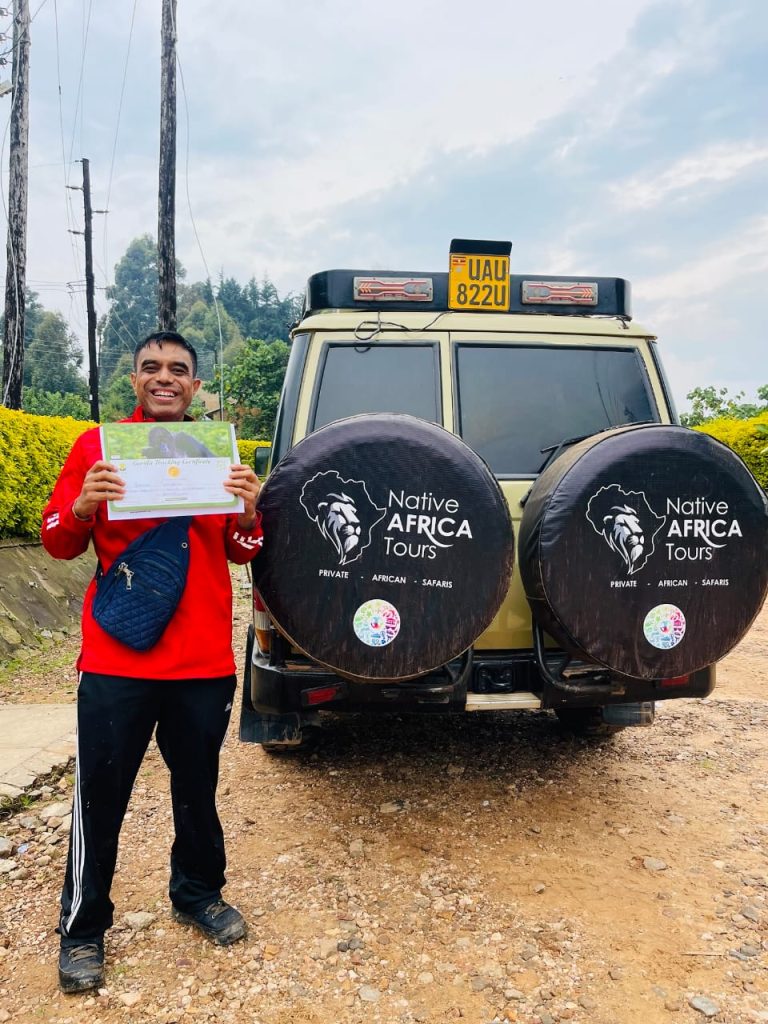
That is where proper safari planning becomes important. Native Africa Tours is a Uganda-based safari and destination management company specializing in Uganda and Rwanda, and we can organize the different parts of your trip into one itinerary rather than leaving you to coordinate permits, accommodation, and transfers separately.
What does a Uganda gorilla safari actually include?
A Uganda gorilla safari can be as simple as a two-day gorilla trip or as extensive as a two-week Uganda wildlife and primate adventure. The core elements usually include:
- Gorilla trekking permit
- Accommodation
- 4×4 safari vehicle and professional driver-guide
- Airport or hotel transfers
- Gorilla trekking logistics
- Meals according to the selected accommodation
- Park activities and entrance fees included in the itinerary
- Optional domestic flights
- Additional wildlife and primate activities
- Cultural or community experiences where appropriate
The exact combination depends on the type of trip you want. For example, a traveler with only three days available may prioritize gorillas and minimize driving. A traveller with ten days may combine Kibale chimpanzee trekking, Queen Elizabeth wildlife viewing, and Bwindi gorilla trekking. This is why there is no single “best” Uganda gorilla safari itinerary for everyone.
Step 1: Choose Between Bwindi and Mgahinga
The first major decision is where you want to trek. Uganda’s two mountain gorilla destinations are Bwindi Impenetrable National Park and Mgahinga Gorilla National Park. Bwindi is the country’s most popular gorilla trekking destination, while Mgahinga provides an alternative in the Virunga Mountains.
Bwindi Impenetrable National Park
Bwindi is the larger and more established destination for gorilla tourism. It has four main trekking sectors:
- Buhoma
- Ruhija
- Rushaga
- Nkuringo
The important point is that these are not simply four entrances to the same safari experience from a logistical perspective. They are located in different parts of the forest and connect naturally with different routes.
Mgahinga Gorilla National Park
Mgahinga is located in southwestern Uganda within the Virunga mountain range. The park issues about eight gorilla permits per day, making it a much smaller-scale alternative to Bwindi. Mgahinga can be particularly interesting for travellers who want to combine gorilla trekking with the volcanic landscape of the Virungas or who prefer a smaller gorilla destination.
Step 2: Choose the Right Bwindi Sector
If Bwindi is your preferred destination, choosing the sector is one of the most important parts of your Uganda gorilla safari planning.
| Bwindi Sector | Best Suited To | Common Route |
|---|---|---|
| Buhoma | Queen Elizabeth and classic western Uganda safaris | Entebbe → Queen Elizabeth → Ishasha → Buhoma |
| Ruhija | Lake Bunyonyi, Kabale and eastern approaches | Entebbe → Lake Bunyonyi → Ruhija |
| Rushaga | Rwanda–Uganda trips and Gorilla Habituation | Kigali → Musanze → Cyanika → Kisoro → Rushaga |
| Nkuringo | Southern Bwindi and Rwanda-linked itineraries | Kigali → Volcanoes → Cyanika → Kisoro → Nkuringo |
This decision should ideally be made before booking accommodation, because your lodge should be positioned sensibly for the trekking sector. The southern Bwindi can be reached via Kisoro, while Buhoma is connected to approaches through Kihihi and Queen Elizabeth National Park. Scheduled flights from Entebbe also serve Kisoro for the southern sectors and Kihihi for the northern side. For more detail, see our guide to how Bwindi sectors fit into different Uganda safari routes.
Step 3: Decide How Many Days You Need
The right number of days depends on whether the gorilla trek is the entire purpose of the trip or the highlight of a larger Uganda safari.
2–3 Days: Gorilla-focused trip
A short safari can work well if you have limited time. For example:
Day 1: Entebbe/Kampala → Bwindi
Day 2: Gorilla trekking → overnight Bwindi
Day 3: Bwindi → Entebbe/Kampala
Alternatively, travellers arriving from Rwanda can create a short cross-border gorilla trip through southern Bwindi.
4–5 Days: Gorilla + scenery or wildlife
With additional time, you can slow the journey down and include places such as:
- Lake Bunyonyi
- Lake Mutanda
- Queen Elizabeth National Park
- Ishasha
- Cultural experiences
7–10 Days: Gorilla + primates + wildlife
This is where Uganda becomes particularly interesting. A longer itinerary can connect several very different ecosystems: Kibale → Queen Elizabeth → Bwindi → Entebbe. You could combine chimpanzee trekking, wildlife viewing, and gorilla trekking in a single journey. For travellers interested in a more comprehensive primate experience, Gorilla Habituation in Rushaga can also be considered. It differs from standard gorilla trekking and allows substantially more time with the gorillas under the applicable guidelines.
Step 4: Decide Whether to Drive or Fly
Uganda’s distances can be substantial, so transportation can transform the character of your safari. A road safari gives you the opportunity to see more of the countryside and stop along the way. It also makes it easier to combine destinations such as Queen Elizabeth, Kibale and Bwindi.
Flying, on the other hand, can save considerable time. There are scheduled flights from Entebbe to Kisoro Airstrip for travellers visiting southern Bwindi, particularly Rushaga and Nkuringo, and flights to Kihihi Airstrip for the northern side around Buhoma. The flights take about 1 hour 10 minutes, with a road transfer still required from the airstrip to the lodge.
This creates several useful combinations.
Example: Fly to southern Bwindi: Entebbe → Kisoro → Rushaga/Nkuringo → Gorilla Trek → Entebbe
Example: Fly to northern Bwindi: Entebbe → Kihihi → Buhoma → Gorilla Trek → Entebbe
Example: Road safari: Entebbe → Queen Elizabeth → Ishasha → Buhoma → Entebbe
The best option depends on your budget, available time, and the rest of your itinerary.
Step 5: Book Your Gorilla Permit Before Building Everything Around It
This is one of the most important planning principles. Do not build an entire Uganda gorilla safari around an assumed trekking date before confirming permit availability. The gorilla permit determines the date on which you need to be at the designated trekking point. Uganda Wildlife Authority guidelines state that visitors must report to the designated entry point for permit validation, orientation, and briefing before tracking.
That means your accommodation and transport should be arranged around the permit not the other way around. This is particularly important during popular travel periods when preferred dates and accommodation can become limited. For current permit rates and tariff changes, it is best to check the latest Uganda Wildlife Authority tariff information.
Step 6: Choose Accommodation Near the Correct Trekking Sector
One of the easiest mistakes to make when planning a gorilla safari is booking a lodge based only on its name or price.
Location matters. A lodge may be described online as being “in Bwindi” while still being inconvenient for the particular trekking sector you have booked. For example, if your permit is for Rushaga, staying close to the Rushaga area is more logical than selecting accommodation on the opposite side of Bwindi simply because it has a lower advertised rate.
Your accommodation choice should consider:
- Distance to the trekking briefing point: You normally want an easy morning transfer rather than a long drive before beginning a demanding forest trek.
- Comfort level: Bwindi has budget, mid-range, and luxury accommodation, allowing the safari to be tailored to different budgets.
- Route: Your lodge should fit the next destination and the gorilla trek.
- Arrival time: If you are arriving by road or air on the day before trekking, the transfer needs to leave enough margin for delays.
For travellers planning southern Bwindi, Kisoro and Lake Mutanda can also be useful bases depending on the itinerary.
Step 7: Plan the rest of the Uganda safari around the gorilla Trek
A good Uganda gorilla safari should not feel like a series of disconnected hotel bookings. The destinations should flow naturally.
For example, consider this route:
7-Day Uganda Gorilla and Wildlife Safari
Day 1: Entebbe → Kibale
Day 2: Chimpanzee trekking in Kibale
Day 3: Kibale → Queen Elizabeth
Day 4: Queen Elizabeth Wildlife Safari
Day 5: Queen Elizabeth → Bwindi
Day 6: Gorilla trekking
Day 7: Bwindi → Entebbe
This itinerary makes the gorilla trek part of a broader primate and wildlife journey.
Another traveller might prefer: Kigali → Volcanoes → Cyanika → Kisoro → Rushaga → Lake Bunyonyi → Kigali. That route is particularly attractive for a Rwanda–Uganda combination. The important principle is to design the route around geography rather than simply adding famous destinations to a list.
What can you combine with gorilla trekking in Uganda?
Gorilla trekking is often the main reason travellers visit southwestern Uganda, but it does not have to be the only major activity.
Chimpanzee trekking
Kibale Forest is one of Uganda’s best-known destinations for chimpanzee experiences. Combining chimpanzees and gorillas creates a particularly strong primate-focused safari.
Queen Elizabeth National Park
Queen Elizabeth works especially well with Buhoma because of the western Uganda route and the possibility of travelling through Ishasha. You can add game drives and a Kazinga Channel boat safari depending on the itinerary.
Lake Bunyonyi
Lake Bunyonyi is a natural addition to many southern Uganda itineraries and can work particularly well with Ruhija. It is also useful as a scenic stop between different parts of a longer safari.
Murchison Falls National Park
For travellers with more time, Murchison Falls can be incorporated into a much longer Uganda circuit before continuing south toward Kibale, Queen Elizabeth and Bwindi.
Gorilla Habituation
If the goal is not simply to see gorillas but to spend considerably more time observing them, Gorilla Habituation in Rushaga is a different option worth considering. UWA’s tracking guidelines distinguish habituation from standard tracking and provide for up to four hours of viewing during the habituation experience.
How much should you budget for a Uganda gorilla safari?
There is no single price for a Uganda gorilla safari because the total cost depends on several variables.
The biggest factors are:
| Cost Factor | How It Affects Your Safari |
|---|---|
| Gorilla permit | Major part of the overall cost |
| Number of safari days | More days increase transport, accommodation and activity costs |
| Accommodation | Budget, mid-range and luxury options can differ significantly |
| Transport | Private 4×4, shared options and flights affect the total |
| Group size | Larger private groups can reduce the per-person vehicle cost |
| Additional activities | Chimpanzee trekking, game drives and boat trips add to the package |
| Travel season | Accommodation and transport demand can vary |
| International flights | Usually separate from the Uganda safari package |
Because tariffs can change, prospective travellers should confirm the applicable permit rate for their travel date before making a final budget.
Is a Uganda Gorilla Safari Suitable for Older Travellers?
Yes, but the itinerary should be designed around the traveler rather than assuming every trek is the same. Gorilla trekking requires moderate fitness, and treks can last approximately 2–7 hours. The challenge is not simply the number of hours. Bwindi is a mountainous rainforest environment, and terrain can be steep, muddy, and uneven.
For older travellers or anyone concerned about physical difficulty, we can discuss:
- Choosing a suitable trekking sector
- Hiring a porter
- Using walking support where appropriate
- Allowing more recovery time
- Reducing unnecessary transfers
- Choosing accommodation close to the trekking point
- Building a slower itinerary
A safari should be enjoyable, not a race between destinations.
What should you pack for gorilla trekking?
The rainforest environment means practical clothing matters more than fashion. A useful packing list includes:
- Waterproof hiking boots
- Long trousers
- Long-sleeved shirt
- Waterproof jacket or poncho
- Lightweight backpack
- Gardening-style gloves
- Hat
- Insect repellent
- Water bottle
- Snacks
- Camera and spare batteries
- Walking poles if useful
- Personal medication
- Waterproof protection for electronics
Because Bwindi can be wet and cool, good waterproofing is particularly important.
Is Gorilla Trekking in Uganda Worth Combining With a Wildlife Safari?
For many travellers, yes. The appeal of Uganda is that the gorilla experience can be combined with strange landscapes and wildlife within the same country. You can move from savannah landscapes in Queen Elizabeth National Park to montane rainforest in Bwindi. A longer itinerary can add Kibale’s primate-rich forest or Murchison Falls’ large savannah ecosystem.
This creates a much more varied holiday than simply travelling to Uganda for one activity. The key is not to add too much. A poorly planned ten-day itinerary can feel more exhausting than a well-designed seven-day safari.
Why Booking With a Local Uganda Safari Company Can Make a Difference
Planning independently can work, but a local operator can help connect the parts of the journey that are difficult to judge from a map. For example, the difference between a good and bad itinerary may be something as simple as:
- Staying near the correct gorilla sector
- Avoiding an unnecessary backtracking route
- Scheduling the right arrival day before trekking
- Choosing road transport instead of a flightor vice versa
- Allowing enough time for a border crossing
- Connecting Queen Elizabeth and Bwindi efficiently
- Selecting accommodation that matches the client’s expectations
- Adjusting the itinerary when permit availability changes
This becomes particularly valuable for Rwanda–Uganda gorilla safaris, where border logistics and the choice of southern Bwindi sector can affect the overall route.
What Makes Native Africa Tours Different?
Native Africa Tours is locally based in Uganda and specializes in organizing Uganda and Rwanda safari experiences. Rather than offering a fixed itinerary to every traveler, we can build the trip around what actually matters to you. That could mean:
- A short gorilla trip for someone with limited time.
- A luxury flying safari for travellers who want to reduce long road journeys.
- A Uganda wildlife and gorilla safari combining primates, game drives, and forest experiences.
- A Rwanda–Uganda gorilla safari connecting Kigali and southwestern Uganda.
- A Gorilla Habituation safari for travellers who want a longer gorilla observation experience in Rushaga.
- A tailor-made family or private safari with a slower pace and carefully selected accommodation.
A Simple Way to Plan Your Uganda Gorilla Safari
Instead of starting with “Which package should I buy?”, start with five questions:
1. Where will I arrive?
Entebbe, Kampala or Kigali?
2. How many days do I have?
Two days and ten days require completely different strategies.
3. Which gorilla experience do I want?
Standard gorilla trekking or the longer Gorilla Habituation Experience?
4. What else do I want to see?
Chimpanzees, lions, elephants, Lake Bunyonyi, Murchison Falls, Queen Elizabeth, or something else?
5. Do I prefer driving or flying?
Once these questions are answered, the rest of the itinerary becomes much easier to design.
Frequently Asked Questions
How far in advance should I plan a Uganda gorilla safari?
It is advisable to plan as early as possible, particularly when you have fixed travel dates or want a specific trekking sector, lodge or accommodation category. Permit availability should be checked before finalizing the itinerary.
Where can I do gorilla trekking in Uganda?
Gorilla trekking takes place in Bwindi Impenetrable National Park and Mgahinga Gorilla National Park. Bwindi has four main trekking sectors: Buhoma, Ruhija, Rushaga and Nkuringo.
Which Bwindi sector is best?
There is no universal best sector. Buhoma can fit naturally into Queen Elizabeth and western Uganda routes, Ruhija works well with Kabale and Lake Bunyonyi, while Rushaga and Nkuringo are particularly useful for southern Bwindi and Rwanda–Uganda itineraries.
Where does gorilla habituation take place?
For Uganda’s Gorilla Habituation Experience, Rushaga in the southern part of Bwindi is the relevant sector.
Can I combine gorilla trekking with a Uganda safari?
Yes. Gorilla trekking can be combined with destinations such as Kibale, Queen Elizabeth National Park, Lake Bunyonyi and Murchison Falls, depending on the number of days available.
Can I do a Uganda gorilla safari from Kigali?
Yes. Kigali is a practical starting point for a Rwanda–Uganda itinerary, particularly when travelling to southern Bwindi through the Cyanika–Kisoro route.
Can I fly to Bwindi?
Yes. UWA lists flights from Entebbe to Kisoro for the southern sectors and to Kihihi for the northern side, followed by a road transfer to the lodge.
Is gorilla trekking difficult?
The physical difficulty varies. UWA states that gorilla treks may last approximately 2–7 hours and require moderate fitness.
Plan Your Uganda Gorilla Safari With Native Africa Tours
A successful gorilla safari is not simply about getting a gorilla permit. It is about putting the right permit, trekking sector, lodge, transport, and wildlife experiences together in the right order.
Whether you have three days or two weeks, whether you want a road safari or a flying safari, or whether you are combining Uganda with Rwanda, Native Africa Tours can help design the journey around your priorities. We can help you with gorilla permits, accommodation, 4×4 safari transport, professional guides, domestic flights, wildlife safaris, chimpanzee experiences, Gorilla Habituation, and Rwanda–Uganda itineraries.
Ready to plan your Uganda gorilla safari? Contact Native Africa Tours and tell us your travel dates, number of travellers, preferred accommodation level and what you would like to see. We will help you build a practical itinerary around your gorilla experience.