
Yes, you can do gorilla habituation in Uganda after gorilla trekking in Rwanda. In fact, combining these two experiences is an excellent option for travellers who want to explore mountain gorillas beyond the standard one-hour encounter. You can trek gorillas in Rwanda’s Volcanoes National Park, cross the border into southwestern Uganda, and participate in the Gorilla Habituation Experience in Bwindi Impenetrable National Park. If you are planning this combination, Native Africa Tours can help you arrange the permits, border transfers, accommodation, and a private safari connecting both destinations.
The most important thing to understand is that gorilla habituation is offered in Uganda, not Rwanda. Rwanda’s Volcanoes National Park offers standard gorilla trekking with fully habituated gorilla families. Uganda offers both standard trekking and the more immersive habituation experience, which allows visitors to spend up to four hours with a gorilla family that is still becoming accustomed to human presence.
This means you do not have to choose between visiting Rwanda and experiencing gorilla habituation. With careful planning, you can enjoy both countries during one East African safari. The key is to select suitable travel dates, secure the correct permits, and allow enough time to travel between Volcanoes National Park and Bwindi’s Rushaga sector.
Can You Combine Rwanda Gorilla Trekking and Uganda Gorilla Habituation?
Absolutely. Many travellers initially choose Rwanda because of its convenient access from Kigali and the relatively short transfer to Volcanoes National Park. After experiencing a standard gorilla trek, some discover that they would like to spend more time observing gorilla behaviour or learn more about the conservation work involved in protecting these endangered primates.
Uganda provides that opportunity through the Gorilla Habituation Experience in the southern part of Bwindi Impenetrable National Park. Instead of spending the usual one hour with a fully habituated gorilla family, you can spend up to four hours with a family undergoing habituation, accompanied by the authorised guides, trackers, and researchers involved in the programme.
Combining the two experiences offers a valuable perspective on mountain gorilla tourism. In Rwanda, you encounter gorillas that are accustomed to the presence of visitors. In Uganda, you experience a different stage of the process, learning how wild gorillas gradually become comfortable with carefully managed human observation.
The experiences are complementary rather than identical. Your Rwanda trek is not a prerequisite for habituation in Uganda, and completing a trek in Rwanda does not automatically qualify you for a habituation permit. You simply need to meet the applicable visitor requirements and obtain a separate permit from the relevant Ugandan authority.
For travellers who have already seen mountain gorillas in Rwanda, Uganda can be particularly rewarding because the habituation experience provides additional time in the forest and a closer look at the work behind responsible gorilla tourism.
Where Does Gorilla Habituation Take Place in Uganda?

Gorilla habituation takes place in the Rushaga sector of Bwindi Impenetrable National Park in southwestern Uganda. This ancient rainforest is one of Africa’s most important habitats for mountain gorillas and is recognised for its exceptional biodiversity.
Rushaga is located in the southern part of Bwindi, within reach of the Uganda–Rwanda border. Its location makes it a practical choice for travellers arriving through Kigali who want to combine a Rwandan gorilla trek with Uganda’s extended habituation experience.
Unlike standard gorilla trekking, which is available in several sectors of Bwindi and in Mgahinga Gorilla National Park, the habituation experience is associated with Rushaga. Travellers should therefore book accommodation and transfers according to their assigned habituation location rather than assuming that any lodge around Bwindi will be equally convenient.
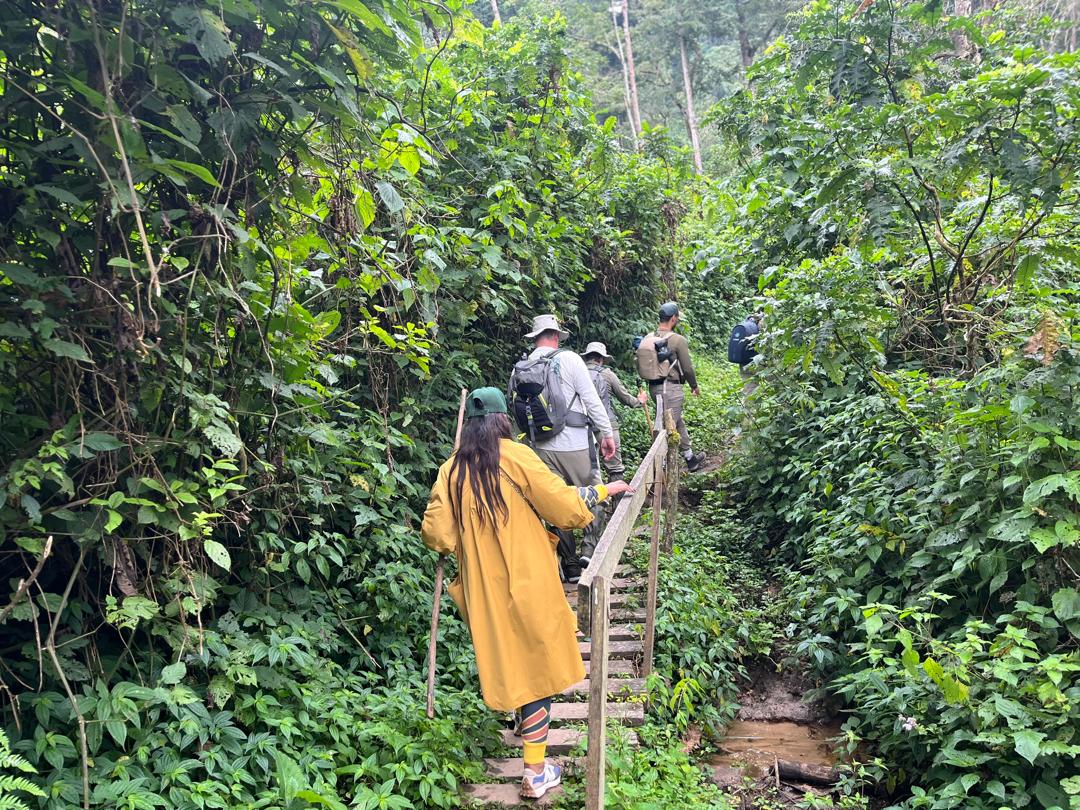
The forest itself adds to the experience. Steep slopes, tangled vegetation, tall trees, thick undergrowth, and changing weather make every trek different. Gorilla families move freely through their natural habitat, so the time required to locate them can vary considerably.
This is also why an overnight stay near Rushaga before the habituation day is strongly recommended. Arriving from Rwanda on the morning of your experience would introduce unnecessary pressure and could put your permit at risk if there are border delays, road disruptions, or other unforeseen circumstances.
Allow approximately four to six hours for the overland journey from the Kigali area to Rushaga under normal conditions, and longer if there are border queues, roadworks, poor weather, or delays. Actual journey times vary, so your itinerary should include a comfortable buffer rather than relying on the shortest estimated driving time.
If you have not yet completed your Rwanda trek, the route can be planned in either direction. You can visit Volcanoes National Park first and then continue to Uganda, or complete the Uganda habituation experience before returning to Rwanda, provided your flight schedule and permits allow it.
The most important planning decision is to protect your habituation date. Your itinerary should place you near Rushaga the night before the experience, with sufficient flexibility for the international border crossing and any unexpected delays.
What Is the Difference Between Gorilla Trekking in Rwanda and Gorilla Habituation in Uganda?
Although both activities involve observing mountain gorillas in their natural habitat, they offer different experiences. Understanding the distinction will help you decide whether adding Uganda to your safari is worthwhile.
Standard gorilla trekking in Rwanda
In Rwanda’s Volcanoes National Park, visitors trek into the forest with authorised guides and park rangers to find a fully habituated gorilla family. Once the gorillas are located, visitors are generally permitted to spend one hour observing them, subject to park regulations and ranger instructions.
That hour can be extraordinary. You may watch a silverback resting, juveniles playing, females feeding, or members of the family interacting with one another. The experience is suitable for first-time gorilla visitors, photographers, wildlife enthusiasts, and travellers with limited time.
Rwanda is especially convenient for a short gorilla safari because Volcanoes National Park can be reached from Kigali in a relatively short drive. However, the standard trek does not offer the extended four-hour habituation encounter available in Uganda.
Gorilla habituation in Uganda
The Gorilla Habituation Experience in Uganda is designed for visitors who want more time with a gorilla family and an opportunity to understand the process of habituation.
Habituation is the gradual process through which wild gorillas become accustomed to the presence of humans. Trackers and researchers work carefully and consistently around a selected family over an extended period. The aim is to reduce the gorillas’ fear of human presence while maintaining their wild behaviour and welfare.
During the visitor experience, you accompany the authorised team into the forest and spend up to four hours observing a family that is still undergoing this process. The gorillas may behave differently from fully habituated families. They might move away, remain cautious, feed quietly, or show curiosity about their surroundings. Their behaviour is never guaranteed, and visitors must follow the team’s instructions at all times.
The longer observation period can give you more opportunities to appreciate social interactions and feeding behaviour. However, it does not guarantee that you will see more activity or every behaviour you hope to photograph. These are wild animals, and their movements determine what you encounter.
The habituation trek can also be more demanding than a standard trek. You may walk through steep, muddy terrain and dense vegetation for several hours before reaching the gorillas. The four-hour period with the gorillas is separate from the time spent walking to and from the family.
Comparing the two experiences
| Feature | Rwanda gorilla trekking | Uganda gorilla habituation |
|---|---|---|
| Destination | Volcanoes National Park | Bwindi Impenetrable National Park |
| Experience type | Standard gorilla trekking | Gorilla habituation |
| Time with gorillas | One hour | Up to four hours |
| Gorilla families | Fully habituated | Still undergoing habituation |
| Group size | Maximum eight visitors per family | Maximum four visitors per group |
| Main focus | Observing a habituated family | Extended observation and learning about habituation |
| Physical demands | Vary by trek | Can be more demanding |
| Permit | Separate Rwanda permit | Separate Uganda habituation permit |
The principal advantage of combining both experiences is that you enjoy two distinct ways of observing mountain gorillas. You are not simply repeating the same activity in another country; you are experiencing a different setting and a different stage of the relationship between gorillas and human observers.
How Much Does Gorilla Habituation Cost After Trekking in Rwanda?
The total cost depends on your travel dates, the type of accommodation you choose, the number of people travelling, transport arrangements, and whether you have already paid for your Rwanda gorilla permit.
The Uganda Gorilla Habituation Experience has historically been priced at US$1,500 per person for foreign non-residents under the previous tariff. However, effective 2027, gorilla habituation permit in Uganda will be $1800 per person.
Your Rwanda gorilla permit is a separate expense. It does not include the Uganda habituation permit, and paying for one does not reserve the other. If you have already completed your Rwanda trek, you only need to budget for the remaining Uganda experience and its associated travel costs.
Other expenses may include the transfer from Rwanda to Uganda, accommodation near Rushaga, meals, a local porter, gratuities, and any additional activities included in your itinerary. Depending on your plans, you may also need to account for border-related requirements and the cost of obtaining the appropriate entry permission.
The most useful way to budget is to request a package quotation that clearly separates the habituation permit, transport, accommodation, meals, and other included services. This makes it easier to compare operators and understand the actual cost of adding Uganda to your existing Rwanda safari.
For couples or small private groups, the per-person cost can vary depending on how transport and accommodation are shared. Travellers who have already booked their flights and Rwanda accommodation may find that adding Uganda is more straightforward than planning an entirely new safari, especially if their dates can be adjusted around permit availability.
How to Travel From Rwanda to Bwindi for Gorilla Habituation
Travelling from Rwanda to Uganda for gorilla habituation is possible by road, and Kigali is a convenient starting point for many travellers. However, the transfer should be planned around your trekking date rather than treated as an ordinary sightseeing drive.
Crossing the Uganda–Rwanda border
The border crossing you use will depend on your itinerary. Katuna–Gatuna and Cyanika are among the crossings that may be relevant to a journey between Rwanda and southwestern Uganda. The best option depends on your route, road conditions, current border arrangements, and the precise location of your accommodation. Before travelling, confirm the entry requirements for both countries based on your nationality and travel documents. A visa or entry permission for Rwanda does not automatically grant permission to enter Uganda, and the same applies in the opposite direction.
Travellers should also check passport validity, visa conditions, and any applicable entry requirements before departure. If you are returning to Rwanda after the Uganda habituation experience, confirm that your travel arrangements permit re-entry and that your visa or other authorisation remains valid.
A tour operator familiar with cross-border safaris can help coordinate the transfer, advise you on the route, and make sure that the itinerary leaves enough time for the border formalities.
How long should you allow for the transfer?
Although the Kigali-to-Rushaga drive is often estimated at approximately four to three hours, the actual journey may take longer. Border formalities, traffic, road conditions, rain, and stops along the way can all affect arrival time. For that reason, we recommend travelling to Rushaga the day before your habituation experience. This gives you time to settle into your lodge, prepare your trekking equipment, and rest before an early start.
If you are planning the Uganda habituation experience immediately after your Rwanda trek, try to avoid scheduling the two activities on consecutive mornings without a realistic transfer plan. Completing a gorilla trek in Rwanda and then driving several hours to Uganda on the same day may be possible, depending on the schedule, but it is not always the most comfortable or reliable arrangement. A more relaxed itinerary protects your investment in the habituation permit and allows you to enjoy the journey rather than worrying about reaching the next destination on time.
A Recommended Itinerary: Rwanda Gorilla Trekking Followed by Uganda Gorilla Habituation
If you want to experience standard gorilla trekking in Rwanda before continuing to Uganda, a four- to five-day arrangement can work well, depending on your arrival and departure plans. Travellers who have already completed the Rwanda portion can use a shorter Uganda extension.

Day 1: Gorilla trekking in Rwanda
Begin with your scheduled trek in Volcanoes National Park. After the early-morning briefing, enter the forest with your guides and spend up to one hour observing a fully habituated gorilla family. Return to your lodge afterwards to rest and enjoy the remainder of the day.

Day 2: Transfer from Rwanda to Rushaga

Day 3: Gorilla habituation in Bwindi

Day 4: Relax in southwestern Uganda

Day 5: Return to Rwanda or continue your safari
This is a suggested structure rather than a fixed itinerary. If your Rwanda gorilla trek is already complete, you may only need a two- or three-day Uganda extension, depending on where you are staying, the available permit date, and whether you want to return to Rwanda or continue travelling in Uganda.
If your international flight departs from Kigali, avoid planning a tight same-day connection after a long road transfer from Rushaga. An additional overnight stay in Rwanda can make the final part of the journey considerably less stressful.
Can You Do Gorilla Habituation in Uganda the Day After Trekking in Rwanda?
Yes, provided you have the appropriate Uganda habituation permit and can reach the correct briefing point on time. However, whether it is practical depends on where you finish your Rwanda trek and how you arrange the transfer.
For example, if you complete your trek in Volcanoes National Park in the morning, travel to Rushaga later that day, and stay near the sector headquarters overnight, you may be able to participate in habituation the following morning. This requires a carefully coordinated transfer and sufficient time for border formalities.
If you are staying in Kigali after your Rwanda trek, the same principle applies, although you will need to allow for the journey from Kigali to southwestern Uganda.
We generally recommend keeping the day before habituation as flexible as possible. A delayed departure, heavy rain, or a slow border crossing can affect the schedule, so travelling early and staying near Rushaga is preferable to attempting a last-minute arrival.
It is also important to distinguish between a physical ability to travel and permit availability. Even if you can reach Uganda in time, your habituation experience is only confirmed when you have secured the correct permit for your chosen date.
Do You Need a New Gorilla Permit for Uganda?
Yes. You need a separate Uganda Gorilla Habituation Experience permit even if you have already paid for and completed a standard gorilla trek in Rwanda.
Gorilla permits are issued for specific activities, dates, and destinations. A Rwanda permit authorises the activity specified by the relevant Rwandan authority; it cannot be exchanged for a Ugandan habituation permit. The same principle applies if you have previously trekked gorillas in Uganda. A standard trekking permit does not entitle you to spend four hours with a habituation family. The habituation experience has its own permit category and availability arrangements.
Because habituation places are limited, it is sensible to secure the Uganda permit before finalising non-refundable accommodation and transport. Your tour operator can check the available dates and help coordinate the two experiences so that you are not left with a gap between your Rwanda trek and Uganda extension. If you are travelling during a busy period, such as July, August, or the December holiday season, plan well ahead. Availability depends on the requested date and the permits remaining when you enquire, so early planning is especially important for couples and groups travelling on fixed international flight schedules.
Is Gorilla Habituation Worth Doing After a Rwanda Gorilla Trek?
For many travellers, yes. However, the value depends on what you want from your safari and how much time you have available. If you enjoyed your Rwanda gorilla trek but wished you could stay longer with the gorillas, the habituation experience in Uganda is a compelling option. Spending up to four hours with a habituation family gives you a longer observation window and an opportunity to learn about the work involved in gradually preparing wild gorillas for carefully regulated tourism.
It is also particularly attractive to wildlife photographers, conservation enthusiasts, repeat visitors to Africa, and travellers who prefer experiences that go beyond conventional sightseeing. The smaller habituation group can provide a more intimate setting, although the behaviour of the gorillas, forest conditions, and photographic opportunities are never guaranteed.
The experience is not necessarily better for everyone. If your priority is a short luxury safari with minimal road travel, Rwanda’s standard trek may already meet your expectations. If you are interested in seeing different gorilla behaviours and spending more time in the forest, adding Uganda can be worth the additional expense and travel.
Another advantage is that you experience two different protected areas and two national tourism settings in one trip. The landscape around Volcanoes National Park differs from the dense, mountainous rainforest of Bwindi, adding variety to your safari.
Ultimately, the best decision is the one that matches your interests, budget, physical fitness, and available time.
What Should You Pack for Gorilla Habituation in Uganda?
Preparing properly is important because the habituation experience can involve long walks through steep, wet, and densely vegetated forest. Even if you have already completed a gorilla trek in Rwanda, do not assume the Uganda experience will involve the same terrain or level of difficulty.
Wear sturdy, waterproof hiking boots with good grip and ankle support. Long trousers and long-sleeved clothing help protect you from scratches, insects, and stinging vegetation. A lightweight waterproof jacket is useful because rainfall can occur even during periods generally considered dry.
Carry drinking water, some energy-giving snacks if permitted, and a small daypack. Gardening-style gloves can help when moving through vegetation, while a walking stick or trekking poles may be useful on slippery slopes. A camera with sufficient battery life and memory is worth bringing, but avoid using flash photography.
A porter can be especially helpful if you want assistance carrying your belongings or maintaining balance on difficult sections of the trail. Hiring a porter also provides income to someone from the surrounding community.
You should also be prepared for the possibility that the trek will take longer than expected. The time required to locate the gorillas varies, and the habituation experience involves more time with the family than a standard trek.
Follow all instructions from the authorised guides and trackers. Respect the required distance from the gorillas, keep your voice low, and never attempt to approach or touch them. If you feel unwell before the trek, inform your guide, as respiratory infections can pose a risk to gorillas.
When Is the Best Time to Combine Rwanda Gorilla Trekking and Uganda Gorilla Habituation?
Gorilla trekking and habituation are generally available throughout the year, subject to permit availability and any operational changes. The most suitable period depends on your preferences for weather, forest conditions, and travel arrangements.
The relatively drier periods, commonly around June to September and December to February, are popular with visitors. Trails may be easier to manage during drier spells, although rainfall is possible at any time in these mountainous rainforest environments.
The wetter periods can bring muddier trails and more challenging hiking conditions. However, the forest remains lush, and some travellers prefer the quieter atmosphere associated with less busy travel periods.
There is no guarantee that a trek will be shorter or that gorillas will be easier to find in a particular month. Gorilla families move freely, and their location, rather than the calendar alone, determines the length of the walk. For a combined Rwanda and Uganda safari, the most important factor is securing your habituation permit for a suitable date and building the rest of the itinerary around it. Once your permits are confirmed, you can choose accommodation and transfers that make the journey comfortable.
Can You Return to Rwanda After Gorilla Habituation in Uganda?
Yes. You can return to Rwanda after completing the habituation experience in Bwindi, provided you meet the applicable entry requirements for Rwanda and have sufficient time for the journey. This arrangement works particularly well for travellers who fly into Kigali, visit Volcanoes National Park, continue to Uganda for habituation, and then return to Kigali for their international departure.
However, the road journey from Rushaga to Kigali can take several hours, and the actual duration depends on border procedures, traffic, and road conditions. It is not advisable to assume that you can finish the habituation experience and comfortably catch an international flight from Kigali later that same day. The habituation trek may take most of the day, and you cannot reliably predict the exact time you will return to your lodge. For this reason, an overnight stay after the experience or an additional buffer before your flight is often the safer choice.
If you have additional time, you could also continue exploring Uganda rather than returning immediately to Rwanda. Your options may include Lake Bunyonyi, Lake Mutanda, Queen Elizabeth National Park, or other destinations depending on the length of your safari.
Frequently Asked Questions About Gorilla Habituation in Uganda After Rwanda Trekking
Can I do gorilla habituation in Uganda after trekking gorillas in Rwanda?
Yes. You can complete a standard gorilla trek in Rwanda’s Volcanoes National Park and then travel to Bwindi Impenetrable National Park in Uganda for the Gorilla Habituation Experience. You need a separate Ugandan habituation permit and must meet all relevant travel and entry requirements.
Is gorilla habituation available in Rwanda?
No. The Gorilla Habituation Experience described in this article is available in Uganda, specifically in the Rushaga sector of Bwindi Impenetrable National Park. Rwanda offers standard gorilla trekking with fully habituated gorilla families.
How many hours can I spend with gorillas during habituation in Uganda?
The Gorilla Habituation Experience allows visitors to spend up to four hours with the gorillas once the family has been located. This is longer than the standard one-hour gorilla encounter. The forest trek itself can add several hours to the overall experience.
How far is Bwindi from Volcanoes National Park?
The driving time depends on your starting point, the route, and the border crossing. As a broad planning estimate, allow approximately four to six hours for the overland journey between the Volcanoes National Park area and Rushaga, potentially longer when conditions are difficult. Confirm the route and expected travel time for your specific itinerary.
Can I do Rwanda gorilla trekking and Uganda habituation on consecutive days?
Yes, it can be possible. You must complete the Rwanda trek, travel to Uganda, cross the border, and arrive near Rushaga in time for the habituation briefing the following morning. An overnight stay near Rushaga is essential for a practical itinerary, and the transfer should be arranged with enough buffer for delays.
How much does the Uganda Gorilla Habituation Experience permit cost?
The permit price must be confirmed for your intended travel date. The previous tariff listed US$1,500 per foreign non-resident, but that tariff ended in June 2026. Check the current Uganda Wildlife Authority tariff before making a booking or comparing package prices.
Do I need to trek gorillas in Rwanda before doing habituation in Uganda?
No. Previous gorilla trekking in Rwanda is not a requirement. You can travel directly to Uganda for the habituation experience if you prefer. Combining the two is simply an attractive option for travellers who want both the standard trek and the extended habituation experience.
Is gorilla habituation more difficult than standard trekking?
It can be. The terrain, distance to the gorillas, duration of the forest walk, and time spent observing the family can make habituation physically demanding. You should be comfortable walking on uneven ground and be prepared for muddy trails, steep slopes, and changing weather.
Can I book the Rwanda and Uganda experiences together?
Yes. A tour operator can coordinate your Rwanda trekking permit, Uganda habituation permit, cross-border transfers, accommodation, and other safari arrangements. Booking the experiences together can help reduce scheduling problems and make the transition between the two countries more straightforward.
Can I do gorilla habituation in Uganda if I have already seen gorillas several times?
Yes. There is no general requirement to be a first-time visitor, and the experience can be particularly appealing to repeat travellers who want a different perspective on mountain gorilla conservation. You still need to secure a valid habituation permit for your chosen date.
Plan Your Rwanda Gorilla Trekking and Uganda Habituation Safari
If you have already trekked gorillas in Rwanda and want to take your experience further, adding Uganda’s Gorilla Habituation Experience is an excellent way to explore another side of mountain gorilla conservation.
You can enjoy the standard one-hour encounter in Volcanoes National Park, cross into Uganda, and spend up to four hours with a gorilla family undergoing habituation in Bwindi’s Rushaga sector. With the right planning, the two experiences can form a memorable combination without requiring an unnecessarily complicated itinerary.
At Gorilla Uganda, operated by Native Africa Tours, we help travellers organise gorilla safaris in Uganda and Rwanda, including habituation permits, cross-border transfers, accommodation, private vehicles, and customised itineraries. Whether you have already completed your Rwanda trek or are planning both experiences from the beginning, we can help you work out the most practical route and schedule.
Contact Native Africa Tours with your intended travel dates, number of travellers, and preferred accommodation level. We can help you check the applicable habituation permit price and availability, then prepare a personalised quotation for your Rwanda and Uganda gorilla safari.