
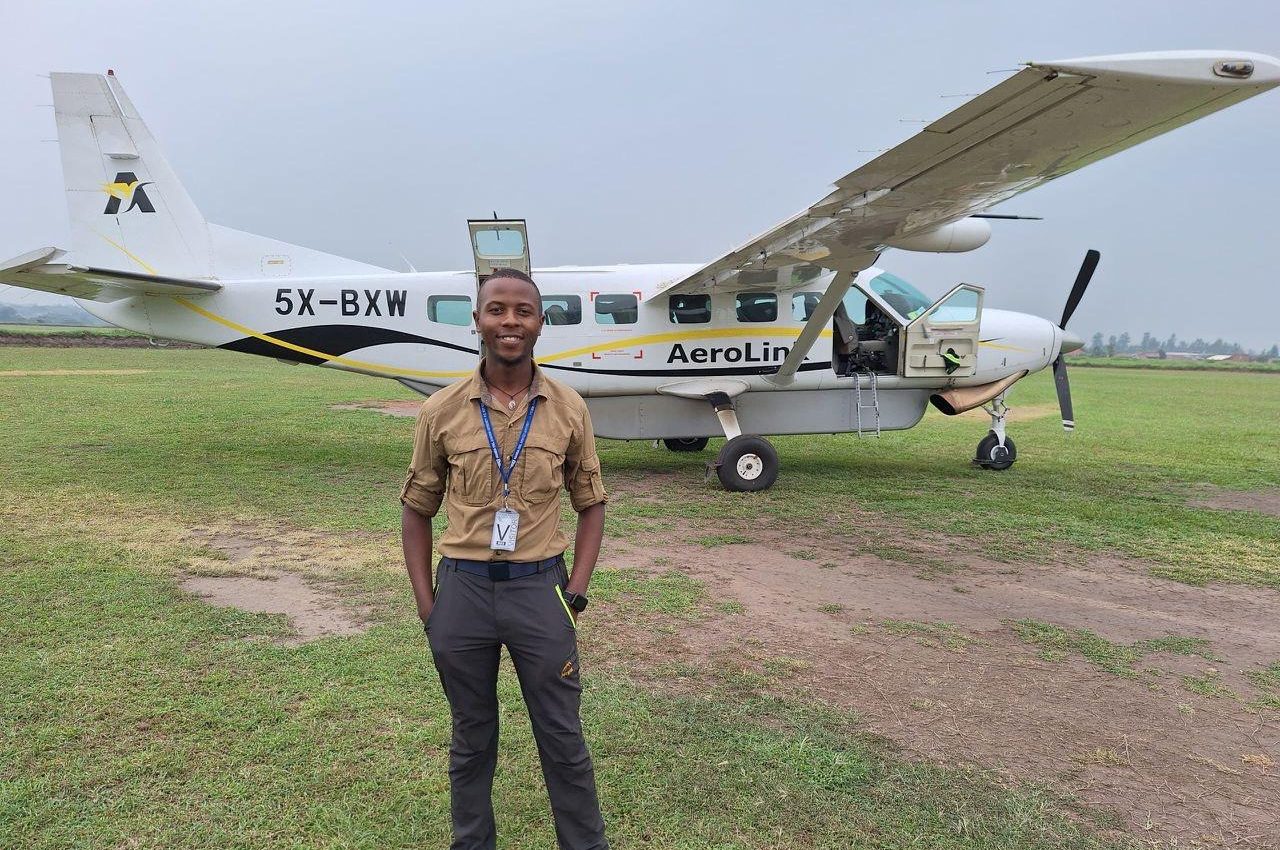
How Much Does a Flying Safari to Bwindi Cost? The total cost depends on several factors, including the gorilla trekking permit, domestic flights, accommodation, ground transfers, meals, safari activities, the number of travellers, and the number of days you spend in Uganda. A flying safari to Bwindi will usually cost more than travelling entirely by road, but it can save many hours of overland travel and give you more time to enjoy Uganda’s gorillas and other safari experiences.
The most important thing to understand is that there is no single fixed price for a flying safari to Bwindi. A short three-day fly-in gorilla safari with mid-range accommodation will cost considerably less than a luxury safari combining Bwindi with Queen Elizabeth National Park, while the choice between flying to Kisoro or Kihihi also depends on the Bwindi sector you plan to visit. If you are considering a flying safari to Bwindi and want help choosing the right flight route, gorilla permit, accommodation, and itinerary for your budget, Native Africa Tours can help you plan and arrange the entire trip.
In this guide, we break down how much a flying safari to Bwindi costs, including domestic flights, gorilla permits, accommodation, transfers, additional activities, and the difference between scheduled and charter flights. We also look at practical examples for 3, 4, and 5 days flying gorilla safaris so you can understand where your money goes and decide whether flying is worth the additional cost.
Table of Contents
ToggleHow Much Does a Flying Safari to Bwindi Cost?
The cost of a flying safari to Bwindi can range from a relatively focused fly-in gorilla trip to a much more expensive luxury safari depending on the accommodation, flights, activities and length of the itinerary. Rather than quoting one figure that may not apply to every traveller, it is more useful to break the price into its individual components.
| Cost Component | What Determines the Price |
|---|---|
| Gorilla permit | Visitor category and trekking date |
| Domestic flights | Route, flight availability, season and airline |
| Accommodation | Budget, mid-range or luxury lodge |
| Ground transfers | Distance between airstrip and lodge |
| Safari vehicle | Private vehicle, shared arrangements and itinerary |
| Meals | Lodge category and package |
| Additional activities | Game drives, boat safaris, nature walks and cultural experiences |
| Number of travellers | Room sharing and transport costs |
| Safari duration | Number of nights and activities |
| Charter flight | Considerably more than scheduled services |
For a traveller coming from overseas, the gorilla permit and international airfare are separate from the flying safari itself. The international flight gets you to Uganda; the domestic safari flight gets you closer to Bwindi. This distinction is important when comparing safari quotations.
What Is Included in the Cost of a Flying Safari to Bwindi?
A flying safari normally combines several services into one itinerary. When a tour operator gives you a package price, the quotation may include some or all of these services. The most important cost components are the gorilla permit, domestic flight, accommodation, and ground transportation. Additional services such as meals, drinking water, park activities, airport transfers and game drives depend on the itinerary and package selected.
A good quotation should make these components clear so that you can compare different safari packages fairly.
For example, a package priced at $3,000 per person may initially appear more expensive than another priced at $2,700. However, if the first package includes the gorilla permit, return domestic flights, private vehicle, accommodation, and meals, while the second excludes the flights or permit, the apparently cheaper option may actually cost more once everything is added.
Gorilla Permit Cost
The gorilla permit is normally one of the largest fixed expenses in a Uganda gorilla safari, whether you travel by road or by air.
Uganda’s gorilla trekking takes place in Bwindi Impenetrable National Park and Mgahinga Gorilla National Park, under the management of the Uganda Wildlife Authority (UWA). UWA describes standard gorilla tracking as an experience that can take approximately 2–7 hours depending on the location of the gorilla family, with up to one hour spent observing the gorillas once they are located.
What does a Uganda gorilla permit cost?
For the standard tariff currently applicable in 2026/2027, the standard gorilla trekking permit for a foreign non-resident is US$800 per person. The corresponding rates are US$700 for foreign residents, US$500 for visitors in the Rest of Africa category, and UGX 300,000 for East African citizens. There is also a special low-season rate of US$600 for foreign non-residents and US$500 for foreign residents during April, May and November. Uganda Wildlife Authority states that these discounted low-season permits cannot be rescheduled. This means that if you are planning a flying safari to Bwindi in one of the discounted months, the permit itself can reduce the overall safari cost.
From January 1, 2027, UWA’s revised tariff structure keeps standard gorilla tracking at US$800 for foreign non-residents but changes the Gorilla Habituation Experience to US$1,800 for foreign non-residents. Because UWA tariffs can change, travellers should always confirm the applicable permit rate for their exact travel date before making a final budget.
Domestic Flight Cost to Bwindi
The domestic flight is the part of the flying safari that distinguishes it from a conventional road safari. For Bwindi, the appropriate airstrip depends largely on the gorilla sector and the rest of your itinerary.
Flying to Kisoro for Southern Bwindi
Kisoro is the key air access point for Rushaga and Nkuringo, making it particularly useful for travellers planning a southern Bwindi gorilla safari. It is also the appropriate air route if you are planning Gorilla Habituation in Rushaga, because Gorilla Habituation takes place specifically in the Rushaga sector.
AeroLink’s 2026 timetable lists daily Entebbe–Kisoro services. The published schedule includes morning and mid-morning flights, with the airline noting that Kisoro operations are scheduled around prevailing weather conditions. The timetable also lists a US$70 per-person Kisoro surcharge, while the actual airfare varies according to the booking date, availability, and fare type. For budgeting purposes, Entebbe to Kisoro is US$324 one way per adult, before the applicable taxes and the US$70 Kisoro surcharge. This means that, when calculating how much a flying safari to Bwindi costs, travellers should budget for more than the headline airfare. For example, using the published fare example, an adult travelling Entebbe to Kisoro one way could see a fare of approximately US$324 + US$80 in listed taxes + US$70 Kisoro surcharge, giving an indicative total of around US$474 one way before any other booking-related charges.
Cost of Ground Transfers
One of the most commonly overlooked costs when calculating how much a flying safari to Bwindi costs is the transfer from the airstrip to your lodge. Flying does not take you directly to the gorilla trailhead. After landing, you still need a suitable safari vehicle to take you from the airstrip to your accommodation. Depending on the route, you may also need a transfer to the briefing point on the morning of your gorilla trek.
For example, a southern Bwindi itinerary might follow Entebbe → Kisoro → Rushaga → Lodge, while a northern itinerary might follow Entebbe → Kihihi → Buhoma → Lodge. Kisoro is approximately 35 km from the southern Bwindi sectors, with the drive to the southern sectors taking roughly 1–1.5 hours depending on conditions. Four-wheel-drive vehicles are recommended for Bwindi’s roads. The actual transfer time can vary because of road conditions, weather, traffic, and the precise location of your lodge.
For budgeting purposes, a private 4×4 transfer from a Bwindi airstrip to your lodge may cost roughly $150 -$350 per vehicle one way, depending on the distance and the lodge location. Some lodges include airport or airstrip transfers in their accommodation rates, while others charge separately. Published Buhoma-area rates, for example, put Kihihi-to-Buhoma lodge transfers in the $150 – $350range.
For southern Bwindi, including Rushaga and Nkuringo, the transfer from Kisoro can be more substantial because of the mountainous roads and longer distance. Rates show Kisoro-to-Nkuringo at about $270 one way per vehicle, illustrating why the exact sector and lodge should be confirmed when calculating the final cost.
| Transfer | Indicative Cost |
|---|---|
| Kihihi → Buhoma | $150–$350 per vehicle |
| Kisoro → Rushaga | Approximately $150–$350+ per vehicle |
| Kisoro → Nkuringo | Around $200–$270+ per vehicle |
| Airstrip → lodge → airstrip | Approximately $300–$500+ round trip |
These figures are indicative rather than fixed tour prices. The cost can be lower when the transfer is shared with other travellers and higher when you require a private safari vehicle, have several pieces of luggage, or are staying at a lodge farther from the airstrip. For this reason, when comparing a flying safari with a road safari, it is important to include both the domestic flight and the ground transfer rather than looking at the flight price alone.
For a package booked through Native Africa Tours, we would normally factor the necessary airport or airstrip transfers into the overall safari quotation so that the flying safari budget reflects the complete journey rather than just the airfare.
Accommodation Costs in Bwindi
Accommodation can make a major difference to the total price of a flying safari to Bwindi. You can generally choose from budget, mid-range and luxury accommodation, although the exact options available depend on the gorilla sector. A budget-oriented traveller may choose a simple lodge or guesthouse, while a luxury traveller may select a high-end forest lodge with larger rooms, better views, upgraded dining and additional services. The important consideration is not simply the room rate.
Location matters too
A cheaper lodge that requires a long transfer to the gorilla briefing point may not always represent better value. For gorilla trekking, your lodge should ideally be located conveniently for your designated sector. This is particularly important because gorilla permits are associated with a designated trekking location. You should therefore select your gorilla sector first, accommodation second and flight route third.
For a detailed explanation of how each sector fits into different safari routes, see How Bwindi Sectors Fit Into Different Uganda Safari Routes.
Cost of Meals and Safari Services
Your accommodation rate may be bed and breakfast, half board, full board or part of a complete safari package.
A full safari package may include:
- Breakfast
- Lunch
- Dinner
- Drinking water
- Safari vehicle
- Driver-guide
- Airport or airstrip transfers
- Park activities
- Gorilla permit
However, you should always check the quotation carefully because not every safari package includes the same services. Personal drinks, alcoholic beverages, laundry, souvenirs, tips, and other personal expenses are often separate.
Cost of Additional Activities
A flying safari to Bwindi does not have to be limited to gorilla trekking. You can combine the trip with activities such as:
- Game drives in Queen Elizabeth National Park
- Kazinga Channel boat safari
- Lake Bunyonyi
- Cultural experiences
- Nature walks
- Golden monkey trekking
- Additional forest experiences
Each additional activity increases the overall safari cost, but it can also make the flight investment more worthwhile because you are using the saved travel time to experience more of Uganda.
How Much Does a 3-Day Flying Gorilla Safari Cost?
A 3-day flying gorilla safari is one of the shortest practical options for visitors who want to concentrate almost entirely on the gorilla experience. Because the trip uses domestic flights instead of a long road transfer from Entebbe, it allows travellers to reach Bwindi much faster, although the overall cost is usually higher than a road-based gorilla safari.
A typical southern Bwindi itinerary could look like this:
| Day | Route | Main Activity | Overnight |
|---|---|---|---|
| Day 1 | Entebbe → Kisoro → Rushaga | Flight and transfer to Bwindi | Rushaga |
| Day 2 | Rushaga | Gorilla trekking | Rushaga |
| Day 3 | Rushaga → Kisoro → Entebbe | Transfer and flight | — |
For a Buhoma-focused itinerary, the route could instead be: Entebbe → Kihihi → Buhoma followed by gorilla trekking and a return transfer to Kihihi.
Estimated Cost of a 3-Day Flying Gorilla Safari
For two international visitors sharing a room and a private safari vehicle, a three-day flying gorilla safari can commonly fall into the US$2,500–$4,500+ per person range, depending mainly on the gorilla permit, flight fares, accommodation category and level of safari service. This is an indicative planning range rather than a fixed package price. The biggest fixed expense is normally the gorilla trekking permit. The permit price depends on the visitor category and trekking date, while accommodation and flights can vary considerably. If you are travelling during a lower-cost permit period, choosing a mid-range lodge and securing flights early, the overall price can be considerably lower than a luxury three-day package.
How Much Does a 4-Day Flying Safari to Bwindi Cost?
Four days gives you more flexibility than a 3 days fly-in gorilla safari. You still get the convenience of flying to southwestern Uganda, but the additional night allows you to include another experience such as Lake Bunyonyi without making the itinerary feel as rushed.
Four days gives you more flexibility.
| Day | Route | Main Activity | Overnight |
|---|---|---|---|
| Day 1 | Entebbe → Kisoro → Rushaga | Flight and transfer | Rushaga |
| Day 2 | Rushaga | Gorilla trekking | Rushaga |
| Day 3 | Rushaga → Lake Bunyonyi | Scenic transfer and lake experience | Lake Bunyonyi |
| Day 4 | Lake Bunyonyi → Kisoro → Entebbe | Transfer and flight | — |
This type of itinerary can be particularly attractive for travellers who want to combine their flying safari to Bwindi with a scenic southwestern Uganda experience.
Estimated Cost of a 4-Day Flying Safari to Bwindi
For two international visitors sharing a room and travelling with a private safari vehicle, a four-day flying gorilla safari can typically be budgeted at around US$2,800–$5,000+ per person, depending on the gorilla permit category, flight fares, accommodation standard, transfers and activities included. The additional night means you pay for one more night of accommodation, meals, and vehicle services, but the main fixed costs, particularly the gorilla permit and domestic flights, do not increase simply because the safari lasts one day longer.
How Much Does a 5-Day Flying Gorilla Safari Cost?
Five days gives you enough time to combine Bwindi with another major destination, making the flying option particularly useful for travellers who want to experience both Uganda’s wildlife and mountain gorillas without spending long hours travelling by road.
| Day | Destination | Main Activity | Overnight |
|---|---|---|---|
| Day 1 | Entebbe → Kasese | Flight and transfer | Queen Elizabeth |
| Day 2 | Queen Elizabeth | Game drive and/or boat safari | Queen Elizabeth |
| Day 3 | Queen Elizabeth → Kihihi → Buhoma | Flight and transfer to Bwindi | Buhoma |
| Day 4 | Buhoma | Gorilla trekking | Buhoma |
| Day 5 | Buhoma → Kihihi → Entebbe | Transfer and flight | — |
AeroLink’s 2026 timetable lists daily Entebbe–Kasese services for the Queen Elizabeth/Kibale area and daily Entebbe–Kihihi services for northern Bwindi. The timetable also states that passengers can connect between Kasese, Kihihi and Kisoro on request at seat rate, although AeroLink notes that schedules can change because of operational, weather or safety conditions.
Estimated Cost of a 5-Day Flying Gorilla Safari
For two international visitors sharing a room and travelling on a private safari, a five-day flying gorilla safari combining Queen Elizabeth National Park and Bwindi could reasonably be budgeted at around US$3,500–$6,000+ per person. The final price can be considerably higher for luxury lodges, premium room categories, private charters, or additional activities. These figures are intended as planning estimates rather than fixed package prices.
How Much Does a Luxury Flying Safari to Bwindi Cost?
A luxury flying safari to Bwindi can cost substantially more than a standard fly-in gorilla trip because the accommodation, transfers, services, and potentially the aircraft arrangement are upgraded.
For two international travellers sharing a room, a luxury fly-in gorilla safari to Bwindi will often fall in the region of US$4,000–$6,000+ per person, depending on the number of nights, lodge selected, gorilla permit, domestic flight arrangements and activities included. Published luxury Uganda gorilla itineraries currently provide useful benchmarks: one five-day luxury fly-in itinerary is advertised at about US$3,733 per person, while another five-day luxury Uganda gorilla safari starts at US$4,760 per person.
A luxury package may include:
- Premium lodge accommodation
- Scheduled domestic flights
- Private safari vehicle
- Private airport and airstrip transfers
- Gorilla trekking permit
- Full-board meals
- Professional driver-guide
- Game drives where applicable
- Boat safari where applicable
- Exclusive cultural experiences
- Additional nights in luxury lodges
The accommodation is often one of the biggest differences between a standard and luxury flying safari. Premium Bwindi properties can significantly increase the overall price, particularly when travellers choose suites, private villas or properties with exceptional forest views and additional services.
These figures are planning estimates rather than fixed rates. The final price depends heavily on the lodge, travel season, number of nights, number of travellers and the exact flight arrangements. For example, one current five-day luxury fly-in package includes luxury accommodation, a return Entebbe–Kisoro flight, gorilla permit, ground transport and excursions for US$3,733 per person for two travellers.
How Much Does Gorilla Habituation by Air Cost?
This is an especially important question for travellers searching for a flying safari to Bwindi because Gorilla Habituation is available specifically in Rushaga. The route is therefore: Entebbe → Kisoro → Rushaga rather than Entebbe → Kihihi → Buhoma. Gorilla Habituation is different from standard gorilla trekking because visitors can spend considerably more time with a habituated group under the guidance of researchers, trackers, and park personnel.
For 2026, the Gorilla Habituation permit for foreign non-residents is US$1,500 under the tariff applicable before the revised tariff structure takes effect on January 1, 2027. UWA’s announced revised tariff lists the Gorilla Habituation permit at US$1,800 for foreign non-residents from January 1, 2027. This makes Gorilla Habituation one of the most significant components of the budget for a flying habituation safari.
If you are specifically interested in this experience, read How Much Does a Gorilla Habituation Permit Cost in Uganda?
How to Reduce the Cost of a Flying Safari to Bwindi
A flying safari to Bwindi does not automatically have to mean an extravagant luxury safari. The flight is only one part of the total cost, and several other components, particularly accommodation, the gorilla permit, vehicle arrangements, and the number of nights, can be adjusted to bring the price down. The important thing is to reduce the flexible costs without compromising the parts of the safari that are difficult to change. For example, choosing a mid-range lodge can make a much larger difference to the total price than trying to save a small amount on a ground transfer.
For a couple travelling together, the biggest opportunities for savings usually come from travel dates, accommodation, flight type, vehicle sharing and itinerary design.
Travel During the Low Season
One of the most obvious ways to reduce the cost of a Uganda gorilla safari in 2026 is to travel during UWA’s designated low-season permit months. UWA introduced a discounted gorilla tracking permit for April, May and November 2026. For foreign non-residents, the low-season permit is US$600, compared with the standard US$800 rate. That means a saving of US$200 per person. For two foreign non-residents travelling together, the saving is US$400 before considering any other safari costs.
However, do not assume that a cheaper gorilla permit automatically makes the entire flying safari cheaper. There is an important complication for travellers flying to Bwindi. AeroLink’s 2026/2027 timetable has different operating patterns across its scheduled services, and some services do not operate during April, May and November. Flight availability therefore needs to be checked before choosing a low-season date. AeroLink also states that its fares are subject to availability and change without notice and that quoted fares exclude taxes.
In other words, compare the complete safari cost, not just the permit. For example, if travelling in a low-season month saves a couple US$400 on permits but requires a more expensive flight arrangement or creates additional accommodation nights, some of that saving could disappear.
Is Low Season Always the Cheapest Option?
Not necessarily. A better way to think about it is: Total safari cost = permit + flights + accommodation + transfers + activities + meals + other services. The US$200 permit saving is guaranteed by the tariff for eligible low-season bookings, but the other components can fluctuate. This is why Native Africa Tours would normally look at the whole itinerary when advising a traveller on the cheapest practical dates rather than simply recommending the cheapest permit month.
Use Scheduled Flights Instead of a Charter
If your main objective is to reduce the cost of flying to Bwindi, scheduled flights are normally the starting point to consider. AeroLink Flight company operates scheduled services connecting Entebbe with Uganda’s major safari destinations, including Bwindi and Queen Elizabeth National Park. The airline also offers charter flights for travellers who want a more bespoke arrangement.
The difference is important. With a scheduled flight, you purchase a seat on an existing service. The aircraft is already operating according to the airline’s timetable, so you are sharing the operating cost with other passengers. With a charter, the aircraft is arranged around your itinerary. AeroLink describes its charter service as a bespoke option where the aircraft can be selected according to the requirements of the journey and can operate to airstrips outside its normal scheduled network.
Therefore, if you are a couple or small group and your dates fit the scheduled network, a scheduled flight will generally be the more economical choice. Chartering becomes more attractive when flexibility, privacy, special routing, or a large group is more important than minimizing the cost.
Choose Mid-Range Accommodation Instead of Luxury
Accommodation can make an enormous difference to the final price of a flying gorilla safari. You do not necessarily need a luxury lodge to have a comfortable and enjoyable gorilla trekking experience. Bwindi has accommodation ranging from relatively simple properties to high-end lodges, and the difference between these categories can run into hundreds of dollars per person per night.
Consider a simple example. Suppose two travellers stay for three nights:
| Accommodation Level | Example Price Per Person/Night | 3 Nights for 2 People |
|---|---|---|
| Mid-range | US$150 | US$900 |
| Upper-mid-range | US$250 | US$1,500 |
| Luxury | US$500 | US$3,000 |
These are illustrative figures, not fixed lodge rates, but they demonstrate an important point: moving from a US$150-per-person lodge to a US$500-per-person lodge could add approximately US$2,100 for two people over three nights.
So if your priority is experiencing the gorillas rather than staying at an ultra-luxury property, mid-range accommodation can be one of the most effective ways to control your overall budget. The key is to choose a lodge that is not only affordable but also well positioned for your chosen Bwindi sector.
Share the Safari Vehicle
Another way to reduce the cost is to share transportation. A private 4×4 safari vehicle is generally arranged for the group rather than priced as an individual airline-style seat. If two travellers use the vehicle alone, they carry the full vehicle cost between them. If four travellers share the same vehicle, the transport cost can be distributed across four people.
For example, if a private vehicle and driver-guide cost US$300 per day:
- 2 travellers = US$150 per person
- 4 travellers = US$75 per person
- 6 travellers = US$50 per person
The exact vehicle rate will depend on the operator and itinerary, but the principle remains the same. This is particularly useful for travellers who are comfortable travelling as a small private group rather than insisting on exclusive vehicle use for just one or two people. It is also worth remembering that sharing a vehicle does not mean sharing the gorilla permit. Every traveller still needs their own gorilla permit.
Choose Your Bwindi Sector Carefully
The sector you choose can affect your ground-transfer costs. For example, if you are flying into Kisoro, you are primarily looking at the southern Bwindi sectors, including Rushaga and Nkuringo. If you are flying into Kihihi, Buhoma in northern Bwindi is a natural option. Kisoro is approximately 35 km from the southern sectors, with the drive taking roughly 1–1.5 hours, depending on conditions. Four-wheel-drive vehicles are recommended for Bwindi’s roads.
This matters because a traveller can sometimes save money simply by matching the airstrip, gorilla sector, and lodge location correctly. You do not want to pay for a flight to one part of the region and then add unnecessary road transfers to reach accommodation in another part. For a traveller doing Gorilla Habituation, this is particularly relevant because Gorilla Habituation takes place specifically in Rushaga. Flying to Kisoro and staying close to Rushaga creates a much more logical itinerary than building unnecessary transfers around a different Bwindi sector.
Avoid Unnecessary Transfers
Another overlooked saving is reducing the number of times your safari vehicle has to move between destinations. Suppose you are staying in Bwindi for two nights. If you choose a lodge close to the trekking sector, your vehicle can complete the necessary transfers without making additional long journeys.
On the other hand, choosing accommodation much farther away simply because the nightly rate is lower can sometimes result in additional transfer costs. This creates an important rule: Don’t compare accommodation prices alone. Compare the accommodation price plus the transportation required to use it. A lodge costing US$30 less per person per night may not actually be cheaper if it requires a lengthy additional transfer.
Does the Number of Travellers Affect the Price?
The number of travellers can make a significant difference to the per-person cost of a flying safari to Bwindi, especially when the safari includes a private 4×4 vehicle, driver-guide and accommodation. The important distinction is between per-person costs and shared costs. A gorilla permit and airline ticket are generally charged per traveller, so two people will normally pay twice the individual permit and flight cost. However, costs such as a safari vehicle and driver-guide can often be shared by everyone in the vehicle.
For example, if a private safari vehicle and driver-guide cost an illustrative US$300 per day, two travellers would effectively carry US$150 each per day. With four travellers, that same US$300 shared cost becomes US$75 per person per day. The actual vehicle rate depends on the safari operator, itinerary and vehicle type, but the principle explains why small groups can sometimes achieve a lower per-person safari price.
Accommodation works differently. Two people sharing one room normally benefit from the room’s double occupancy rate, while a solo traveller may have to pay a single-room supplement. Flights and gorilla permits remain largely individual costs, so adding travellers does not reduce those components in the same way. This is why a quotation for one traveller, two travellers and four travellers can look quite different even when the itinerary is the same.
When Is the Cheapest Time to Take a Flying Safari to Bwindi?
There are two different questions here: When is the cheapest time for the gorilla permit? And when is the cheapest time for the entire flying safari? They are not necessarily the same. For 2026, UWA’s official low-season gorilla permit promotion applies in April, May and November.
However, AeroLink’s 2026 timetable also notes that some flight services operate differently during March, April, May and November. In particular, certain additional flight numbers do not operate during those months. Therefore, if you are planning a low-season flying safari to Bwindi, you should check both permit availability and flight schedules before committing to your dates. This is a good example of why the cheapest gorilla permit does not automatically mean the cheapest complete safari.
Which Safari Costs Are Charged Per Person?
Some of the largest components of a flying gorilla safari are normally calculated per traveller.
These include:
- Gorilla trekking permits
- Domestic airline tickets
- Some park activities
- Some meals or lodge packages
- Personal expenses
- Optional activities
For example, if two foreign non-resident travellers each require an $800 standard gorilla permit in 2026, the permit component alone is: $800 × 2 = $1,600.Adding another traveller would mean another $800 permit, so the permit cost does not become cheaper simply because you are travelling as a group. The same principle generally applies to domestic flights. If an airline charges a particular fare per passenger, four travellers will normally pay four fares.
Which Costs Can Be Shared?
Other safari expenses can be shared between travellers.
The most important examples are:
- Safari vehicle
- Driver-guide
- Some airstrip transfers
- Some road transfers
- Certain private activities
- Sometimes accommodation, depending on room occupancy
This is where travelling as a couple or small group can significantly improve the per-person value of a flying safari.
Plan Your Flying Safari to Bwindi With Native Africa Tours
A flying safari to Bwindi can be one of the most efficient ways to experience Uganda’s mountain gorillas while minimizing the amount of time spent travelling long distances by road. Instead of using an entire day for an overland journey from Entebbe or Kampala to southwestern Uganda, you can combine a domestic flight with a shorter 4×4 transfer to your lodge and gorilla trekking sector.
However, planning a successful fly-in gorilla safari involves more than simply booking a plane ticket. The flight schedule needs to work with your gorilla permit date, Bwindi sector, accommodation, ground transfers and return journey. If you are adding Queen Elizabeth National Park, Lake Bunyonyi or another destination, the routing also needs to be planned so that you do not spend unnecessary time travelling between destinations.
At Native Africa Tours, we can help you coordinate these different components into one practical Uganda safari itinerary. Instead of booking the flight, lodge, gorilla permit and transfers separately and then trying to connect everything yourself, we can plan the journey around your preferred travel dates, budget and safari priorities. Native Africa Tours can help you compare the options and build a flying gorilla safari around your dates, budget and preferred experiences.