
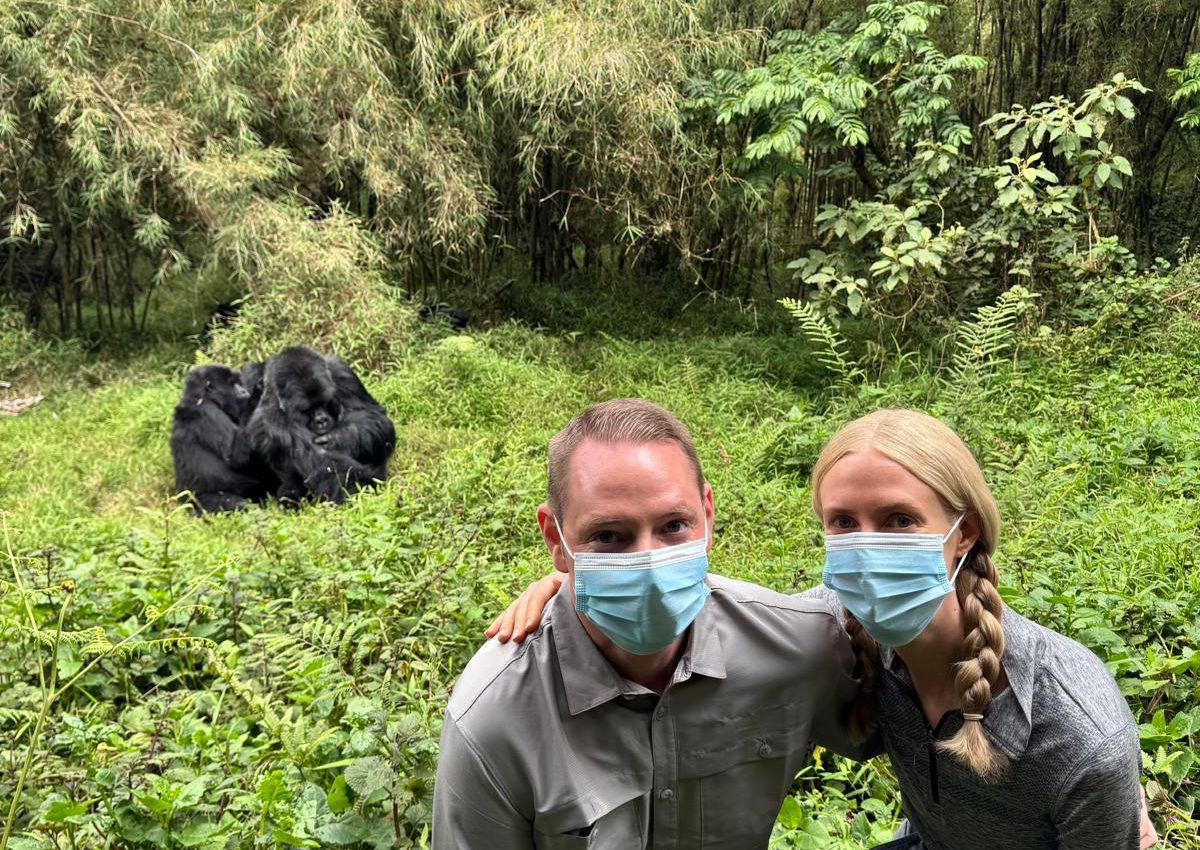
A 7-Day Gorilla Habituation, Chimpanzee and Wildlife Safari combines three of Uganda’s most rewarding wildlife experiences: spending extended time with mountain gorillas in the Rushaga sector of Bwindi Impenetrable National Park, tracking chimpanzees in Kibale National Park, and exploring the savannah and wetlands of Queen Elizabeth National Park.
Rather than focusing on gorillas alone, this itinerary is designed for travelers who want to experience Uganda’s extraordinary primate diversity alongside classic African wildlife. You can move from the forests of Kibale, where chimpanzees are the main attraction, to the open landscapes of Queen Elizabeth National Park before continuing to southern Bwindi for the Gorilla Habituation Experience.
The route also gives you a chance to experience several very different landscapes within one week. Kibale is dominated by tropical forest, Queen Elizabeth combines savannah, wetlands and lakes, while Bwindi rises into a mountainous rainforest landscape.
UWA identifies Kibale as one of Uganda’s major chimpanzee destinations, while Bwindi and Mgahinga are Uganda’s principal mountain-gorilla destinations.
What does the 7-day Gorilla Habituation, Chimpanzee and Wildlife Safari include?
This seven-day safari is built around three key experiences:
| Experience | Destination | Main Highlight |
|---|---|---|
| Chimpanzee tracking | Kibale National Park | Tracking wild chimpanzees in tropical forests |
| Wildlife safari | Queen Elizabeth National Park | Game drives and wildlife viewing |
| Gorilla Habituation | Bwindi Impenetrable National Park | Extended observation of mountain gorillas |
| Forest experience | Kibale & Bwindi | Two contrasting rainforest ecosystems |
| Scenic travel | Western & southwestern Uganda | Hills, crater landscapes, forests, and rural communities |
The sequence can be adjusted depending on your arrival point, preferred accommodation, and the availability of the Gorilla Habituation permit.
The most important part of the planning is to secure the Gorilla Habituation date first, if this is the main reason for your trip. Once the date is confirmed, the rest of the itinerary can be arranged around it.
7-Day Gorilla Habituation, Chimpanzee and Wildlife Safari Itinerary
Day 1: Entebbe or Kampala to Kibale National Park
Your safari begins with pickup from Entebbe International Airport, your hotel in Entebbe, or Kampala. You will travel west toward Kibale National Park, passing through Uganda’s countryside and changing landscapes as you move toward the forest region. Depending on your starting point and road conditions, this is primarily a travel day. The journey allows you to see rural Uganda, agricultural landscapes, and local communities along the way.
Kibale is one of Uganda’s most important primate destinations. UWA describes the park as being particularly renowned for its primate diversity, including chimpanzees and several monkey species.
After arriving in the Kibale area, check into your lodge and relax. If time permits, an optional nature or community experience can be added depending on your arrival time.
Day 2: Chimpanzee Tracking in Kibale National Park
After breakfast, you head to the park headquarters for your chimpanzee tracking experience. Chimpanzee tracking in Kibale takes you into the forest in search of habituated chimpanzee communities. The experience differs from gorilla trekking because chimpanzees are highly mobile and spend significant amounts of time moving through the forest canopy and on the ground. Uganda Wildlife Authority’s current information states that chimpanzee tracking at Kibale is conducted from designated locations and that visitors are allowed a maximum of one hour with the chimpanzees once they are encountered during normal tracking.
The wider forest experience is also part of the attraction. Kibale supports a remarkable variety of primates, and you may encounter monkeys, baboons, and numerous forest bird species during the walk. Uganda Wildlife Authority currently describes guided chimpanzee tracking at Kibale as a major park experience and notes that the forest supports more than 1,500 chimpanzees, according to its current park information.
After the chimpanzee experience, return to the lodge for lunch and relaxation. Depending on your interests, the afternoon can be used for a community walk, nature experience, or simply relaxing at the lodge.
Day 3: Kibale to Queen Elizabeth National Park–Wildlife Viewing
After breakfast, leave Kibale and continue toward Queen Elizabeth National Park. The journey is relatively short compared with some of the longer cross-country transfers in Uganda, allowing time for wildlife viewing once you reach the park.
Depending on your route and arrival time, you may have an afternoon game drive. Queen Elizabeth is an excellent addition to a primate-focused safari because it introduces a unique environment. Instead of spending the entire trip in dense forest, you move into open savannah and wetland habitats where you can look for elephants, buffaloes, antelopes, hippos, and other wildlife.
The exact wildlife sightings cannot be guaranteed because animals move freely through the park. You will return to your lodge after the afternoon activity.
Day 4: Queen Elizabeth National Park Safari–Kazinga Channel
Wake up early for a morning game drive. The cooler morning hours are often productive for wildlife viewing, as many animals are more active before the heat of the day increases. Depending on the route, you may encounter elephants, buffaloes, Uganda kobs, warthogs, antelopes, and other savannah species.
After the game drive and lunch, you can take a boat trip along the Kazinga Channel, depending on the final itinerary and activity schedule. The channel connects Lake Edward and Lake George and is famous for concentrations of hippos and other wildlife along its shores.
The combination of a game drive and boat safari makes Queen Elizabeth particularly useful in a seven-day itinerary because you experience the park from two different perspectives. After the boat trip, return to the lodge for dinner and relaxation.
Day 5: Queen Elizabeth to Rushaga–Bwindi Impenetrable National Park
After breakfast, leave Queen Elizabeth National Park and travel toward the Rushaga sector of Bwindi Impenetrable National Park.
The landscape changes dramatically as you approach southwestern Uganda. The open savannah gradually gives way to rolling hills, cultivated slopes, and eventually the mountainous rainforest surrounding Bwindi. Rushaga is in southern Bwindi and is particularly important for travelers planning the Gorilla Habituation Experience.
UWA’s current Bwindi information notes that the southern sectors, including Rushaga, are accessed from the Kisoro side, with a winding road from Kisoro toward the park and a 4WD vehicle recommended for the approach. This is an important logistical point: the night before Gorilla Habituation should be spent close to the Rushaga trailhead.
You do not want to arrive from a distant destination on the morning of the habituation experience because the activity begins early. After checking into your lodge, your guide will brief you on the following day’s activities. Prepare your hiking clothing, waterproof gear, drinking water, camera equipment, and other essentials.
Day 6: Gorilla Habituation Experience in Rushaga
This is the highlight of the 7-day Gorilla Habituation, Chimpanzee and Wildlife Safari. You will wake up early and have breakfast before proceeding to the briefing point for your Gorilla Habituation Experience.
UWA’s current guidelines state that the Gorilla Habituation Experience begins at 6:30 a.m., earlier than standard gorilla tracking, which begins at 8:00 a.m. The experience involves entering the forest with the habituation team and tracking a gorilla group that is undergoing habituation.
Unlike normal gorilla tracking, where the maximum viewing period is one hour, UWA allows a maximum of four hours of viewing for the Gorilla Habituation Experience. That additional time provides a much deeper opportunity to observe gorilla behavior. You may watch the gorillas feeding, moving through vegetation, interacting with one another, resting, climbing, or responding to members of their group.
However, four hours should not be interpreted as a guarantee of four uninterrupted hours of close photographic opportunities. The gorillas remain wild animals, and their movements determine how the encounter develops.
You should also expect challenging forest terrain. Bwindi has steep ridges and deep valleys, and conditions can become muddy after rain. A porter can be hired if you would like assistance carrying your backpack or photography equipment. After completing the experience, return to your lodge for lunch and relaxation. The afternoon should remain relatively relaxed because the morning in the forest can be physically demanding.
Day 7: Bwindi to Entebbe, Kampala or Next Destination
After breakfast, begin your journey out of the Bwindi region. The last arrangement depends on your onward travel plans.
You can travel by road toward Kampala or Entebbe, continue to another Ugandan destination, or connect with a domestic flight from the Kisoro area if your itinerary and flight schedule allow.
There are scheduled flights from Entebbe serving Kisoro Airstrip for travelers visiting the southern Bwindi sectors, including Rushaga, followed by a 4WD road transfer.
If you are continuing to another destination rather than returning directly to Entebbe, we can also restructure the itinerary accordingly. For example, the safari can continue toward Kigali in Rwanda, depending on your travel plans.
Why Combine Gorilla Habituation, Chimpanzees and Wildlife?
The biggest advantage of this safari is variety. Gorilla habituation, chimpanzee tracking, and a traditional wildlife safari are not three versions of the same activity. They take place in different environments and involve different types of wildlife encounters.
Mountain gorillas in Bwindi
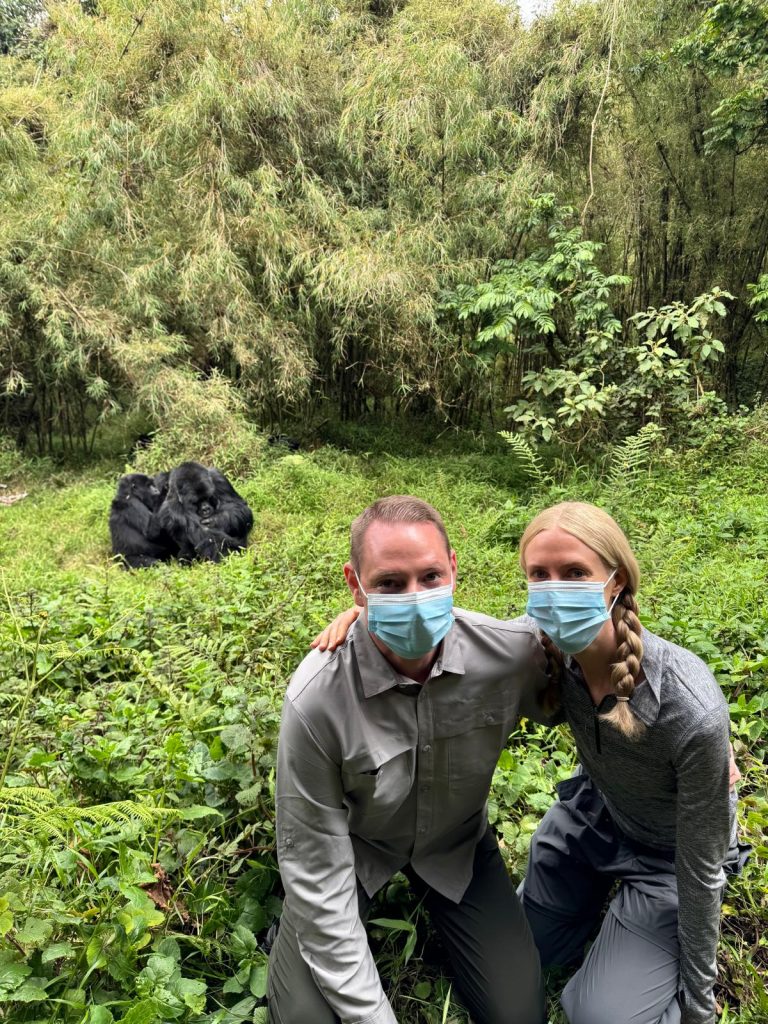
The Gorilla Habituation Experience gives you extended time observing mountain gorillas in the rainforest of Bwindi.
Chimpanzees in Kibale
Chimpanzee tracking allows you to follow one of Uganda’s most fascinating great apes through tropical forests.
Savannah wildlife in Queen Elizabeth
Queen Elizabeth adds a completely different dimension with open landscapes, elephants, buffaloes, antelopes, hippos, and the possibility of a Kazinga Channel boat safari. This makes the seven-day route particularly suitable for travelers who don’t want their Uganda holiday to focus on only one species.
How difficult is the 7-day Gorilla Habituation Safari?
The safari involves a mixture of driving, forest walking, and wildlife activities. The most physically demanding day is usually the Gorilla Habituation Experience. Gorilla trekking in Uganda requires moderate fitness, and note that a trek may last approximately 2–7 hours, depending on circumstances.
The experience can vary significantly because the terrain and movements of the gorillas are unpredictable. Bwindi is mountainous rather than flat rainforest. You may encounter steep slopes, slippery sections, thick vegetation, and muddy trails.
You do not need to be an athlete, but you should be comfortable walking for several hours on uneven terrain. If you have concerns about the physical demands, hiring a porter can be useful.
Can I replace chimpanzee tracking with chimpanzee habituation?
Yes, if you are particularly interested in primates and have the appropriate time and permit availability. Chimpanzee Habituation Experience is an extended experience with chimpanzees, while normal chimpanzee tracking provides a shorter encounter. The experience allows up to four hours of viewing for chimpanzee habituation compared with one hour for normal chimpanzee tracking.
However, replacing standard chimpanzee tracking with habituation changes the character and logistics of the seven-day safari. It is therefore something we would recommend based on your interests rather than automatically adding it to every itinerary.
For most travelers wanting to experience gorillas, chimpanzees, and classic wildlife within seven days, standard chimpanzee tracking provides a good balance.
What is the best order for this safari?
For this seven-day itinerary, I prefer the sequence: Kibale → Queen Elizabeth → Rushaga/Bwindi. There is a practical reason for this.
The gorilla habituation date becomes the final major activity of the safari, allowing us to work backward and position you near Rushaga the night before.
It also creates a natural progression from: Chimpanzees → Savannah wildlife → Mountain gorillas
However, this isn’t the only possible routing. If your international flights, accommodation preferences or permit date require a different sequence, the itinerary can be reversed or adjusted.
What is the best time for this safari?
This safari can be organized at different times of the year. Kibale’s chimpanzee experiences operate throughout the year, according to UWA, although chimpanzee movements and forest conditions vary seasonally.
The same principle applies to gorilla and wildlife activities: Uganda’s forests and savannahs are year-round destinations, but weather conditions can influence trail conditions, road conditions, and wildlife movements.
If you are traveling during a busy period, the most important part is to secure the Gorilla Habituation permit early and then build the surrounding itinerary.
How much does a 7-day gorilla habituation, chimpanzee, and wildlife safari cost?
There is no single price for this safari because the ultimate cost depends on several factors.
The biggest variables include:
- Gorilla habituation permit category and applicable tariff
- Accommodation standard
- Number of travelers
- Private or shared transportation
- Chimpanzee activity selected
- Queen Elizabeth activities
- Road or domestic flight arrangements
- Travel season
- Number of rooms required
What is included in the safari?
A private seven-day package can typically be arranged to include:
- Private 4WD safari vehicle
- Professional English-speaking driver-guide
- Gorilla Habituation permit
- Chimpanzee tracking permit
- Accommodation according to the selected category
- Game drives in Queen Elizabeth National Park
- Kazinga Channel boat safari where included
- Park entry fees applicable to the itinerary
- Meals according to the selected accommodation
- Drinking water during road transfers
- Airport pickup and drop-off where applicable
The exact inclusions should always be confirmed in your final quotation because activities, accommodation, and transport arrangements can vary.
What is not included?
Unless specifically included in your quotation, the following are normally excluded:
- International flights
- Uganda visa
- Travel insurance
- Personal expenses
- Alcoholic drinks
- Laundry
- Tips
- Porter fees
- Optional activities
- Additional nights outside the seven-day itinerary
- Domestic flights, unless specifically included
Who is this 7-day Uganda safari best for?
This itinerary is particularly suitable for travelers who want a primate-focused Uganda safari with wildlife.
It works especially well for:
- Couples looking for a combination of adventure and wildlife.
- Wildlife photographers who want opportunities to photograph chimpanzees, gorillas, and savannah animals.
- Primate enthusiasts who want to experience both chimpanzees and mountain gorillas.
- First-time Uganda visitors who want to combine several major attractions without attempting to cover the entire country.
- Travelers with limited time who want a concentrated western and southwestern Uganda itinerary.
It may be less suitable for travelers who want to include Murchison Falls or Kidepo Valley National Park. Those destinations are better added when you have more time because of the additional driving involved.
Why Seven Days Works Well?
Seven days provides enough time to combine three very different experiences in trying to visit too many destinations.
The itinerary essentially gives you:
- 2 days around Kibale Chimpanzees and rainforest
- 2 days around Queen Elizabeth Game drives and Kazinga Channel
- 2 days around Bwindi/Rushaga: travel into the region and Gorilla Habituation
- 1 departure day
This balance is more realistic than attempting to squeeze four or five major national parks into one week. The goal should not simply be to collect destinations. It should be to give you enough time to actually experience each place.
Frequently Asked Questions
How much does a 7-day Gorilla Habituation, Chimpanzee and Wildlife Safari cost?
The price depends on accommodation, group size, permit category, transportation, and activities. A customized quotation is therefore more accurate than a fixed, generic price.
Can I combine gorilla habituation with chimpanzee tracking?
Yes. Kibale National Park and Bwindi make an excellent combination for travelers interested in Uganda’s great apes.
Where does gorilla habituation take place?
The Gorilla Habituation Experience is conducted in the Rushaga sector of Bwindi Impenetrable National Park.
How long do I spend with the gorillas during habituation?
UWA’s guidelines allow a maximum of four hours of viewing during the Gorilla Habituation Experience.
How long is chimpanzee tracking in Kibale?
Normal chimpanzee tracking can take several hours depending on the movement of the chimpanzees. Once the chimpanzees are encountered, the maximum viewing time for normal tracking is one hour under UWA’s current guidelines.
Can I add Queen Elizabeth National Park?
Yes. Queen Elizabeth is one of the best additions to this itinerary because it introduces classic savannah wildlife and the Kazinga Channel.
Can I start this safari from Entebbe?
Yes. The itinerary can begin with pickup from Entebbe International Airport or a hotel in Entebbe/Kampala.
Can I finish the safari in Kigali?
Yes, the itinerary can potentially be modified so that you cross into Rwanda after Bwindi, subject to your border arrangements and onward travel plans.
Is seven days enough for gorilla habituation and chimpanzees?
Yes. Seven days gives enough time to combine gorilla habituation with Kibale chimpanzee tracking and a wildlife safari in Queen Elizabeth National Park without adding too many distant destinations.
Final Thoughts
A 7-Day Gorilla Habituation, Chimpanzee and Wildlife Safari is one of the strongest short-to-medium Uganda itineraries for travelers who want more than a single wildlife experience.
You begin with chimpanzees in Kibale, experience Uganda’s savannah wildlife in Queen Elizabeth National Park, and finish with the extended mountain-gorilla encounter in the Rushaga sector of Bwindi.
The most important planning principle is to secure the gorilla habituation date first. Once that date is confirmed, the rest of the itinerary can be arranged around it, including accommodation near Rushaga, transportation from Queen Elizabeth, and your onward journey.
For travelers who want to experience Uganda’s great apes while still enjoying a traditional African safari, seven days provides a very good balance between primates, wildlife, rainforest and adventure.