
Lake Mburo National Park
This park is located in western Uganda. It covers 100 square miles and just like other national parks in Uganda, it’s under the Uganda Wildlife Authority. Lake Mburo National Park is generally a savannah park and therefore has many of the lowland accustomed wildlife species.
History
The park’s history is smeared with traditional and modern-day facts and tales. There’s a traditional tale of two brothers who first inhabited the present-day park areas. By name, they were Mburo and Kigarama. They lived within these lowland savannah plains that make up the present park areas. The area consequentially became known as “Kaaro karungi” which loosely translated into the English language means “a good village.”
Kigarama told his brother Mburo, someday, about a dream he had about a flood that would later wash the savannah plains and destroy much of the surviving wildlife, flora, and property. Mburo couldn’t have taken his information seriously. As dated from the old days, in Africa, dreams have always been accorded much attention and so Kigarama set for the far highland areas to escape what he thought was coming as a dream.
The dream later indeed came true, having drowned Mburo to death, and his property destroyed. As a result, the area was named Mburo, and the hills in the area were named after his brother Kigarama. The story is common to all tours that visit Lake Mburo.
Initially, it was a hunting area as so gazetted in 1933. The hunting was also being closely monitored and in 1963, it was transformed into a game reserve. The Bahima herders were the predominant people who lived in the area and they grazed their animals therein in the savannah vegetation. The area was upgraded to a national park status in 1983.
Uniqueness
Lake Mburo National Park has the Impalas in great numbers and this makes it the only park within Uganda that sustains this ecotone species. Lake Mburo National Park also has the last known surviving population of the elands (also the largest African antelope) in Uganda.
Attractions in Lake Mburo National Park
Wildlife
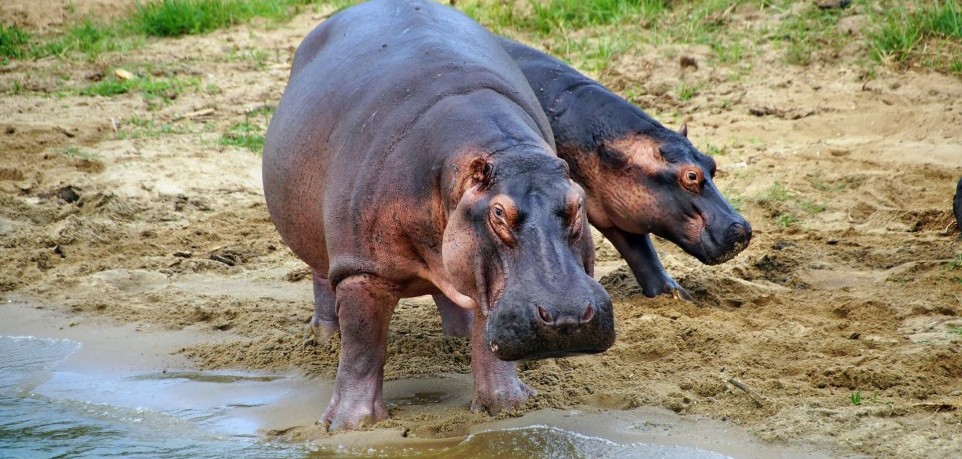
Many of the common savannah-accustomed animals are present within the park. The impalas are the most common due to their high population, Oribis, hyenas, cheetahs, eland, leopards, buffalo, antelopes, and water animals such as the hippopotamus, among many others.
Birds
The Lake Mburo waters have hundreds of water birds that fly over the lake while enjoying the breeze and occasionally fishing. Some of these are the fish eagles. Others are herons, papyrus gonolek, shoebills, pelicans, and Hadada Ibis, among others.
The other savannah birds are the crested cranes, turacos, sunbirds, tropical boubou, and plain eagles, plus more than 300 bird species.
Lake Mburo
Being the center of the park’s name, Lake Mburo is another attraction within the park.
Activities in Lake Mburo National Park
Game drives
Game drives are carried out on the available tracks within Lake Mburo National Park. This is done using the 4×4 vehicles on which the tourists view the wildlife within the park. The tourists view hippopotamus, antelopes, kobs, lions, zebras, among other animals.
Sportfishing
This is done on Lake Mburo by interested visitors. They use hooks and other available fishing methods to fish on the lake. While on the lake, they also view locals in their fishing boats trying to catch the fish for their desired use.
Birding
Being both a savannah area surrounded by hills and a lake, bird species within the park are both lowland birds and water bird species. Some of the water birds are visible as they catch fish hanging close to the water’s surface. Some of these bird species include the fish eagle, papyrus gonolek, herons, low-lying plane kites, and shoebills, among many others.
Cultural expedition
This is done around the Banyankole / Bahima herders within the area. The tourist gets to learn about their culture, the types of cattle herded especially the long-horned Ankole cattle, and traditional dances, among others.
Other activities are nature walking, minimal hiking, and many more.
How to get to Lake Mburo National Park?
From Kampala, Uganda’s capital city, the park is approximately 240 kilometers away. From Mbarara, the closest city in Western Uganda, the park is 30 kilometers away. For those from Entebbe International Airport, the park is about 290 kilometers. The park can be accessed on the road for about 4 to 5 hours drive from Entebbe International Airport.
When to visit Lake Mburo National Park?
Lake Mburo National Park being a savannah area in the tropics gets two different seasons in a year i.e., dry and wet seasons. For obvious reasons, the dry season is the recommended time to visit the Park. It comes with a dry spell which brings an abundance of sunshine.
The clear skies provide a good visibility atmosphere for clarity given the available attractions within the park. The dry season runs from June to September, and December to February.
A detailed introduction to Lake Mburo National Park
Lake Mburo National Park is best understood as more than a name on an itinerary. It is a practical way to experience Lake Mburo National Park through a wildlife safari, supported by local guiding and enough time to notice guided game drives, changing habitats and time to watch animal behaviour. The page above explains the central subject; this planning section adds the decisions that turn that information into a workable trip. Travellers should think about the season, the length of each transfer, the amount of activity they enjoy, the standard of accommodation they prefer and how much unstructured time they want. A good plan protects the quality of the experience without making the journey feel rigid. In Uganda, conditions can change between regions even during the same journey, so a route should be checked as a complete sequence rather than as a list of separate attractions. Start with the experience that matters most, then build transport, rest and secondary visits around it. That approach keeps Lake Mburo National Park rewarding for first-time visitors, experienced safari travellers, couples, families and private groups with different interests. For independent protected-area and conservation context, consult Uganda Wildlife Authority and confirm operational details again near the travel date.
How to plan the timing and route
Timing for Lake Mburo National Park is not only a question of choosing a month. It also involves arrival time, road or flight connections, permit availability where controlled activities are included, and the realistic pace of each day. Dry periods can make some roads and trails easier, while greener months may bring dramatic skies, fresh vegetation and fewer visitors in certain areas. Rain can occur in any season, particularly around forests and highlands, so flexibility remains useful. A local planner should confirm current park rules and access before final payment because official conditions can change. Use the Uganda safari collection to compare journeys in the same region, then review the complete safari collection if you may want to combine countries. Arriving a night before a major trek or long game-drive day is often more comfortable than connecting directly from an international flight. When the route covers several borders, build in sensible buffers and avoid treating every transfer as guaranteed to take the shortest possible time.
Further planning resources for Lake Mburo National Park
Compare the destination guides, safari experiences. Use official sources for general background and confirm current fees, access, schedules, permits and operating rules for the exact travel dates before payment. Internal Gorilla Uganda pages help compare route structure and travel style, while the open inquiry form allows a local specialist to check how the information applies to a private journey.