
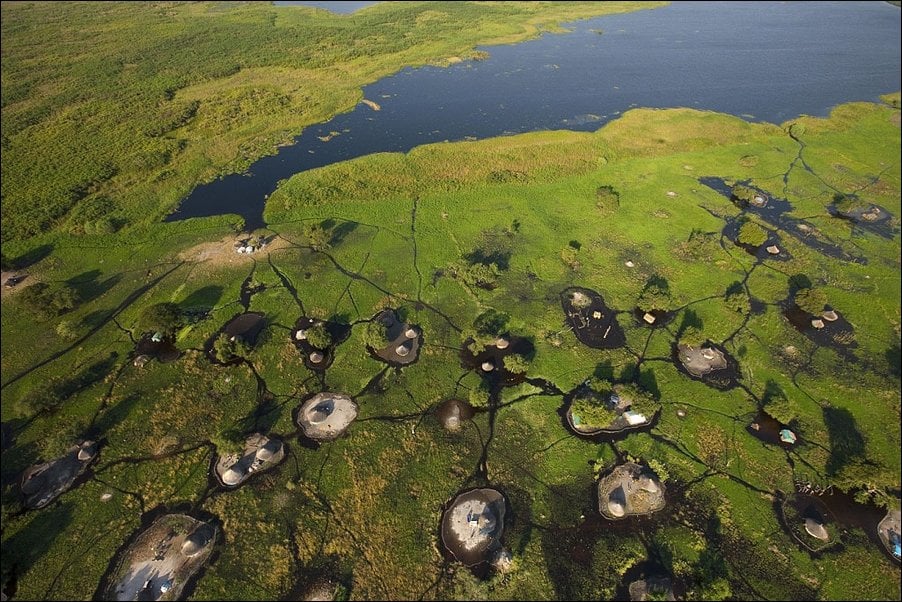
Suud Swamp is located in South Sudan in the Nile basin. It is the largest swamp in the world with fresh water from the Nile covering a total area of 500 square kilometers. It is also a shallow flat land delta in the areas of Mongalla in the south, Malakai in the north, and Bahr el Gazel in the south. Suud Swamp traces its name “Suud” from a local word meaning “barrier or obstruction”. Suud Swamp in South Sudan is covered by thick vegetation with an impenetrable barrier.
Historically the ancient Egyptians failed to penetrate through the wetland. It plays a great role in controlling floods since the waters are collected within the swamp. More so, the swamp is surrounded by several communities including the Dinka, Nuer, and Shilluk. These communities are generally pastoralists who largely depend on cattle rearing.

Reserves in Suud Swamp in South Sudan
Suud Swamp in South Sudan has multiple reserves that attract tourists from different parts of the world. Some of these include;
Zeraf Island Reserve
Zeraf Island Reserve is located in the northern part of South Sudan covering a total area of about 8000 square kilometers. The reserve was gazette in 1939 as a game reserve when it was in Sudan. The largest portion of the swamp is usually flooded throughout the year. It has a large concentration of mammals and also has the white Nile to the west of the reserve, and Bahr el Zeraf River to the east. The reserve originates its name from the Bahr el Zeraf River. Native Africa Tours can organize a trip to this reserve and you create everlasting memories.
Shambe Reserve
Shambe Reserve was established in 1985 as a mere game reserve and later transformed into a national park. It covers an area of about 620 square kilometers. The reserve lies within the remote area of the Adior Payam and also extends towards to south of Kenisa. This park is also called Anyoop National Park. It is home to several wildlife like lions, foxes, monkeys, ostriches, gazelles, giraffes, ostrich, and many others.
Mongalla Game Reserve
Mongalla Game Reserve was established in 1939 covering a total area of about 75 square kilometers. It is also within the Suud swamp area coverage and it originates its name from the Mongalla gazelle which is within the flood plains of the reserve.
What to do in the Suud Swamp?
While in the Suud Swamp, there are several activities that travelers on their safaris can engage in and they include;
Birding
This is among the primary activities that travelers engage in the search for birds around the swamp. There are about 400 bird species in the swamp that travelers on their safaris encounter. The bird species encountered range from endemic species to endangered species, and other common species that travelers encounter on their safaris. These species include black crowned crane, white stork, black tern, great white pelican, shoebill stock, and many others. Travelers on their shoe bill safaris, can visit this swamp since it is the best place for travelers to see such bird species.
Wildlife viewing
In the Suud Swamp, there are several wildlife that travelers have time to encounter during the safari. In this swamp, there are several wildlife that include; crocodiles, Nile lechwe, tiang, Mongolla gazelle, hippos, white-eared kob, and many others.
Filming
Filming in the Suud Swamp is one of the activities that travelers are able to encounter the swamp. To do the filming, travelers are supposed to acquire several permits that allow them to do the activity.
Where to stay on a tour of the Suud Swamp?
While on the safari to the study swamp in South Sudan, there are several accommodation facilities that travelers can stay in for the safari. These facilities are rated luxury, midrange, and luxury and in case you are planning a safari to Suud Swamp in South Sudan, contact us to ensure availability.
When is the best time to visit the Suud swamp?
While planning a safari to Suud Swamp, it is open throughout the year. The best time to visit the Suud Swamp is in the wet season for siting several bird species that are around the wetland. During the dry season, the swamp can be visited to see several bird species like migratory species.
A detailed introduction to Suud Swamp in South Sudan
Suud Swamp in South Sudan is best understood as more than a name on an itinerary. It is a practical way to experience East Africa through an East African journey, supported by local guiding and enough time to notice landscapes, wildlife, local knowledge and the rhythm of travel between carefully chosen stops. The page above explains the central subject; this planning section adds the decisions that turn that information into a workable trip. Travellers should think about the season, the length of each transfer, the amount of activity they enjoy, the standard of accommodation they prefer and how much unstructured time they want. A good plan protects the quality of the experience without making the journey feel rigid. In East Africa, conditions can change between regions even during the same journey, so a route should be checked as a complete sequence rather than as a list of separate attractions. Start with the experience that matters most, then build transport, rest and secondary visits around it. That approach keeps Suud Swamp in South Sudan rewarding for first-time visitors, experienced safari travellers, couples, families and private groups with different interests. For independent protected-area and conservation context, consult UNESCO World Heritage Centre and confirm operational details again near the travel date.
How to plan the timing and route
Timing for Suud Swamp in South Sudan is not only a question of choosing a month. It also involves arrival time, road or flight connections, permit availability where controlled activities are included, and the realistic pace of each day. Dry periods can make some roads and trails easier, while greener months may bring dramatic skies, fresh vegetation and fewer visitors in certain areas. Rain can occur in any season, particularly around forests and highlands, so flexibility remains useful. A local planner should confirm current park rules and access before final payment because official conditions can change. Use the East Africa safari collection to compare journeys in the same region, then review the complete safari collection if you may want to combine countries. Arriving a night before a major trek or long game-drive day is often more comfortable than connecting directly from an international flight. When the route covers several borders, build in sensible buffers and avoid treating every transfer as guaranteed to take the shortest possible time.
Further planning resources for Suud Swamp in South Sudan
Compare the destination guides, safari experiences. Use official sources for general background and confirm current fees, access, schedules, permits and operating rules for the exact travel dates before payment. Internal Gorilla Uganda pages help compare route structure and travel style, while the open inquiry form allows a local specialist to check how the information applies to a private journey.