
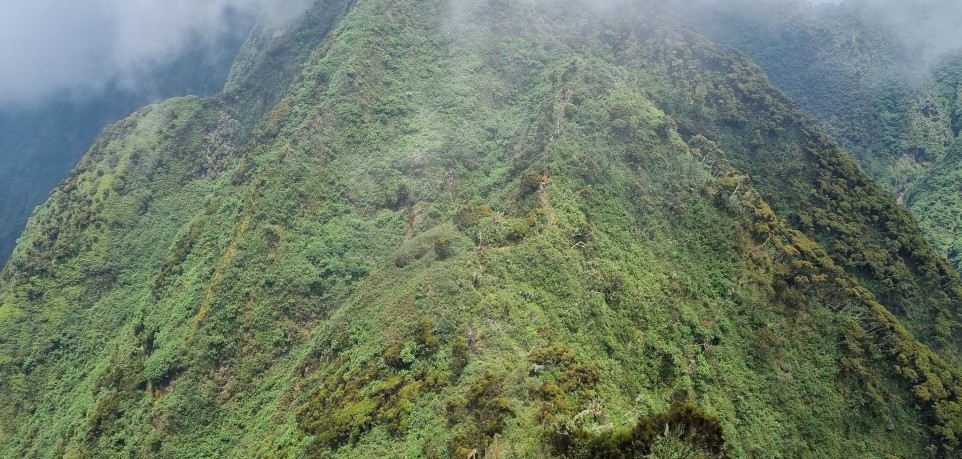
Mount Sabyinyo
The word Sabyinyo comes from a local dialect translated as “old man’s tooth” which is a result of the mountain’s shape which resembles an old man’s tooth in a swelling gum.
Mount Sabyinyo is located in southwestern Uganda near Mgahinga National Park and at the same extending to Rwanda and the Democratic Republic of Congo. This mountain has three different peaks that stand at 3423 meters, 3537 meters, and 3669 meters which are the highest and are located in three countries (Uganda, Rwanda, and Democratic Republic of Congo). The biggest part of the mountain is located in Mgahinga National Park and this is the same side where hiking is done but ladders are used at the beginning of the trail.
Mount. Sabyinyo is one of the 8 Virunga Mountain ranges and others include Mount Nyiragongo, Mt Bisoke, Mt Nyamuragira, Mt Gahinga, Mt Muhabura, Mt Karisimbi, and Mount Mikeno. Mount Sabyinyo is the oldest among them and this holds a great traditional symbol for the local people who live near it, most of the time people are seen heading to the mountains to perform rituals as they ask for blessings and good luck from the gods.
Mount Sabyinyo is covered by lush forests and on its slopes, there are Hogalia forests with different tree species that make it a home to different wildlife such as mountain gorillas, golden monkeys, forest elephants, bird species like Rwenzori batis, Rwenzori turaco, cape Robin-chat, black paradise flycatcher, speckled mouth bird and much more. Due to these unique attractions, tourists visit Mgahinga National Park to explore them through taking different activities with the main one being gorilla trekking.
Hiking Mount. Sabyinyo
Mount Sabyinyo hike lasts about 8 to 9 hours and briefing happens at the park offices from 7:00 am which involves registration and acquiring some materials to use such as a walking stick. Hiking Mount Sabyinyo offers the best hiking experience among the 8 Virunga Mountain Volcanoes and the summit allows standing in 3 countries at the same time with a view of Lake Bunyonyi in Uganda and Lake Kivu in Rwanda.
Gorilla trekking in Mgahinga Gorilla National Park
Gorilla trekking exposes visitors to one habituated gorilla family (Nyakagezi) the only gorilla family found in this park. The overall experience takes about 2 to 7 hours but an hour will be spent in front of this gorilla family.
This experience only allows 8 tourists per day and in the morning, visitors start the experience with a briefing by the park ranger guide at the headquarters to get conversant with the gorilla trekking experience. Tourists are advised to hire potters to carry their extra luggage at an extra cost.
Golden monkey trekking
Just like gorilla trekking adventure, trekking golden monkeys differs by the cost of the trekking permit (which is 60$ per person), and the use of a flashlight camera is allowed. Also, gorillas are found on the ground and only juveniles tend to climb trees to get fruits but in the case of golden monkeys which are rare species found in Rwanda’s Volcanoes National Park like to climb bamboo trees. You will notice that some don’t have tails and this comes as a result as they play, the tails get stacked in bamboo trees and end up getting cut off. They are the most playful primates on earth.
Bird watching
This is possible since the park boasts over 200 bird species including Albertine endemics while others are endemic to this park. Among the birds you can spot here include brown crowned change, cape Robin-chat, dusky turtle dove, cinnamon bracken warbler, buff spotted fluff tail, strange weaver, cinnamon cheated Bee-eater, and many others.
Other activities include the Batwa cultural trail, nature walks, visiting Lake Mutanda, etc. Are you planning to take a hike to Mount Sabyinyo, look no further.
A detailed introduction to Mount Sabyinyo
Mount Sabyinyo is best understood as more than a name on an itinerary. It is a practical way to experience East Africa through hiking, supported by local guiding and enough time to notice changing elevation, trail conditions and wide landscape views. The page above explains the central subject; this planning section adds the decisions that turn that information into a workable trip. Travellers should think about the season, the length of each transfer, the amount of activity they enjoy, the standard of accommodation they prefer and how much unstructured time they want. A good plan protects the quality of the experience without making the journey feel rigid. In East Africa, conditions can change between regions even during the same journey, so a route should be checked as a complete sequence rather than as a list of separate attractions. Start with the experience that matters most, then build transport, rest and secondary visits around it. That approach keeps Mount Sabyinyo rewarding for first-time visitors, experienced safari travellers, couples, families and private groups with different interests. For independent protected-area and conservation context, consult UNESCO World Heritage Centre and confirm operational details again near the travel date.
How to plan the timing and route
Timing for Mount Sabyinyo is not only a question of choosing a month. It also involves arrival time, road or flight connections, permit availability where controlled activities are included, and the realistic pace of each day. Dry periods can make some roads and trails easier, while greener months may bring dramatic skies, fresh vegetation and fewer visitors in certain areas. Rain can occur in any season, particularly around forests and highlands, so flexibility remains useful. A local planner should confirm current park rules and access before final payment because official conditions can change. Use the East Africa safari collection to compare journeys in the same region, then review the complete safari collection if you may want to combine countries. Arriving a night before a major trek or long game-drive day is often more comfortable than connecting directly from an international flight. When the route covers several borders, build in sensible buffers and avoid treating every transfer as guaranteed to take the shortest possible time.
What the experience may feel like
The character of Mount Sabyinyo comes from changing elevation, trail conditions and wide landscape views. Some moments are active and focused, while others are quiet: listening to a guide, waiting for wildlife to move, watching light change across the landscape or sharing a meal after a long day. A private journey makes it easier to adjust stops and explanations to the group, although protected-area rules, ranger instructions and safety limits always take priority. Guides read tracks, weather, vegetation, road conditions and animal behaviour, then explain what those clues mean without promising a sighting that nature cannot guarantee. Travellers get more from hiking when they ask questions and allow time for observation rather than concentrating only on photographs. The route may include early starts, uneven ground or extended drives, depending on the subject, but these can be balanced with breaks and well-placed nights. Browse the signature experiences to see how different activities can complement one another, especially when one person wants primates and another prefers landscapes, birds, culture or classic wildlife.