
Lake Mutanda
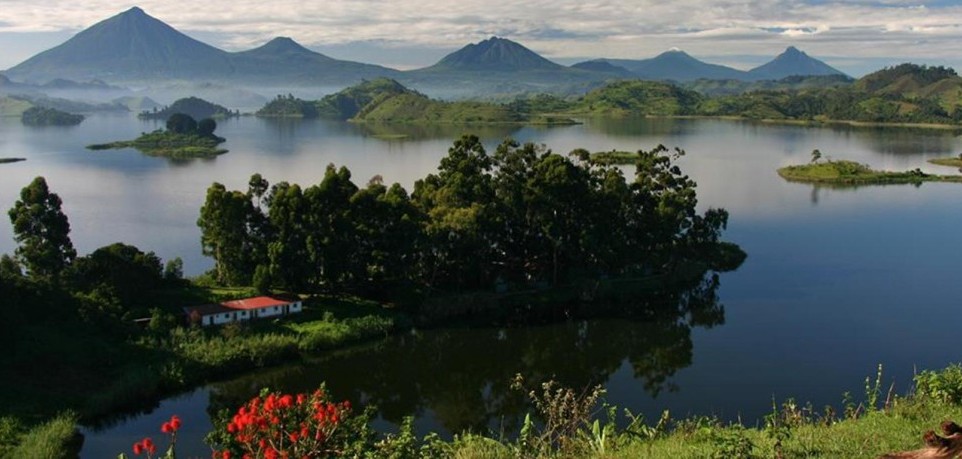
Located in the hilly terrain of Kisoro District Southwest of Uganda, Lake Mutanda is a little-known gem. It is one of Africa’s most beautiful lakes, set in a striking setting of expansive, lush, and verdant mountains.
Composed of at least 15 islands with thick trees and plants filled with fresh-clear water. The lake is surrounded by stunning landscape, including expansive highlands covered with greenery, plantations, and terraced crops along the slopes. The beautiful cloud-covered peaks of the Virunga Mountain Volcanoes serve as the perfect backdrop to this wonderful sight. Three of the eight major volcanoes in the Virunga Mountain Range, which straddles the borders of Uganda, Rwanda, and the Democratic Republic of the Congo are shared by Uganda.
The three mountains that make up Mgahinga Gorilla National Park are Mt. Muhavura, Gahinga, and Sabyinyo. These are seen, rising in the distance over Lake Mutanda and the vast hills, with white clouds drifting across their summits. An awe-inspiring panorama is created over Lake Mutanda in the morning when dense clouds of mist cover the verdant mountains.
Only one of the 15 islands in Lake Mutanda is inhabited by local people, and only a few have been able to support plantations of crops and trees. A few of the other islands are uninhabited and covered in overgrown vegetation with diverse species.
Mutanda Island, which bears the lake’s name, is the largest. The “Abagesera” tribe inhabits this island. They cultivate crops like sugar cane, bananas, and peas. This island is mostly covered in trees and bushes. Local worshipers from the mainland canoe to the island to attend services at the church that has been built on top of it.
Two islands were given the name Punishment Islands because they were used as punishment dumps for criminals and other outcasts of society. Unwanted people from the area would be tied up and sent to the island, where they would be left to die, along with unmarried pregnant girls, the elderly who had no one to care for them, thieves, and other criminals. On these islands, other people would be slain and dumped. On the islands, there are caves containing skeletal remains. Because it is thought that these two islands are haunted by the dead, the locals are afraid of them and don’t even venture upon them.
The Python Island, which is home to pythons, is another fascinating island. However, python sightings are uncommon.
Due to the area’s high elevation and cold weather, which is adverse to many species, there aren’t many birds to be found here. Sunbirds, the Great Cormorant, the Pied and Malachite Kingfisher, and others are some of the common birds. Otters frequent the lake, although there are just a few fish species like Cats & Mad Fish.
Tours and activities to do at Lake Mutanda
Island tours
For a chance to see these giant snakes, go to the Python Island. A hot day is a wonderful time to catch them. In Lake Mutanda, the pythons mostly devour fish and other aquatic animals. Visit the punishment islands as well as the caves that contain the victims’ skeleton remains. Visit the local village and church while visiting Mutanda Island, and bring some donations for the residents. The island provides a vantage point from which to enjoy stunning lake views.
Canoeing
Take a ride on the calm waters, feel the peace, travel among the islands, and take in the breathtaking scenery while watching some animals, like birds and otters. It offers such a relaxing experience only witnessed on Lake Mutanda.
Hiking
You can only get amazing spots for stunning views of Mutanda and the volcanoes by hiking to and around the lake.
Mountain Biking
The mountainous terrain surrounding Lake Mutanda is pretty thrilling to bike on with nice mountain bikes.
When to visit Lake Mutanda?
Uganda has a tropical climate, which means that it is always warm and does not experience any significant seasonal fluctuations. Anyone can travel to Lake Mutanda at any time of the year.
A detailed introduction to Lake Mutanda
Lake Mutanda is best understood as more than a name on an itinerary. It is a practical way to experience East Africa through an East African journey, supported by local guiding and enough time to notice landscapes, wildlife, local knowledge and the rhythm of travel between carefully chosen stops. The page above explains the central subject; this planning section adds the decisions that turn that information into a workable trip. Travellers should think about the season, the length of each transfer, the amount of activity they enjoy, the standard of accommodation they prefer and how much unstructured time they want. Careful sequencing matters because driving time, trail conditions and wildlife movement all shape the day. In East Africa, conditions can change between regions even during the same journey, so a route should be checked as a complete sequence rather than as a list of separate attractions. Start with the experience that matters most, then build transport, rest and secondary visits around it. That approach keeps Lake Mutanda rewarding for first-time visitors, experienced safari travellers, couples, families and private groups with different interests. For independent protected-area and conservation context, consult UNESCO World Heritage Centre and confirm operational details again near the travel date.
How to plan the timing and route
Timing for Lake Mutanda is not only a question of choosing a month. It also involves arrival time, road or flight connections, permit availability where controlled activities are included, and the realistic pace of each day. Dry periods can make some roads and trails easier, while greener months may bring dramatic skies, fresh vegetation and fewer visitors in certain areas. Rain can occur in any season, particularly around forests and highlands, so flexibility remains useful. A local planner should confirm current park rules and access before final payment because official conditions can change. Use the East Africa safari collection to compare journeys in the same region, then review the complete safari collection if you may want to combine countries. Arriving a night before a major trek or long game-drive day is often more comfortable than connecting directly from an international flight. When the route covers several borders, build in sensible buffers and avoid treating every transfer as guaranteed to take the shortest possible time.
What the experience may feel like
The character of Lake Mutanda comes from landscapes, wildlife, local knowledge and the rhythm of travel between carefully chosen stops. Some moments are active and focused, while others are quiet: listening to a guide, waiting for wildlife to move, watching light change across the landscape or sharing a meal after a long day. A private journey makes it easier to adjust stops and explanations to the group, although protected-area rules, ranger instructions and safety limits always take priority. Guides read tracks, weather, vegetation, road conditions and animal behaviour, then explain what those clues mean without promising a sighting that nature cannot guarantee. Travellers get more from an East African journey when they ask questions and allow time for observation rather than concentrating only on photographs. The route may include early starts, uneven ground or extended drives, depending on the subject, but these can be balanced with breaks and well-placed nights. Browse the signature experiences to see how different activities can complement one another, especially when one person wants primates and another prefers landscapes, birds, culture or classic wildlife.