
Do Gorillas Climb Trees?
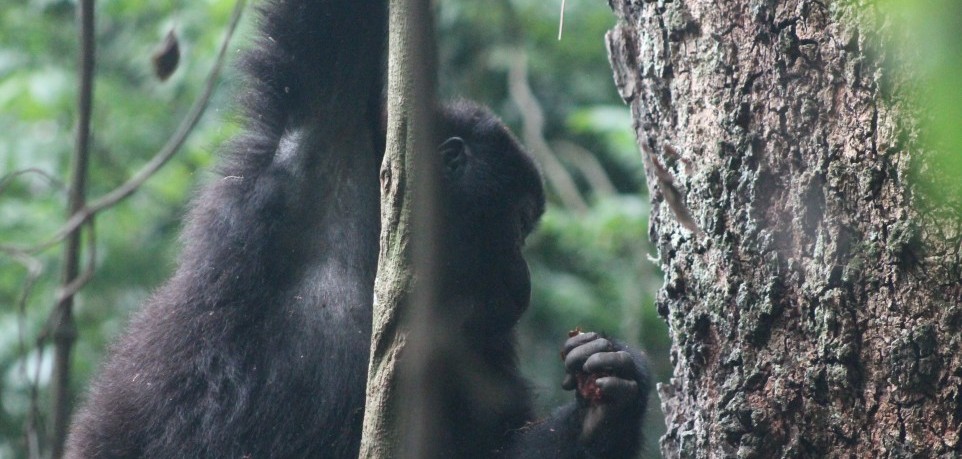
Are you wondering whether gorillas climb trees? Any primate lover would be interested in knowing key aspects of primates’ lives. One of the frequently asked questions about Giant Apes (gorillas) is whether they climb trees or not. The answer is yes and no, as you will find out in this article. One thing you need to know is that gorillas are generally “Terrestrial” and not “Arboreal” animals, meaning they live primarily on the ground in contrast to the latter which live primarily in trees.
Of the Great Apes (excluding humans), gorillas spend the least time on trees (only about five to twenty percent of the day), followed by the common chimpanzee which spends about 47 to 61% of the day away from the ground while the extraordinary Orangutans spend almost all their time (in fact 10%) on trees. Even for the little time gorillas climb trees, it is mainly to play (applicable to infants) or to harvest fruits (as long as the tree branch can handle its weight).
When climbing trees, these Giant Apes hold onto tree branches and smaller trunks with hands and feet. Additionally, it is done quadrupedally (or on all four limbs) and rarely brachiate (swinging from one tree branch to another). Given their massive weight, it is the infant gorillas that tend to climb trees and even play more often on trees than on the ground. Of the two gorilla species and Eastern gorillas, adults of the latter hardly climb into trees, owing to their heavy weight ranging from 100 to 220 kilograms. Besides their weight, few tree species are befitting for nest building in their natural habitat in addition to lacking fruiting trees.
Interestingly, the western gorillas spend substantial time on trees, even as adults because of their lighter weight in addition to having numerous fruiting trees in their natural habitats. For all gorilla species, the silverbacks prefer moving on the ground because of their weight although will attempt climbing high into fruiting trees that can handle their heavy weight. However, some of these Giant Apes that have blindly attempted tree climbing without considering weight have ended up losing their lives.
Some of the silverbacks that have been victims of this unfortunate predicament include Ndahura, a renowned 18-year-old dominant silverback of Bwindi’s Bitukura Gorilla Group (in the Ruhija sector) who fell over 50 meters from a tree branch on 18th December 2016 while trying to pick Chrysophyllum fruits.
The weak tree branch broke due to his heavy weight and to make matters worse, the branch also fell on him. It is said that after the broken tree branch was removed from his injured body, he tried sitting up but failed and he passed away about half an hour later. Post-mortem examination that was conducted on him showed that he had died from “massive trauma” with numerous fractures on the left femur, bleeding in most of his body organs, and dislocation of shoulders as well as his neck bones.
Three years before Ndahura’s death, the 30-year-old silverback Ruhamuka of Bwindi’s Kahungye (within the Rushaga sector) lost his dear life after falling from a tree. He fell so badly that even sustained sharp head and brain injuries which led to mouse and nose bleeding hence dying there and then.
Where to see the extraordinary Gorillas in Africa?
The western lowland gorillas boast the World’s highest population at about 100,000 to 250,000 individuals in Gabon, the Republic of Congo, Equatorial Guinea, Angola, and the Central African Republic among others.
For the Eastern lowland gorillas, there are about 3000-5000 of them living in the Democratic Republic of Congo.
The Mountain gorillas are about 1063 in number and are found in Uganda, the Democratic Republic of Congo, and Rwanda.
The Cross River Gorillas have the smallest population with about 250 to 300 individuals in Nigeria and Cameroon.
A detailed introduction to Do Gorillas Climb Trees?
Do Gorillas Climb Trees? is best understood as more than a name on an itinerary. It is a practical way to experience East Africa through gorilla trekking, supported by local guiding and enough time to notice a guided forest trek and a carefully managed encounter with habituated gorillas. The page above explains the central subject; this planning section adds the decisions that turn that information into a workable trip. Travellers should think about the season, the length of each transfer, the amount of activity they enjoy, the standard of accommodation they prefer and how much unstructured time they want. The strongest itineraries leave room for real observations instead of rushing from one headline sight to another. In East Africa, conditions can change between regions even during the same journey, so a route should be checked as a complete sequence rather than as a list of separate attractions. Start with the experience that matters most, then build transport, rest and secondary visits around it. That approach keeps Do Gorillas Climb Trees? rewarding for first-time visitors, experienced safari travellers, couples, families and private groups with different interests. For independent protected-area and conservation context, consult UNESCO’s Bwindi overview, IUCN mountain gorilla conservation information and confirm operational details again near the travel date.
How to plan the timing and route
Timing for Do Gorillas Climb Trees? is not only a question of choosing a month. It also involves arrival time, road or flight connections, permit availability where controlled activities are included, and the realistic pace of each day. Dry periods can make some roads and trails easier, while greener months may bring dramatic skies, fresh vegetation and fewer visitors in certain areas. Rain can occur in any season, particularly around forests and highlands, so flexibility remains useful. A local planner should confirm current park rules and access before final payment because official conditions can change. Use the East Africa safari collection to compare journeys in the same region, then review the complete safari collection if you may want to combine countries. Arriving a night before a major trek or long game-drive day is often more comfortable than connecting directly from an international flight. When the route covers several borders, build in sensible buffers and avoid treating every transfer as guaranteed to take the shortest possible time.
What the experience may feel like
The character of Do Gorillas Climb Trees? comes from a guided forest trek and a carefully managed encounter with habituated gorillas. Some moments are active and focused, while others are quiet: listening to a guide, waiting for wildlife to move, watching light change across the landscape or sharing a meal after a long day. A private journey makes it easier to adjust stops and explanations to the group, although protected-area rules, ranger instructions and safety limits always take priority. Guides read tracks, weather, vegetation, road conditions and animal behaviour, then explain what those clues mean without promising a sighting that nature cannot guarantee. Travellers get more from gorilla trekking when they ask questions and allow time for observation rather than concentrating only on photographs. The route may include early starts, uneven ground or extended drives, depending on the subject, but these can be balanced with breaks and well-placed nights. Browse the signature experiences to see how different activities can complement one another, especially when one person wants primates and another prefers landscapes, birds, culture or classic wildlife.