
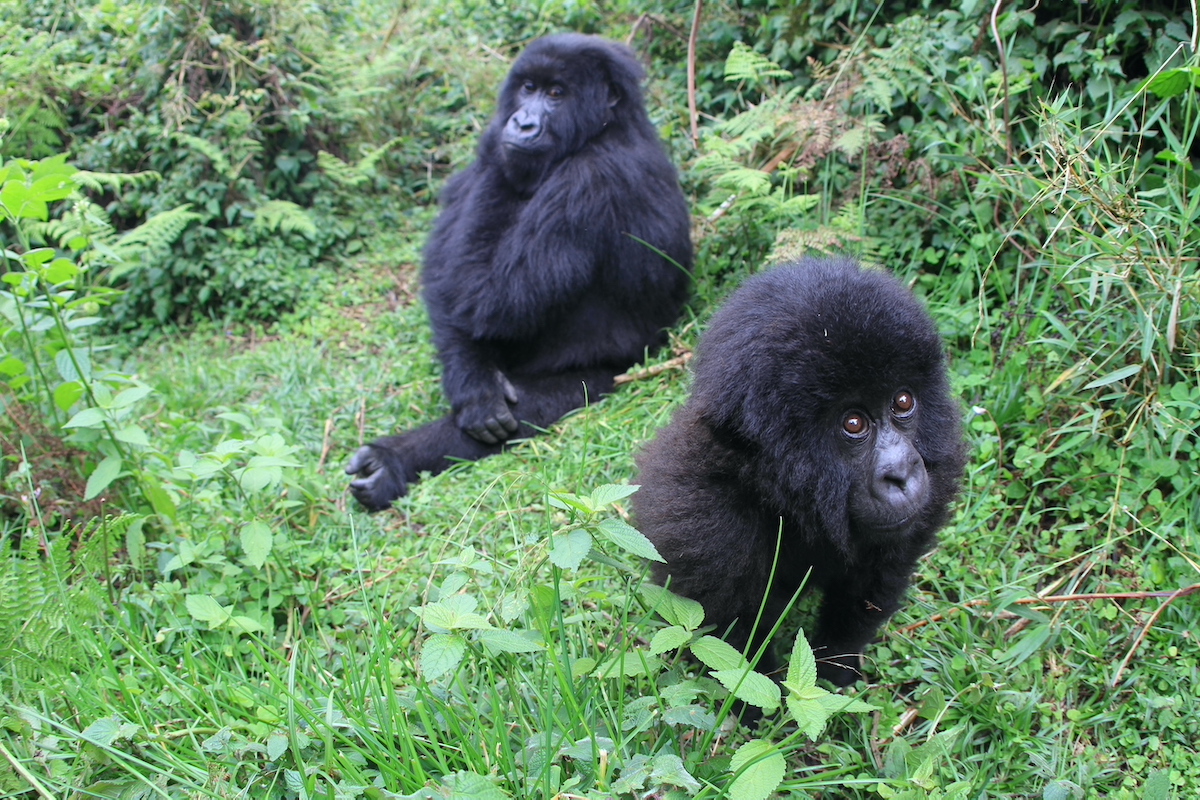
Uganda Gorilla Trekking from Kigali Rwanda, is one of the most practical ways to experience Uganda’s mountain gorillas when your international journey begins in Rwanda. Instead of travelling all the way from Entebbe or Kampala to southwestern Uganda, travellers can arrive in Kigali, cross the Rwanda–Uganda border by road, and continue towards Bwindi Impenetrable National Park or Mgahinga Gorilla National Park. The actual gorilla trekking experience takes place in Uganda, while Kigali serves as the international gateway and starting point for the journey.
Uganda Wildlife Authority (UWA) confirms that gorilla trekking in Uganda takes place in Bwindi Impenetrable National Park and Mgahinga Gorilla National Park. Bwindi is divided into four main gorilla trekking sectors: Buhoma, Ruhija, Rushaga and Nkuringo. A standard gorilla trek can take approximately 2–7 hours depending on where the allocated gorilla family is located, with a maximum of one hour spent observing the gorillas once they are found.
For travellers already visiting Rwanda, arriving through Kigali can therefore create a natural cross-border itinerary: spend time in Kigali or other parts of Rwanda, travel south towards the Rwanda–Uganda border, continue into southwestern Uganda, trek mountain gorillas in Bwindi or Mgahinga, and then either return to Kigali or continue deeper into Uganda for destinations such as Queen Elizabeth National Park, Kibale Forest or Lake Bunyonyi.
If you are planning your own Uganda Gorilla Trekking From Kigali Rwanda experience, Native Africa Tours can arrange the gorilla permit, private 4×4 transportation, accommodation, border-crossing logistics and additional Uganda safari activities around your preferred travel dates.
What Is Uganda Gorilla Trekking From Kigali Rwanda?
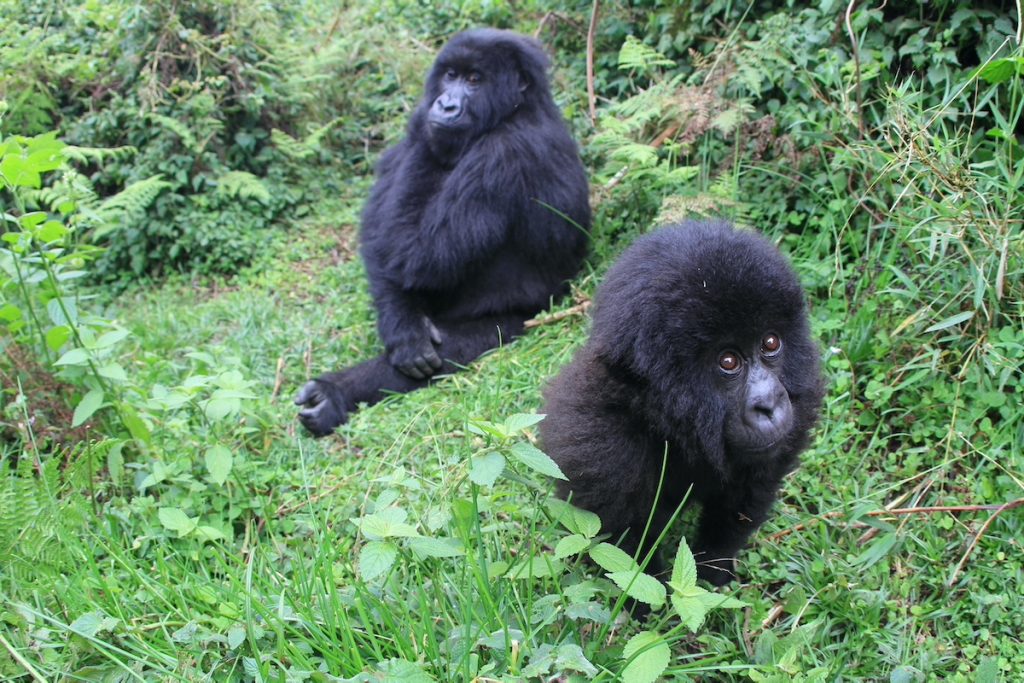
Uganda Gorilla Trekking From Kigali Rwanda refers to a safari where travellers begin their journey in Kigali before crossing into Uganda to trek mountain gorillas in Bwindi Impenetrable National Park or Mgahinga Gorilla National Park. It is important to understand that Kigali is simply the starting point. The gorilla trekking activity itself takes place in Uganda and requires a Uganda gorilla trekking permit issued under Uganda’s wildlife tourism system.
This route has become particularly useful for travellers who are already visiting Rwanda, arriving at Kigali International Airport, or looking for a shorter road journey to southwestern Uganda than travelling overland from Kampala or Entebbe. The journey also allows you to experience two countries within one itinerary. You can have breakfast in Kigali, travel through Rwanda’s scenic highlands, complete immigration procedures at the international border, and continue into Uganda’s mountainous southwestern region on the same day.
For many visitors, the attraction is not simply the shorter route. It is the possibility of creating a Rwanda–Uganda safari in which Kigali, Bwindi, Lake Bunyonyi, Queen Elizabeth National Park, and other destinations can be connected without unnecessary backtracking.
Can You Really Trek Gorillas in Uganda From Kigali?
Yes. Travelling from Kigali does not mean you have to trek gorillas in Rwanda. You can cross the international border into Uganda and continue to one of Uganda’s gorilla destinations.
Bwindi Impenetrable National Park and Mgahinga Gorilla National Park are Uganda’s two gorilla trekking destinations. Bwindi has four main sectors, while Mgahinga lies within the Virunga Mountains in southwestern Uganda. This makes Kigali particularly useful for travellers whose international flights are already routed through Rwanda.
A typical journey might look like: Kigali → Rwanda–Uganda border → Kisoro/Kabale → Bwindi → Gorilla Trekking → Kigali or, for a longer Uganda safari: Kigali → Bwindi → Queen Elizabeth National Park → Kibale Forest → Entebbe. The exact route depends on your gorilla permit, trekking sector, accommodation, and what you want to do after the trek.
Why Start a Uganda Gorilla Safari From Kigali?
The main reason travellers consider Kigali is geographical convenience. The existing article correctly identified Kigali as a useful gateway to southwestern Uganda, but its previous travel-time figures were too optimistic for the complete journey. A journey that includes an international border crossing, immigration procedures, stops, and the final mountain roads into Bwindi should not be presented as a guaranteed two- or three-hour transfer.
For southern Bwindi, the route through Cyanika and Kisoro is particularly relevant. Kisoro is approximately 80 kilometres from Kabale, and the road from Kisoro towards the southern Bwindi sectors is about 35 kilometres and takes roughly 1–1.5 hours, depending on conditions. Native Africa Tours recommends a 4WD vehicle for the winding roads.
Kigali also works well for travellers who want to combine Rwanda and Uganda. For example, you might spend two days in Rwanda before crossing into Uganda for gorilla trekking. After the trek, you can either return to Kigali for your international flight or continue into Uganda for additional wildlife experiences. This flexibility is one of the strongest reasons to consider the route.
How Far Is Kigali From Bwindi?
The answer depends on which Bwindi sector you are visiting. This is an important distinction because Bwindi is not a single roadside destination. It is a large mountainous forest divided into several tourism sectors, and the roads approaching each sector are different. For southern Bwindi, travellers commonly use the Rwanda–Uganda route through Cyanika, Kisoro and then southern Bwindi. For other sectors, routes through Gatuna/Katuna and Kabale may be more appropriate.
The road journey from Kigali to southern Bwindi is commonly planned at approximately 4–5 hours under favourable conditions, but this should be treated as an estimate rather than a guaranteed transfer time. Border procedures, road conditions, weather, traffic, stops, and the exact lodge location can all affect the final journey. The final approach to Bwindi is particularly important. The roads towards the southern sectors are winding, and we recommend a 4WD vehicle. For this reason, we recommend allowing flexibility rather than booking an international flight immediately after a road transfer from Bwindi.
How to Travel From Kigali to Bwindi
The most common option is a private road transfer. Your driver-guide collects you from Kigali International Airport or your Kigali hotel and begins the journey towards southwestern Rwanda. The road then continues towards the Rwanda–Uganda border. After immigration procedures, the journey continues through the Ugandan side towards the selected gorilla trekking sector.
For travellers heading to southern Bwindi, a common route is: Kigali → Cyanika → Kisoro → Rushaga/Nkuringo
For travellers heading towards northern or eastern Bwindi, the route can instead involve: Kigali → Gatuna/Katuna → Kabale → Ruhija/Buhoma
These are practical route-planning patterns, not fixed rules. Select the border and road route based on the gorilla permit and accommodation location. A private 4×4 is particularly useful because you have control over departure time, stops, and the pace of the journey, while the vehicle is also better suited to the mountain roads approaching Bwindi. Native Africa Tours specifically recommends 4WD access for several of the park’s road approaches.
Rwanda–Uganda Border Crossing
Crossing from Rwanda into Uganda is an international border crossing, so it should be treated as part of the itinerary rather than as a simple roadside stop. Rwanda’s official immigration authority lists several Rwanda–Uganda border posts, including Cyanika, Gatuna, Buhita, Buziba, Kagitumba and Rwempasha. For a gorilla safari, the relevant crossing depends on where you are travelling in Uganda.
Your passport or accepted travel document should be valid for the required period, and your immigration status must allow you to enter Uganda.
For visa-required travellers, Uganda Immigration says visa applications are made online and that an approved traveller receives an approval letter by email, which should be printed and presented together with a valid passport or travel document of at least six months’ validity at the port of entry.
Do not confuse your gorilla permit with your immigration documents
A gorilla permit gives you access to the gorilla activity in Uganda. It does not replace your passport, visa or other immigration documentation. Similarly, having a Rwanda visa does not automatically mean that every traveller is authorized to enter Uganda. Your immigration requirements depend on your nationality and travel circumstances.
What Documents Do You Need to Cross From Rwanda Into Uganda?
Because your gorilla trek is in Uganda, you need to satisfy Uganda’s entry requirements even though you started the trip in Rwanda. For many international travellers, the essential documents will include:
- A valid passport or accepted travel document.
- A Ugandan visa or proof of visa-exempt status where applicable.
- Uganda visa approval documentation if you are visa-required.
- Yellow Fever vaccination documentation where applicable.
- Your gorilla permit or booking confirmation.
- Safari itinerary and accommodation details.
Visa applicants provide a passport biodata page, recent photograph, and Yellow Fever vaccination certificate among the application documents, and approved applicants should present the approval letter together with a valid passport or travel document of at least six months’ validity.
If you are travelling with children, additional documentation may be relevant. Rwanda’s immigration authority states that children under 16 entering or leaving Rwanda must be accompanied by a parent or authorized person, and proof of parental consent may be required in some circumstances. Because documentation requirements depend on nationality and circumstances, check the current official immigration guidance before travelling.
Do You Need a Uganda Visa From Rwanda?
It depends on your nationality. Uganda Immigration currently lists Rwanda among the visa-exempt countries, meaning Rwandan nationals do not need a Ugandan visa for entry under the applicable arrangements. Nationals of Uganda, Rwanda and Kenya also have access to the Inter-State Pass arrangement. Uganda Immigration states that these nationals can move between the three countries using a national ID rather than a passport, with no visa fee and the pass issued at the border.
Other nationalities may need a Ugandan tourist visa or another applicable immigration authorization.
For travellers visiting several East African countries, the East African Tourist Visa can also be relevant. Uganda Immigration states that this joint visa covers Uganda, Kenya and Rwanda, is valid for 90 days, allows multiple tourism entries within the three countries and costs US$100. The country issuing it should be the first entry point. Because immigration rules can change, travellers should verify their individual requirements with the relevant immigration authority before departure.
Which Border Should You Use?
There is no single border crossing that is automatically correct for every gorilla trek.
Cyanika Border
Cyanika is particularly useful when your itinerary is heading towards Kisoro and southern Bwindi, including routes towards Rushaga and Nkuringo. This makes it a practical choice for many Kigali-to-southern-Bwindi gorilla itineraries.
Gatuna/Katuna Border
Gatuna/Katuna can be useful for routes connecting Rwanda with Kabale and northern/eastern approaches to Bwindi, including itineraries designed around Ruhija or Buhoma. The best crossing should therefore be determined after your gorilla permit sector and accommodation have been confirmed.
Gorilla Trekking Destinations in Uganda
Uganda has two national parks where mountain gorilla trekking takes place: Bwindi Impenetrable National Park and Mgahinga Gorilla National Park. These are both Uganda’s gorilla destinations. The two parks offer different landscapes.
Bwindi is a vast montane rainforest with steep ridges and valleys. Mgahinga is part of the Virunga volcanic mountain landscape. For travellers arriving from Kigali, both are accessible from southwestern Rwanda, but the practical route and travel time depend on your selected destination.
Bwindi Impenetrable National Park
Bwindi is Uganda’s principal gorilla trekking destination and is divided into four main sectors:
- Buhoma
- Ruhija
- Rushaga
- Nkuringo
Bwindi is home to roughly half of the world’s mountain gorilla population. The latest conservation update states that the 459 figure comes from the 2018 Bwindi census and that results from the more recent census work are still being processed. Bwindi’s landscape is also one of the reasons the trek is so memorable. You are not walking along a flat wildlife trail. You are moving through dense forest, steep terrain, vegetation, and changing elevations while trackers search for the allocated gorilla family.
Mgahinga Gorilla National Park
Mgahinga Gorilla National Park lies in southwestern Uganda within the Virunga Mountains. It is an alternative gorilla trekking destination to Bwindi and states that it issues approximately eight gorilla permits per day. The park is smaller and has a distinctly volcanic environment, with the Virunga volcanoes dominating the surrounding landscape.
For travellers coming from Kigali, Mgahinga can be incorporated into a short gorilla itinerary, especially when the permit availability and preferred trekking dates align. However, Bwindi offers considerably more sector choices, which can provide greater flexibility when arranging a Kigali-to-Uganda gorilla safari.
Which Bwindi Sector Should You Choose?
The sector is important because it affects where you stay, which road you use, and how the rest of your itinerary fits together.
Rushaga
Rushaga is in southern Bwindi and is particularly relevant for travellers coming from Kigali through Kisoro. It is also the sector associated with Uganda’s Gorilla Habituation Experience.
Rushaga Visitor Information Center is one of the designated gorilla entry points. If your main objective is standard gorilla trekking, Rushaga can be an excellent choice. If you want habituation instead, the itinerary needs to be planned specifically around Rushaga. You can read our detailed guide to the Rushaga sector of Bwindi Impenetrable National Park for more information.
Nkuringo
Nkuringo is another southern Bwindi sector. It is accessed from the Kisoro side, making it relevant to some Rwanda–Uganda itineraries. The terrain around Nkuringo can be demanding, so travellers should not choose the sector purely based on geography. Fitness, accommodation and the specific gorilla permit should also be considered.
Ruhija
Ruhija lies on the eastern side of Bwindi and is commonly approached through Kabale. It can fit a Kigali itinerary through the Gatuna/Katuna and Kabale route. The exact journey should be planned around your accommodation and permit location.
Buhoma
Buhoma is in northern Bwindi and is the historic tourism sector of the park. It can be combined particularly well with itineraries entering Uganda from the north or continuing through Queen Elizabeth National Park. For a traveller coming directly from Kigali for a very short gorilla trip, the southern sectors can often make more sense logistically, but the final choice should always follow permit availability and the overall safari route.
How Much Does a Uganda Gorilla Permit Cost?
UWA’s February 2026 tariff notice introduced discounted low-season gorilla tracking permits for April, May and November, with rates of US$600 for Foreign Non-Residents and US$500 for Foreign Residents. The notice states that these low-season permits cannot be rescheduled.
There is a revised tariff structure effective 1 January 2027. Standard gorilla tracking remains US$800 for Foreign Non-Residents, US$700 for Foreign Residents, US$500 for the Rest of Africa, and UGX 300,000 for EAC citizens.
| Visitor Category | Standard Gorilla Tracking |
|---|---|
| Foreign Non-Resident | US$800 |
| Foreign Resident | US$700 |
| Rest of Africa | US$500 |
| East African Community Citizen | UGX 300,000 |
Gorilla Habituation Experience begins at 6:30 am and allows a maximum of four hours of viewing, compared with one hour for normal gorilla tracking. Habituation is an experience where visitors accompany researchers and habituators into the forest as part of the process of habituating gorillas to human presence. If you are particularly interested in habituation, read our guide Can I Do Gorilla Habituation From Kigali? before deciding which itinerary to book.
Best Time for Uganda Gorilla Trekking From Kigali
Gorilla trekking can be done throughout the year. Bwindi is a rainforest environment, so rainfall is possible even during traditionally drier periods. The condition of forest trails can change quickly.
The dry seasons are often preferred by travellers because hiking conditions can be more manageable, but there is no month in which rainfall can be completely ruled out.
Interestingly, Uganda Wildlife Authority introduced discounted gorilla tracking rates for April, May and November 2026, reducing the Foreign Non-Resident permit from US$800 to US$600 and the Foreign Resident rate from US$700 to US$500 during those months. This creates an interesting option for travellers whose schedules are flexible and who are comfortable travelling during wetter months. The best travel period therefore depends on your priorities: weather preferences, budget, availability, photography goals, accommodation and wider safari plans.
What Should You Pack for Gorilla Trekking From Kigali?
The biggest mistake travellers make is thinking of this as an ordinary wildlife drive. The gorilla trek is a genuine forest hike. Your luggage for the safari can therefore be divided into two categories: what stays in the safari vehicle and what you carry into the forest.
For the trekking day, useful items include:
- Waterproof hiking boots
- Long trousers
- Long-sleeved shirt
- Lightweight rain jacket
- Warm layer
- Gardening or hiking gloves
- Hat
- Sunscreen
- Insect repellent
- Small backpack
- Reusable water bottle
- Camera
- Spare batteries
- Waterproof protection for electronics
- Binoculars
- Personal medication
A walking stick can also be useful on steep or muddy sections. A porter can be hired locally to help carry your daypack and provide physical assistance during the trek. Hiring a porter also provides direct income to people working around the protected area.
Sample 2-Day Uganda Gorilla Trekking From Kigali
For travellers with extremely limited time, a 2-day Uganda gorilla trekking from Kigali itinerary can be structured around the gorilla trek.
Day 1: Kigali – Rwanda–Uganda Border – Bwindi
Pick up from Kigali and travel towards the Rwanda–Uganda border. Complete immigration procedures and continue into Uganda towards your selected Bwindi sector. Arrive at your lodge, check in, have dinner, and prepare for the following morning.
Day 2: Gorilla Trekking – Return to Kigali
After an early breakfast, proceed to the gorilla briefing point. Complete the trek and return from the forest. After the activity, begin the journey back towards Kigali. This itinerary is possible but should be planned carefully because it leaves little flexibility for delays.
Sample 3-Day Uganda Gorilla Trekking From Kigali
A 3 Days Uganda Gorilla Trip from Kigali gives you a little more breathing room.
Day 1: Kigali – Bwindi
Transfer from Kigali through the selected border crossing to Bwindi.
Day 2: Gorilla Trekking
Spend the day in Bwindi for the gorilla experience.
Day 3: Bwindi – Lake Bunyonyi or Kigali
You can either return directly to Kigali or add a short Lake Bunyonyi experience before continuing to Rwanda. This is one of the most practical options for travellers who want gorillas without committing to a long Uganda safari.
Sample 4-Day Uganda Gorilla Trekking From Kigali
Day 1
Kigali arrival and city experience.
Day 2
Kigali → Cyanika → Kisoro → Bwindi.
Day 3
Gorilla trekking in Bwindi.
Day 4
Lake Bunyonyi experience and return to Kigali. This itinerary gives the traveller a little more time to enjoy the region instead of treating the journey as a simple airport-to-forest transfer.
Can You Combine Gorilla Trekking With a Uganda Wildlife Safari?
Yes, and this is where travelling from Kigali becomes particularly interesting. Instead of returning to Rwanda immediately after the gorilla trek, you can continue north into Uganda.
One popular route is: Kigali → Bwindi → Ishasha → Queen Elizabeth National Park → Kibale → Entebbe
This creates a much broader safari. After spending time in the rainforest with mountain gorillas, you move into savannah landscapes where you can look for elephants, buffaloes, antelopes, lions, and other wildlife. Queen Elizabeth National Park can also provide a Kazinga Channel boat cruise, giving you a completely different wildlife experience from the forest trek. If you have more time, Kibale Forest can then be added for chimpanzee trekking. This is one of the main advantages of using Kigali as an entry point, but not necessarily as your final destination.
Can You Trek Gorillas in Rwanda and Uganda on the Same Trip?
Yes. Travellers can combine a gorilla trek in Rwanda’s Volcanoes National Park with another gorilla trek in Uganda’s Bwindi or Mgahinga. The two experiences require separate permits because they are different protected areas managed under different national systems.
A possible route is: Kigali → Volcanoes National Park → Cyanika → Kisoro → Bwindi. This is particularly attractive to travellers who want to compare the two mountain gorilla environments.
However, it requires more time and a larger budget than doing a single gorilla trek. If your main goal is to see gorillas once, one carefully planned trek may be enough. If mountain gorillas are the central focus of your holiday, a two-country gorilla itinerary can be extended accordingly. You can also read our detailed guide on Can I Do Gorilla Trekking in Rwanda and Uganda on the Same Trip?
Can You Do Gorilla Habituation From Kigali?
Yes. The Gorilla Habituation Experience is a Ugandan activity and can be arranged for travellers starting in Kigali. The key difference is that habituation is specifically planned around Rushaga in southern Bwindi, rather than simply choosing any Bwindi sector.
The experience provides up to four hours of gorilla viewing, compared with one hour for normal tracking. This makes it particularly attractive for wildlife photographers, primate enthusiasts, researchers and travellers who want a longer forest experience.
A three-day version can look like:
Day 1: Kigali → Rushaga
Day 2: Gorilla Habituation Experience
Day 3: Rushaga → Kigali
Travellers with more time can add Lake Bunyonyi or continue into Queen Elizabeth National Park.
Is Uganda Gorilla Trekking From Kigali Suitable for Short Trips?
Yes, provided the itinerary is planned around the gorilla permit. This is one of the strongest uses of the Kigali route. A traveller with only a few days available can avoid spending several days driving from central Uganda to Bwindi.
Instead, the journey can be concentrated around: Kigali → Bwindi → Gorilla Trek → Kigali. Travellers with three or four days can add Lake Bunyonyi or a Kigali city experience. Those with a week or more can continue into Uganda’s wildlife parks.
The important thing is not to confuse a short itinerary with an easy itinerary. The gorilla trek itself can be physically demanding, and the cross-border journey still involves immigration procedures and mountain roads.
Plan Your Uganda Gorilla Trekking From Kigali, Rwanda
Uganda Gorilla Trekking From Kigali Rwanda gives travellers a practical way to combine Rwanda and Uganda within one journey. Kigali provides a convenient international gateway, while southwestern Uganda provides access to Bwindi Impenetrable National Park and Mgahinga Gorilla National Park. The experience can be as short as a focused two-day gorilla trip or expanded into a much longer East African safari.
You can combine the gorillas with Lake Bunyonyi, Queen Elizabeth National Park, Ishasha, Kibale Forest, chimpanzee trekking or additional Rwanda experiences, depending on how much time you have. The most important step is to secure the gorilla permit and then build the route around the exact trekking sector. This helps determine the correct border crossing, accommodation, road route, and number of nights required.
Native Africa Tours can arrange Uganda Gorilla Trekking from Kigali, Rwanda as a private safari, including the gorilla permit, Rwanda–Uganda border transfer, private 4×4 safari vehicle, accommodation and additional activities. We can also arrange Gorilla Habituation in Rushaga for travellers who want a longer gorilla experience. Contact Native Africa Tours to check gorilla permit availability and receive a personalised Uganda gorilla trekking itinerary from Kigali.