
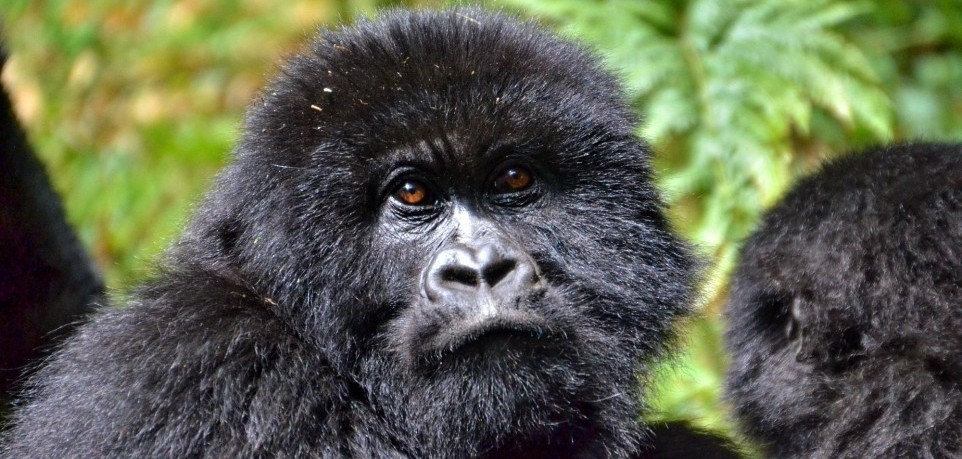
Do Gorillas Drink Water?
Do Gorillas Drink Water? Gorillas are among the species that make up the order of primates. They are generally land-accustomed creatures that live in the jungles of East and Central Africa. It’s the only place where they can be found globally. Gorillas are strong creatures that come in commanding shape and these live generally in the rainforest areas of Uganda, Rwanda, and DRC. Gorillas are classified into two species, and these have different characteristics. They include Eastern lowland gorillas and mountain gorillas.
The Eastern lowland gorillas are also referred to as Grauer’s gorillas. These are only to be found in the Democratic Republic of Congo in the Eastern areas of the country. They live in the jungles whose growth has greatly been facilitated by the great Congo River.
General attributes of gorillas
However, mountain gorillas can be found in all three countries Uganda, Rwanda, and D.R Congo. As their name suggests, these live in mountainous areas. The area in which they are situated is referred to as Virunga because of the volcanoes there. The Virunga volcanoes have fertile soils that have enabled the proper growth of the trees on which the mountain gorillas feed and breed.
They are common in Eastern D.R. Congo, northwestern Rwanda, and Southwestern Uganda. The mountain gorilla’s DNA is almost similar to the human’s although with a higher variation of 95% compared to chimpanzees that have up to 99% DNA similarity.
Unique features of gorillas
Gorillas are generally social creatures and they live in families. The gorilla families have a silverback gorilla as the family head or leader. He prevails over the family members and makes sure that protection is well provided for every member within, especially against external aggression. Gorillas are known to feed on fruits, tree shoots, leaves, bamboo, sometimes flowers, and occasionally on ants, worms, and honey.
Gorillas are of great strength that one shouldn’t be dared into a fight, especially by humans. They are regarded as the largest primates in height and weight. They can weigh between 100 and 210 kilograms. Their height is between 1.2 to 1.9 meters. The gorillas can live between 35 to over 40 years for the healthy ones, especially the ones that live in a confined space of tourism.
The gorillas are endangered as listed by the International Union for Conservation of Nature, and therefore much conservation work has been in place to make sure that the gorillas don’t become extinct through for example preserving their habitats from encroachers and the poachers who often kill these primates.
Do gorillas drink water?
Gorillas don’t drink water. The reason is that they eat a lot of succulent leaves and fruits, and also plants with much morning dew. They feed on flowers sometimes which are equally compacted with much water. Stems and roots also provide the required water in the body since they feed for most time in the day. The gorillas also feed on small ants worms, and seeds which are generally important for their digestion.
Their strong and straight alimentary canal provides the required room for the digestion of over 100 plant species available for the consumption of gorillas. So generally, it’s unfound to sight a gorilla seek out a water source to drink some water.
A detailed introduction to Do Gorillas Drink Water?
Do Gorillas Drink Water? is best understood as more than a name on an itinerary. It is a practical way to experience East Africa through gorilla trekking, supported by local guiding and enough time to notice a guided forest trek and a carefully managed encounter with habituated gorillas. The page above explains the central subject; this planning section adds the decisions that turn that information into a workable trip. Travellers should think about the season, the length of each transfer, the amount of activity they enjoy, the standard of accommodation they prefer and how much unstructured time they want. A good plan protects the quality of the experience without making the journey feel rigid. In East Africa, conditions can change between regions even during the same journey, so a route should be checked as a complete sequence rather than as a list of separate attractions. Start with the experience that matters most, then build transport, rest and secondary visits around it. That approach keeps Do Gorillas Drink Water? rewarding for first-time visitors, experienced safari travellers, couples, families and private groups with different interests. For independent protected-area and conservation context, consult UNESCO’s Bwindi overview, IUCN mountain gorilla conservation information and confirm operational details again near the travel date.
How to plan the timing and route
Timing for Do Gorillas Drink Water? is not only a question of choosing a month. It also involves arrival time, road or flight connections, permit availability where controlled activities are included, and the realistic pace of each day. Dry periods can make some roads and trails easier, while greener months may bring dramatic skies, fresh vegetation and fewer visitors in certain areas. Rain can occur in any season, particularly around forests and highlands, so flexibility remains useful. A local planner should confirm current park rules and access before final payment because official conditions can change. Use the East Africa safari collection to compare journeys in the same region, then review the complete safari collection if you may want to combine countries. Arriving a night before a major trek or long game-drive day is often more comfortable than connecting directly from an international flight. When the route covers several borders, build in sensible buffers and avoid treating every transfer as guaranteed to take the shortest possible time.
What the experience may feel like
The character of Do Gorillas Drink Water? comes from a guided forest trek and a carefully managed encounter with habituated gorillas. Some moments are active and focused, while others are quiet: listening to a guide, waiting for wildlife to move, watching light change across the landscape or sharing a meal after a long day. A private journey makes it easier to adjust stops and explanations to the group, although protected-area rules, ranger instructions and safety limits always take priority. Guides read tracks, weather, vegetation, road conditions and animal behaviour, then explain what those clues mean without promising a sighting that nature cannot guarantee. Travellers get more from gorilla trekking when they ask questions and allow time for observation rather than concentrating only on photographs. The route may include early starts, uneven ground or extended drives, depending on the subject, but these can be balanced with breaks and well-placed nights. Browse the signature experiences to see how different activities can complement one another, especially when one person wants primates and another prefers landscapes, birds, culture or classic wildlife.