
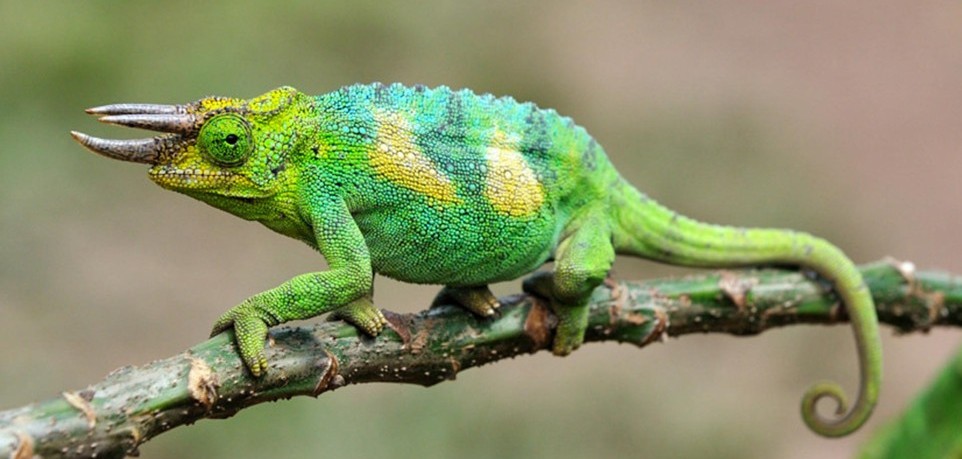
Chameleon tracking in Bwindi Impenetrable National Park
Chameleon tracking in Bwindi Impenetrable National Park is intended mainly to discover the three-horned Jackson’s Chameleon. These chameleon species are only endemic to Bwindi Impenetrable National Park. Bwindi Forest is a concentration of thousands of plant species that have an untold attraction of all sorts of fauna species. The misty Bwindi Forest provides an ecosystem for them to breed and thrive without any potential danger from dangerous human activity. This is another addition to the already existing mountain gorillas in the park.
The three-horned Jackson’s Chameleon thrives at an altitude not less than 1,700 meters above sea level. The species also known as Trioceros Jacksonii is endangered and therefore much attention has been given to it to conserve and protect its remnants. The Park is therefore a heritage site, and they get to share another priority endangered species within the park (mountain gorillas).
The three-horned Jackson’s Chameleon has strange characteristics that should interest any tourist. An example of that is its lifespan. The chameleon can live up to 18 years. It spends its lifetime roaming on a free range. Different from the other tens of chameleon species, the female three-horned Jackson’s Chameleon gives birth. The other chameleon species are known for laying eggs that later get fertilized, and when the hatching period arrives, the eggs burst the young chameleons out.
Another major fact is their friendliness, and besides their physical appearance, they are nonpoisonous. Just like other chameleon species, it camouflages with the shifts in the environment to keep discreet from potential predators too, especially the snakes and birds. These chameleons feed on crickets, ants, grasshoppers, bugs, and other smaller insect species
The cost of chameleon tracking in Bwindi Impenetrable National Park
The chameleon tracking costs just $20 per individual.
When to do chameleon tracking in Bwindi Impenetrable National Park?
Dry seasons are the most convenient season, although chameleon tracking can be done all year round. The advantage of dry seasons is that visitors don’t have to worry about the slippery terrain while in the wilderness. This therefore makes the months of July up to September, and then December to February the most convenient months for historical chameleon tracking. The bushes, shrubs, and thickets are also available for study from the tourists, with information being disseminated to them by the park ranger guides.
How is chameleon tracking in Bwindi Impenetrable National Park done?
Since chameleons live in higher altitudes, tracking them often commences at about 1,800 up to 2,000 meters above sea level. Since they are known to be accustomed to a free-range mode of movement, the tourists get an opportunity to be self-guide.
Visitors shouldn’t be worried about the hardships of locating them since they are in great numbers and evenly distributed in a wide area where they can be spotted without much effort. This makes chameleon trekking so distinct from other forms of tracking since they come with strict guidance from the park’s guides.
How to get there?
Accessing Bwindi Impenetrable National Park for chameleon tracking by road is close to about 7 to 8 hours duration. This is for travelers who set off from Entebbe International Airport or Kampala. This journey goes through Masaka and Kabale, up to Kisoro district as the tourist enjoys a road trip experience in a 4×4 vehicle.
Air travel is also available for visitors in need from Entebbe International Airport by using domestic flights to either Kisoro or Kihihi Airstrip.
A detailed introduction to Chameleon tracking in Bwindi Impenetrable National Park
Chameleon tracking in Bwindi Impenetrable National Park is best understood as more than a name on an itinerary. It is a practical way to experience Bwindi Impenetrable National Park through gorilla trekking, supported by local guiding and enough time to notice a guided forest trek and a carefully managed encounter with habituated gorillas. The page above explains the central subject; this planning section adds the decisions that turn that information into a workable trip. Travellers should think about the season, the length of each transfer, the amount of activity they enjoy, the standard of accommodation they prefer and how much unstructured time they want. A good plan protects the quality of the experience without making the journey feel rigid. In Uganda, conditions can change between regions even during the same journey, so a route should be checked as a complete sequence rather than as a list of separate attractions. Start with the experience that matters most, then build transport, rest and secondary visits around it. That approach keeps Chameleon tracking in Bwindi Impenetrable National Park rewarding for first-time visitors, experienced safari travellers, couples, families and private groups with different interests. For independent protected-area and conservation context, consult Uganda Wildlife Authority, UNESCO’s Bwindi overview and confirm operational details again near the travel date.
How to plan the timing and route
Timing for Chameleon tracking in Bwindi Impenetrable National Park is not only a question of choosing a month. It also involves arrival time, road or flight connections, permit availability where controlled activities are included, and the realistic pace of each day. Dry periods can make some roads and trails easier, while greener months may bring dramatic skies, fresh vegetation and fewer visitors in certain areas. Rain can occur in any season, particularly around forests and highlands, so flexibility remains useful. A local planner should confirm current park rules and access before final payment because official conditions can change. Use the Uganda safari collection to compare journeys in the same region, then review the complete safari collection if you may want to combine countries. Arriving a night before a major trek or long game-drive day is often more comfortable than connecting directly from an international flight. When the route covers several borders, build in sensible buffers and avoid treating every transfer as guaranteed to take the shortest possible time.
What the experience may feel like
The character of Chameleon tracking in Bwindi Impenetrable National Park comes from a guided forest trek and a carefully managed encounter with habituated gorillas. Some moments are active and focused, while others are quiet: listening to a guide, waiting for wildlife to move, watching light change across the landscape or sharing a meal after a long day. A private journey makes it easier to adjust stops and explanations to the group, although protected-area rules, ranger instructions and safety limits always take priority. Guides read tracks, weather, vegetation, road conditions and animal behaviour, then explain what those clues mean without promising a sighting that nature cannot guarantee. Travellers get more from gorilla trekking when they ask questions and allow time for observation rather than concentrating only on photographs. The route may include early starts, uneven ground or extended drives, depending on the subject, but these can be balanced with breaks and well-placed nights. Browse the signature experiences to see how different activities can complement one another, especially when one person wants primates and another prefers landscapes, birds, culture or classic wildlife.
Further planning resources for Chameleon tracking in Bwindi Impenetrable National Park
Compare the destination guides. Use official sources for general background and confirm current fees, access, schedules, permits and operating rules for the exact travel dates before payment. Internal Gorilla Uganda pages help compare route structure and travel style, while the open inquiry form allows a local specialist to check how the information applies to a private journey.